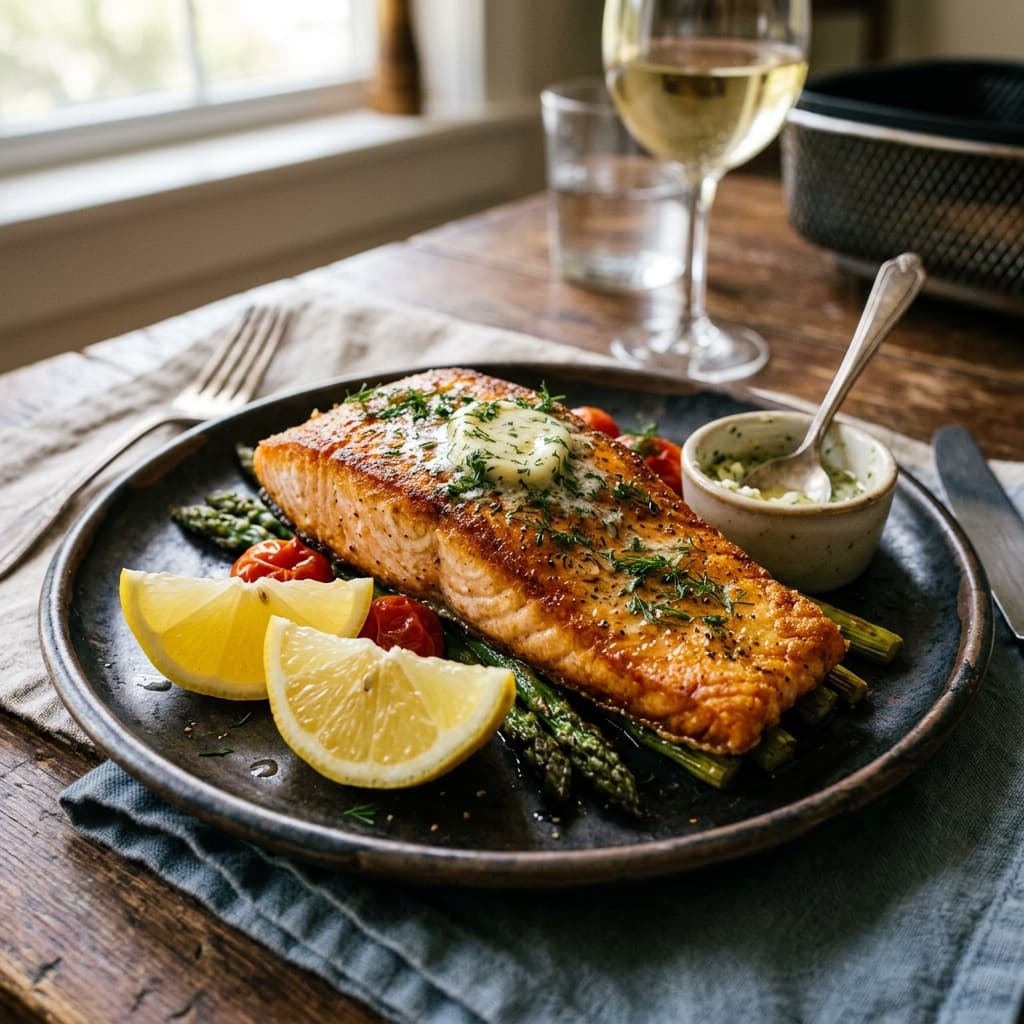
Herb-Crusted Wild Salmon with Roasted Asparagus
This healthy Herb-Crusted Wild Salmon with Roasted Asparagus recipe is a clean eating meal option rich in nutrients. Optimized for Salmon, Gluten-Free, Keto, Low-Carb, Heart Healthy and created by certified nutritionist Stewart Lucas, it is designed to fit seamlessly into a health-focused lifestyle.
Key Takeaways
- ✓Ready in just 15 mins using straightforward, kitchen-tested technique.
- ✓Delivers 42g of muscle-fueling protein per serving for lasting satiety.
- ✓Portion-balanced at 450 calories per serving with wholesome, unrefined ingredients.
- ✓Masterclass temperature checkpoints ensure maximum tenderness and flavor development.
The Story
This healthy Herb-Crusted Wild Salmon with Roasted Asparagus recipe is a clean eating meal option rich in nutrients. Optimized for Salmon, Gluten-Free, Keto, Low-Carb, Heart Healthy and created by certified nutritionist Stewart Lucas, it is designed to fit seamlessly into a health-focused lifestyle.
Herb-Crusted Wild Salmon with Roasted Asparagus
There is something inherently calming about a meal that comes together on a single sheet pan. When you walk into the kitchen after a long day, you don't want a sink full of dishes or a dozen pots bubbling away. You want simplicity, nourishment, and a dinner that makes your home smell like a bistro.
This herb-crusted salmon is one of my go-to recipes when I need to reset. The aroma of roasting garlic and fresh, zesty lemon hitting the hot pan is truly invigorating. The salmon provides a rich, buttery canvas, while the almond-herb crust offers a satisfying crunch that feels fancy enough for guests but is humble enough for a quiet Tuesday night. It is a clean, simple way to fuel your body with the high-quality proteins and healthy fats it craves.
The Ingredients
Quality ingredients are the foundation of any great meal. When you work with simple flavors, let them shine by choosing the freshest produce you can find.
- 4 wild-caught salmon fillets (6oz each)
- 1 bunch of thin, fresh asparagus, woody ends trimmed
- 1/2 cup fresh Italian parsley, finely minced
- 1/4 cup fresh dill, minced
- 1 clove garlic, pressed or finely grated
- 2 tbsp Dijon mustard (the emulsifier for our crust)
- 2 tbsp extra virgin olive oil
- 1 tbsp fresh lemon zest (brightens the entire dish)
- 1/2 cup almond flour (for that grain-free crunch)
- Sea salt and freshly cracked black pepper
Preparation Instructions
- Prep the Oven and Pan: Preheat your oven to 400°F (200°C). Line a large, rimmed baking sheet with parchment paper. This makes clean-up almost nonexistent.
- Make the Crust: In a small bowl, whisk together the almond flour, chopped parsley, fresh dill, lemon zest, and one tablespoon of your olive oil. The mixture should feel like damp, coarse breadcrumbs.
- Prime the Salmon: Pat the salmon fillets completely dry with a paper towel. This step is non-negotiable! Moisture is the enemy of a crisp crust. Brush the top of each fillet with a generous layer of Dijon mustard.
- Assemble: Press the herb mixture firmly into the mustard layer on each fillet. Place the salmon onto the baking sheet.
- Season the Veggies: Toss the trimmed asparagus in the remaining tablespoon of olive oil, a pinch of salt, and pepper. Spread them out in a single layer around the salmon.
- Roast: Slide the tray into the oven for 12–15 minutes. You are looking for the salmon to be opaque and slightly flaky, and the asparagus should be bright green and just starting to char at the tips.
Nutritional Science & Benefits
Why this works for your body:
- Omega-3 Fatty Acids: Wild salmon is a powerhouse for cardiovascular health, providing essential fats that support brain function and lower systemic inflammation.
- Almond Flour vs. Breadcrumbs: By using almond flour instead of refined breadcrumbs, we keep the glycemic load low and increase the healthy monounsaturated fat content.
- Asparagus: This is a prebiotic vegetable. It feeds the beneficial bacteria in your gut, aiding in digestion and long-term metabolic health.
Meal Prep & Storage Guide
Salmon is best eaten fresh, but this dish survives well in the fridge for up to two days. To store, place the cooled fillets and asparagus in an airtight glass container.
When reheating, avoid the microwave if possible; it tends to turn the fish rubbery. Instead, place the salmon in a small oven-safe dish and cover it with foil. Warm it in a 300°F oven for 8–10 minutes just until heated through. If you want to prep in advance, you can mix the herb crust and trim your asparagus the night before, keeping them in separate airtight containers in the fridge so you only have to assemble and roast when you get home.
Flavor Variations
Don't be afraid to make this your own. Cooking should be an intuitive process based on what you have in the pantry.
The Mediterranean Twist
Swap the dill for fresh oregano and add a tablespoon of chopped capers to the crust for a briny, salty hit.
The Spicy Kick
Add a pinch of red pepper flakes to the asparagus toss to bring a gentle warmth that balances the richness of the salmon.
The Vegan Option
While salmon is the star here, you can achieve a similar crust on a firm slab of tofu or thick-cut cauliflower steaks. Simply use a vegan mustard and roast for 20-25 minutes.
Herb-Crusted Wild Salmon with Roasted Asparagus
This healthy Herb-Crusted Wild Salmon with Roasted Asparagus recipe is a clean eating meal option rich in nutrients. Optimized for Salmon, Gluten-Free, Keto, Low-Carb, Heart Healthy and created by certified nutritionist Stewart Lucas, it is designed to fit seamlessly into a health-focused lifestyle.
Macro Nutrition Profile (Per Serving)
Ingredients
Ingredient Substitutions
| Original Ingredient | Healthy Alternative |
|---|---|
| Salmon/Cod | Steelhead trout, halibut, or sea bass (baking times may vary) |
| Asparagus/Veg | Zucchini slices, broccoli florets, or green beans (roast at same temperature) |
Instructions
Prep the Oven and Pan: Preheat your oven to 400°F (200°C). Line a large, rimmed baking sheet with parchment paper. This makes clean-up almost nonexistent.
Make the Crust: In a small bowl, whisk together the almond flour, chopped parsley, fresh dill, lemon zest, and one tablespoon of your olive oil. The mixture should feel like damp, coarse breadcrumbs.
Prime the Salmon: Pat the salmon fillets completely dry with a paper towel. This step is non-negotiable! Moisture is the enemy of a crisp crust. Brush the top of each fillet with a generous layer of Dijon mustard.
Assemble: Press the herb mixture firmly into the mustard layer on each fillet. Place the salmon onto the baking sheet.
Season the Veggies: Toss the trimmed asparagus in the remaining tablespoon of olive oil, a pinch of salt, and pepper. Spread them out in a single layer around the salmon.
Roast: Slide the tray into the oven for 12–15 minutes. You are looking for the salmon to be opaque and slightly flaky, and the asparagus should be bright green and just starting to char at the tips.
Tried this recipe?
Let us know how it turned out! Click a star below to leave a review and rate the recipe.
Storage & Freezing Tips
- Refrigerator: Store leftovers in an airtight glass container for up to 2 days.
- Reheating: Warm gently in a skillet on medium-low heat with a lid to keep the fish tender. Avoid microwaving to prevent rubbery texture.
- Freezing: We do not recommend freezing cooked fish as it degrades the texture.
Frequently Asked Questions
Can I use frozen salmon for this recipe?▼
Absolutely, but ensure you thaw it completely in the refrigerator overnight. Once thawed, pat the fillets extremely dry. If the fish is too wet, the herb crust will become soggy rather than crispy.
How do I prevent the asparagus from overcooking?▼
Asparagus thickness varies. If you have thin, pencil-like asparagus, they will cook faster. If yours are thick, consider blanching them for just one minute in boiling water before roasting to ensure they are tender all the way through.
Is it necessary to use almond flour?▼
Not at all. If you have a nut allergy, you can omit the almond flour entirely or use toasted sunflower seeds pulsed in a food processor for a similar texture and a lovely nutty flavor.
What is the best way to tell if the salmon is done?▼
The best tool is a meat thermometer. Look for an internal temperature of 145°F (63°C). If you don't have one, press the thickest part of the fillet with a fork—if it flakes easily and looks uniform in color, it is ready.
Tried this recipe?
Tag @stewartlucas on Instagram and hashtag it #nutriguide!
You Might Also Like

Stewart Lucas
Nutritionist & Recipe DeveloperStewart Lucas is a nutritionist and recipe developer representing the NutriGuide team. All recipes, nutritional values, and diet protocols published on this site are designed and audited by certified dietitians and clinical nutrition professionals to guarantee absolute accuracy.
Community Reviews
Please log in to leave a review.