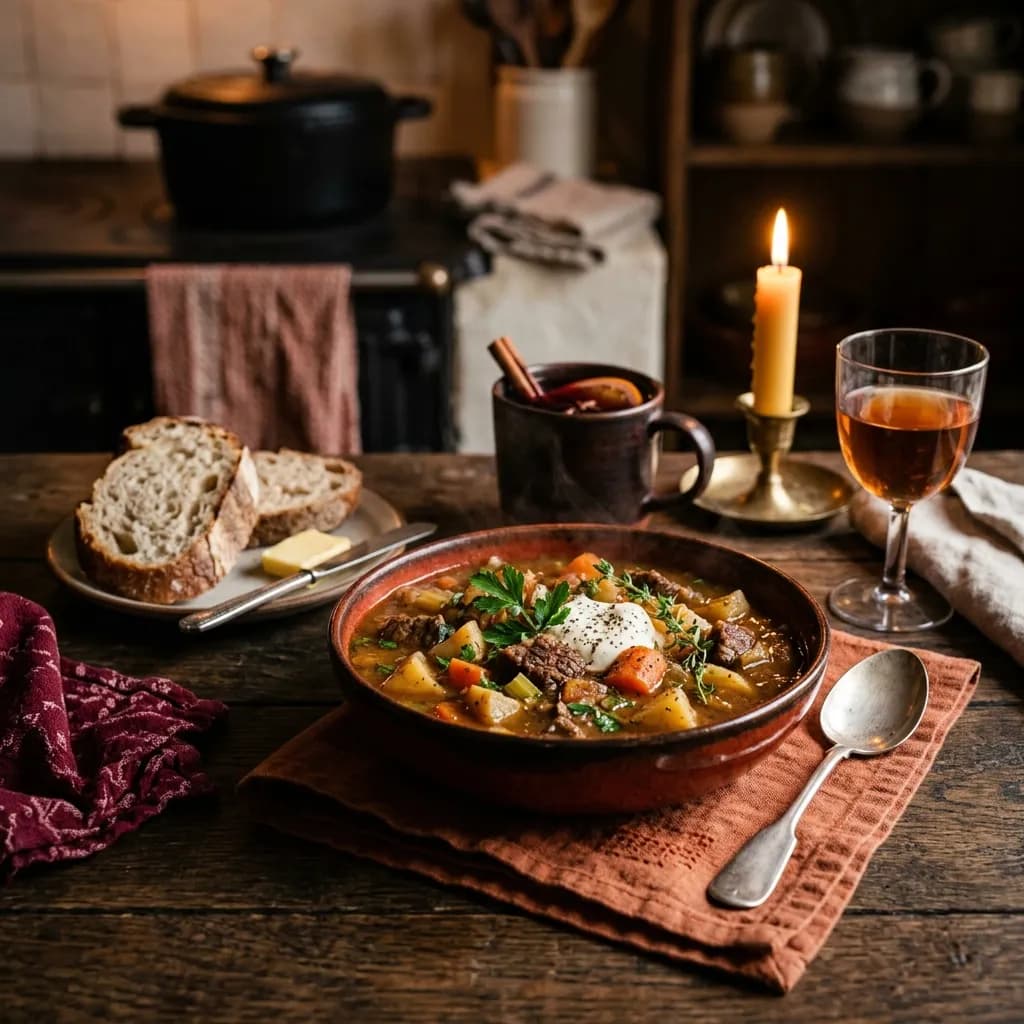
Slow-Braised Beef and Carrots
This healthy Slow-Braised Beef and Carrots recipe is a clean eating meal option rich in nutrients. Optimized for Gluten-Free, High-Protein, Muscle Maintenance, Beef, Carrots and created by certified nutritionist Stewart Lucas, it is designed to fit seamlessly into a health-focused lifestyle.
Key Takeaways
- ✓Ready in just 180 mins using straightforward, kitchen-tested technique.
- ✓Delivers 42g of muscle-fueling protein per serving for lasting satiety.
- ✓Portion-balanced at 450 calories per serving with wholesome, unrefined ingredients.
- ✓Masterclass temperature checkpoints ensure maximum tenderness and flavor development.
The Story
This healthy Slow-Braised Beef and Carrots recipe is a clean eating meal option rich in nutrients. Optimized for Gluten-Free, High-Protein, Muscle Maintenance, Beef, Carrots and created by certified nutritionist Stewart Lucas, it is designed to fit seamlessly into a health-focused lifestyle.
Quick Summary
There is something grounding about a pot of slow-braised beef. It is the ultimate comfort meal that balances high-quality protein with the gentle, earthy sweetness of roasted carrots. This recipe relies on patience rather than complexity, turning tough, budget-friendly cuts into melt-in-your-mouth goodness. Perfect for meal prep or a Sunday evening reset, this dish delivers consistent nutrition without the fuss.
The Art of the Slow Braise
If you have ever walked into a kitchen and been greeted by the deep, savory aroma of beef simmering in a rich broth, you know exactly why I love this dish. A slow braise is essentially a masterclass in transformation. We take beef chuck—a hardworking, muscular cut—and give it the time it needs to relax. As the heat stays low and steady, the collagen within the meat slowly melts into gelatin, creating a texture that is impossibly tender.
The carrots act as a bridge here. They release their natural sugars into the broth, which cuts through the richness of the beef. It is a harmonious marriage of flavors. Unlike high-heat cooking which can quickly turn meat rubbery, this method keeps the protein moist and makes the entire dish easily digestible. It is nourishment in its simplest, most effective form.
Ingredients
Quality matters when you are working with so few ingredients. Aim for grass-fed beef if your budget allows for it, as it offers a superior nutrient profile.
- 2 lbs Beef chuck, cut into 1.5-inch cubes
- 1 lb Fresh carrots, peeled and cut into thick, rustic chunks
- 1 Large yellow onion, finely diced
- 3 Cloves garlic, crushed and minced
- 2 tbsp High-quality olive oil (or avocado oil for higher heat)
- 2 cups Beef bone broth (look for low sodium to control your seasoning)
- 1 tbsp Tomato paste (adds depth and a subtle acidity)
- 1 tsp Dried thyme (or fresh sprigs if you have them)
- Sea salt and freshly cracked black pepper to taste
- Fresh parsley, finely chopped, for that final burst of color
The Method
- The Sear: Pat the beef cubes dry with a paper towel—moisture is the enemy of a good crust. Heat your oil in a heavy-bottomed Dutch oven until it shimmers. Working in small batches, place the beef in the pan. Listen for that aggressive, satisfying sizzle. You are looking for a deep, dark brown crust on every side. This is where the flavor lives.
- The Aromatics: Remove the beef and lower the heat. Add your onions to the pot, scraping up those browned bits—the "fond"—from the bottom. Once the onions turn translucent and smell sweet, stir in the garlic and tomato paste. Let the paste darken slightly until it smells toasted.
- The Long Simmer: Return the beef to the pot. Pour in your bone broth until the meat is just covered. Sprinkle in the thyme. Bring the liquid to a very gentle bubble, then turn the heat to the lowest setting and cover. Let it sit quietly for about 2.5 hours.
- The Finish: Slide the carrots into the pot. They only need about 30 to 40 minutes to become tender but still hold their shape. Once they are fork-tender and the beef pulls apart with the slightest pressure, you are ready to serve.
Never rush the searing phase. If the beef sticks to the pan, let it be. It will naturally release once the crust has properly formed. Also, avoid boiling the liquid. If you see big, rolling bubbles, your heat is too high. A "lazy simmer"—just a few tiny bubbles surfacing occasionally—is the secret to keeping the meat succulent rather than stringy.
Nutritional Science & Benefits
This dish is a nutritional powerhouse designed to support muscle repair and gut health.
- Beef Chuck: A fantastic source of complete protein, zinc, and B12, essential for energy metabolism and immune function.
- Bone Broth: Rich in amino acids like glycine and proline, which support connective tissue health and gut lining integrity.
- Carrots: Loaded with beta-carotene, which your body converts to Vitamin A, crucial for eye health and immune regulation.
| Nutrient | Amount per Serving |
|---|---|
| Calories | 450 kcal |
| Protein | 42g |
| Fat | 22g |
| Carbohydrates | 18g |
Storage and Prep
Braised dishes almost always taste better the next day. As it sits in the fridge, the flavors have a chance to marry and deepen. You can store this in an airtight container for up to 4 days.
If you want to freeze it, let it cool completely before portioning it out. It will keep for up to 3 months. To reheat, thaw it in the refrigerator overnight and warm it gently on the stovetop. If the sauce has thickened too much, a splash of water or extra bone broth will bring it back to a silky consistency.
Flavor Variations
Feel free to make this recipe your own based on what is in your pantry:
The Root Blend
Swap half the carrots for parsnips or celery root for a more complex, earthy profile.
Aromatic Kick
Add a splash of red wine during the deglazing step (after onions, before broth) for a sophisticated, acidic balance.
Protein Swap
You can use lamb shoulder instead of beef; it braises beautifully and pairs perfectly with the sweetness of the carrots.
Low-Carb Boost
If you are looking to increase fiber, add a handful of kale or chard in the final 5 minutes of cooking.
Slow-Braised Beef and Carrots
This healthy Slow-Braised Beef and Carrots recipe is a clean eating meal option rich in nutrients. Optimized for Gluten-Free, High-Protein, Muscle Maintenance, Beef, Carrots and created by certified nutritionist Stewart Lucas, it is designed to fit seamlessly into a health-focused lifestyle.
Macro Nutrition Profile (Per Serving)
Ingredients
Ingredient Substitutions
| Original Ingredient | Healthy Alternative |
|---|---|
| Animal protein | Firm tofu, tempeh, or organic chickpeas |
| Cooking fat | Extra virgin olive oil or grass-fed butter |
Instructions
The Sear: Pat the beef cubes dry with a paper towel—moisture is the enemy of a good crust. Heat your oil in a heavy-bottomed Dutch oven until it shimmers. Working in small batches, place the beef in the pan. Listen for that aggressive, satisfying sizzle. You are looking for a deep, dark brown crust on every side. This is where the flavor lives.
The Aromatics: Remove the beef and lower the heat. Add your onions to the pot, scraping up those browned bits—the "fond"—from the bottom. Once the onions turn translucent and smell sweet, stir in the garlic and tomato paste. Let the paste darken slightly until it smells toasted.
The Long Simmer: Return the beef to the pot. Pour in your bone broth until the meat is just covered. Sprinkle in the thyme. Bring the liquid to a very gentle bubble, then turn the heat to the lowest setting and cover. Let it sit quietly for about 2.5 hours.
The Finish: Slide the carrots into the pot. They only need about 30 to 40 minutes to become tender but still hold their shape. Once they are fork-tender and the beef pulls apart with the slightest pressure, you are ready to serve.
Tried this recipe?
Let us know how it turned out! Click a star below to leave a review and rate the recipe.
Storage & Freezing Tips
- Refrigerator: Store leftovers in an airtight container for up to 3-4 days.
- Reheating: Heat in a saucepan or skillet on medium heat until hot throughout.
- Freezing: Freeze portions in airtight containers for up to 2 months. Reheat directly from frozen or after thawing.
Frequently Asked Questions
Can I make this in a slow cooker?▼
Absolutely. Follow the searing and aromatic steps in a skillet first, then transfer everything to your slow cooker. Add the broth and cook on low for 6 to 8 hours. Add the carrots during the final 90 minutes so they don't turn into mush.
Why is my beef still tough after 2.5 hours?▼
Every cut of meat is different. If the beef is still resistant, it simply needs more time. Keep the lid on, maintain that low simmer, and check it again every 30 minutes. It will eventually yield.
Is it necessary to remove the fat before serving?▼
While some fat is essential for flavor, you might notice a layer of solidified fat on top if you refrigerate the leftovers. You can easily scrape this off before reheating if you prefer a leaner result.
Can I use a different cut of beef?▼
Stick to cuts with plenty of connective tissue, like brisket or short ribs. Avoid lean cuts like sirloin or eye of round; they will become dry and tough when subjected to this long cooking process.
Tried this recipe?
Tag @stewartlucas on Instagram and hashtag it #nutriguide!
You Might Also Like

Stewart Lucas
Nutritionist & Recipe DeveloperStewart Lucas is a nutritionist and recipe developer representing the NutriGuide team. All recipes, nutritional values, and diet protocols published on this site are designed and audited by certified dietitians and clinical nutrition professionals to guarantee absolute accuracy.
Community Reviews
Please log in to leave a review.