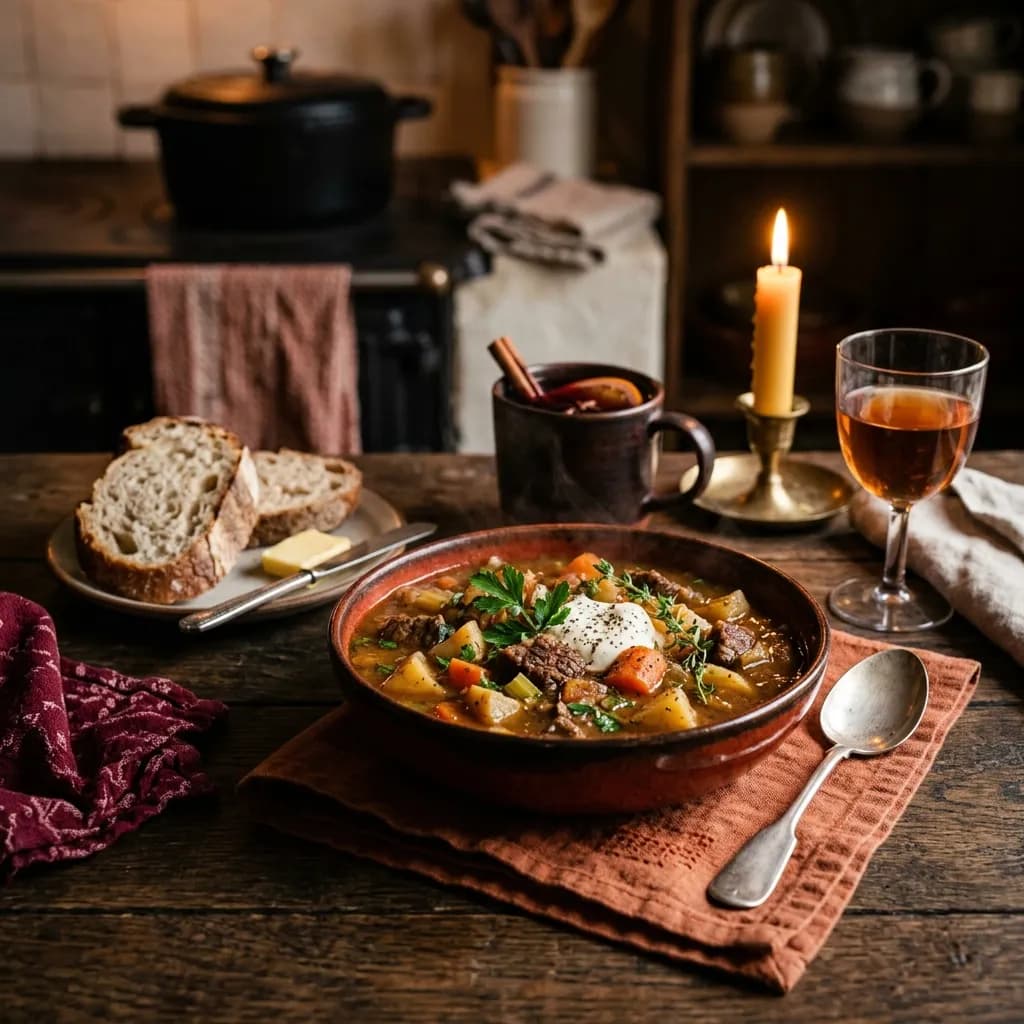
Slow-Cooked Beef and Sweet Potato Stew
This healthy Slow-Cooked Beef and Sweet Potato Stew recipe is a clean eating meal option rich in nutrients. Optimized for non-veg, dinner, Gluten-Free, Anti-Inflammatory, Muscle Maintenance and created by certified nutritionist Stewart Lucas, it is designed to fit seamlessly into a health-focused lifestyle.
Key Takeaways
- ✓Ready in just 120 mins using straightforward, kitchen-tested technique.
- ✓Delivers 35g of muscle-fueling protein per serving for lasting satiety.
- ✓Portion-balanced at 450 calories per serving with wholesome, unrefined ingredients.
- ✓Masterclass temperature checkpoints ensure maximum tenderness and flavor development.
The Story
This healthy Slow-Cooked Beef and Sweet Potato Stew recipe is a clean eating meal option rich in nutrients. Optimized for non-veg, dinner, Gluten-Free, Anti-Inflammatory, Muscle Maintenance and created by certified nutritionist Stewart Lucas, it is designed to fit seamlessly into a health-focused lifestyle.
Slow-Cooked Beef and Sweet Potato Stew
There is something grounding about a simmering pot of stew on the stovetop. When the air outside turns crisp, I often find myself pulling out my heavy-bottomed Dutch oven. The kitchen begins to fill with the savory, deep aroma of browning meat—a scent that signals the start of something truly restorative.
This Slow-Cooked Beef and Sweet Potato Stew has become a staple in my rotation. It isn’t just about comfort; it is about building a meal that balances protein-rich, collagen-building beef with the complex carbohydrates of sweet potatoes. The result is a balanced, one-pot wonder that minimizes cleanup and maximizes flavor.
The Ingredients
Quality matters here. Because this is a simple, rustic dish, the ingredients have nowhere to hide. Choose a good, well-marbled piece of beef chuck; the fat will render down slowly, creating a luxurious mouthfeel that lean cuts simply cannot replicate.
- 800g Beef chuck, cut into 1.5-inch cubes
- 2 Large sweet potatoes, peeled and cut into uniform chunks
- 1 Large yellow onion, finely diced
- 3 Cloves of garlic, minced
- 500ml Beef bone broth (look for high-quality, grass-fed options)
- 2 tbsp Tomato paste
- 1 tsp Dried thyme
- 2 tbsp Extra virgin olive oil
- Sea salt and freshly cracked black pepper to taste
The Nutritional Science
Beef chuck is an excellent source of zinc, iron, and B12—essential for energy metabolism. When combined with sweet potatoes, you are pairing that protein with beta-carotene and fiber, which helps steady your blood sugar response. Using bone broth adds a layer of glycine and amino acids, which are fantastic for supporting gut health.
Preparation Method
- The Sear: Heat your oil in a heavy pot over medium-high heat. Pat your beef dry with a paper towel—this is crucial for a crust. When the pan sizzles aggressively, add the beef in batches. Do not crowd the pan. You want a dark, caramelized brown on every side. This crust is where the flavor lives. Set the meat aside.
- The Aromatics: Lower the heat slightly. Throw the onions into the same pot, scraping up those brown bits (the fond) from the bottom. Sauté until the onions are translucent and soft. Add the garlic and stir for thirty seconds until the kitchen smells incredible.
- Building the Foundation: Stir in the tomato paste and thyme. Let the paste darken slightly—this removes the metallic edge and turns it into a deep, savory jam.
- The Slow Simmer: Add the beef back into the pot. Pour in your bone broth until the meat is just covered. Bring to a gentle boil, then turn the heat to the lowest setting. Cover and let it whisper along for 90 minutes.
- The Finish: Gently add your sweet potato cubes. They need less time than the meat. Simmer for another 30 minutes, or until the potatoes are tender enough to pierce with a fork and the beef practically falls apart when touched.
Stewart's Culinary Coaching Tip
If you find the sauce is too thin at the end, simply remove a few cubes of sweet potato and mash them directly into the broth. The natural starches act as a clean, healthy thickening agent, giving your stew a silky, professional finish without needing flour or cornstarch.
Flavor Variations
Cooking is a conversation, not a set of rigid rules. Here are a few ways to tweak this to your needs:
Low-Carb Swap
If you are looking to reduce your carbohydrate load, substitute the sweet potatoes with chunks of celery root or daikon radish. They absorb the stew's flavors beautifully.
The Earthy Twist
Add a handful of sliced cremini mushrooms during the last 20 minutes of cooking for an extra hit of umami.
Herbal Brightness
Just before serving, fold in a handful of fresh flat-leaf parsley or even a bit of rosemary to cut through the richness of the beef.
Meal Prep & Storage
This dish is a "cook once, eat twice" champion. To store, let the stew cool completely before moving it to glass airtight containers. It stays perfect in the fridge for up to four days. If you're freezing it, leave an inch of headspace in your container, as the liquid will expand. Reheat it slowly on the stovetop over low heat with a splash of water to loosen the sauce back up.
Important Note
Avoid over-boiling the stew once the potatoes are added. Rapid boiling can cause the sweet potatoes to disintegrate into mush, turning your stew into a puree. Keep it at a steady, gentle simmer.
Nutrition Snapshot
| Component | Amount Per Serving |
|---|---|
| Calories | 450 kcal |
| Protein | 35g |
| Fat | 18g |
| Carbohydrates | 38g |
Slow-Cooked Beef and Sweet Potato Stew
This healthy Slow-Cooked Beef and Sweet Potato Stew recipe is a clean eating meal option rich in nutrients. Optimized for non-veg, dinner, Gluten-Free, Anti-Inflammatory, Muscle Maintenance and created by certified nutritionist Stewart Lucas, it is designed to fit seamlessly into a health-focused lifestyle.
Macro Nutrition Profile (Per Serving)
Ingredients
Ingredient Substitutions
| Original Ingredient | Healthy Alternative |
|---|---|
| Animal protein | Firm tofu, tempeh, or organic chickpeas |
| Cooking fat | Extra virgin olive oil or grass-fed butter |
Instructions
The Sear: Heat your oil in a heavy pot over medium-high heat. Pat your beef dry with a paper towel—this is crucial for a crust. When the pan sizzles aggressively, add the beef in batches. Do not crowd the pan. You want a dark, caramelized brown on every side. This crust is where the flavor lives. Set the meat aside.
The Aromatics: Lower the heat slightly. Throw the onions into the same pot, scraping up those brown bits (the fond) from the bottom. Sauté until the onions are translucent and soft. Add the garlic and stir for thirty seconds until the kitchen smells incredible.
Building the Foundation: Stir in the tomato paste and thyme. Let the paste darken slightly—this removes the metallic edge and turns it into a deep, savory jam.
The Slow Simmer: Add the beef back into the pot. Pour in your bone broth until the meat is just covered. Bring to a gentle boil, then turn the heat to the lowest setting. Cover and let it whisper along for 90 minutes.
The Finish: Gently add your sweet potato cubes. They need less time than the meat. Simmer for another 30 minutes, or until the potatoes are tender enough to pierce with a fork and the beef practically falls apart when touched.
Tried this recipe?
Let us know how it turned out! Click a star below to leave a review and rate the recipe.
Storage & Freezing Tips
- Refrigerator: Store leftovers in an airtight container for up to 3-4 days.
- Reheating: Heat in a saucepan or skillet on medium heat until hot throughout.
- Freezing: Freeze portions in airtight containers for up to 2 months. Reheat directly from frozen or after thawing.
Frequently Asked Questions
Can I use a slow cooker for this?▼
Absolutely. Follow the searing steps in a skillet first to build flavor, then transfer everything into your slow cooker. Set it on low for 6 to 8 hours. It is a fantastic way to handle the cooking while you are away during the day.
Is this recipe gluten-free?▼
Yes, this is naturally gluten-free. Just ensure the beef bone broth you purchase is certified gluten-free, as some commercial brands include thickeners or additives that may contain wheat.
Why is my meat still tough?▼
Tough meat in a stew usually means it hasn't cooked long enough. Beef chuck is full of connective tissue that needs time to break down into gelatin. If it feels chewy after 90 minutes, keep it on low for another 30—the transformation will happen, I promise.
Can I use lean beef instead of chuck?▼
I recommend sticking with the chuck. Lean cuts often become dry and stringy during long-simmering processes. If you prefer a leaner meal, consider trimming the visible fat after cooking rather than starting with a lean cut like sirloin.
Tried this recipe?
Tag @stewartlucas on Instagram and hashtag it #nutriguide!
You Might Also Like

Stewart Lucas
Nutritionist & Recipe DeveloperStewart Lucas is a nutritionist and recipe developer representing the NutriGuide team. All recipes, nutritional values, and diet protocols published on this site are designed and audited by certified dietitians and clinical nutrition professionals to guarantee absolute accuracy.
Community Reviews
Please log in to leave a review.