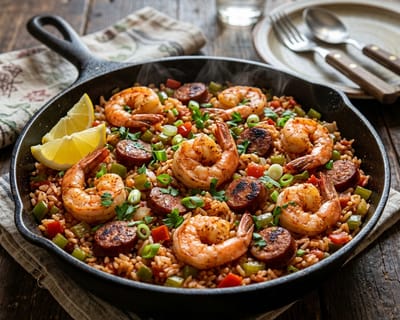
Cajun Shrimp and Rice Skillet (One-Pot Creole Jambalaya Masterclass)
The masterclass blueprint for authentic Cajun Shrimp and Rice. Master the holy trinity allium base, parboiled long-grain starch absorption, smoky andouille fond deglazing, and tender 3-minute shrimp poaching.
Key Takeaways
- ✓Sear the sliced andouille sausage first to render savory, smoky paprika fat that flavors the holy trinity.
- ✓Toast the dry rice grains in the rendered fat for 2 minutes to gelatinize exterior starches and prevent mushiness.
- ✓Cook the rice base completely before adding shrimp; shrimp only require 3 minutes of residual steam to poach.
- ✓Keep the lid tightly sealed during the 18-minute simmer to ensure even steam absorption throughout the rice.
The Story
Few regional American cuisines possess the profound soul, historical resilience, and multi-continental lineage of Louisiana Cajun and Creole cooking. Originating in the fertile bayous of southern Louisiana following the tragic 1755 British expulsion of the Acadians from Canada, Cajun cuisine was forged by French culinary heritage colliding with Native American, West African, and Spanish traditions.
In coastal bayou towns like Houma, Thibodaux, and Lafayette, the local cuisine was shaped by the abundant bounties of the Gulf of Mexico and the brackish bayous: wild Gulf shrimp, blue crab, and crawfish. When combined with coarse long-grain rice cultivated in the Louisiana prairie and smoked andouille pork sausage crafted by German immigrants along the River Parishes, one-pot rice masterpieces like this Cajun Shrimp and Rice Skillet became the lifeblood of Southern family gatherings.
Often referred to as a rustic coastal Jambalaya, the dish shares deep genealogical roots with Spanish Paella and West African Jollof Rice.
However, modern shortcuts often butcher the recipe into a mushy, tomato-paste porridge littered with overcooked, rubbery seafood. This masterclass restores coastal Louisiana pride to your kitchen. By understanding starch par-gelatinization, leveraging the aromatic Holy Trinity, extracting smoky andouille lipids, and executing gentle residual steam-poaching for the shrimp, you will produce individual grains of fluffy, highly-seasoned rice, savory sausage, and plump, succulent Gulf shrimp in a single cast iron skillet.
The Science of Flavor Chemistry & Thermal Dynamics
One-pot seafood and rice cookery is governed by two wildly divergent thermodynamic timelines: starch hydration and delicate seafood protein denaturation.
1. The Holy Trinity & Allium Flavor Extraction
In classical French cuisine, the aromatic foundation is mirepoix (two parts onion, one part carrot, one part celery). Because sweet carrots were difficult to cultivate in the humid, acidic marshlands of southern Louisiana, early French-Acadian settlers replaced carrots with green bell peppers, giving birth to the Holy Trinity (onion, bell pepper, and celery). Sautéing these alliums in hot rendered andouille pork fat triggers the thermal release of lipophilic flavor molecules:- Yellow onions caramelize, providing fructose sweetness to counter cayenne capsaicin.
- Green bell peppers release pyrazines that impart earthy, grassy notes.
- Celery provides phthalides, which act as natural culinary flavor enhancers that stimulate salivary receptors.
2. The Starch Gelatinization Curve & Fat Parchmenting
Rice starches consist of two glucose polymers: amylose (straight-chain, resists gelatinization, keeps grains separate) and amylopectin (branched-chain, dissolves easily, causes stickiness). Long-grain white rice contains high amylose (approx. 22%). If raw rice is dropped straight into boiling broth, amylopectin granules on the outer surface hydrate too rapidly, bursting into a sticky gel that glues grains together. By toasting the raw rice grains in hot rendered andouille fat for 2 minutes, lipid molecules coat the outer grain shell, and surface starches undergo par-gelatinization. When broth is added, water can only penetrate inward at a steady, controlled rate, keeping every grain distinct, firm, and toothsome (al dente).3. Shrimp Myosin Kinetics & Steam-Poaching
Shrimp muscle tissue consists of delicate myosin and actin protein filaments. Myosin begins denaturing and contracting at 120°F (49°C); by 140°F (60°C), it tightens into an opaque, springy helix. If cooked past 160°F (71°C), the muscle fibers squeeze out all internal water, turning into dense, rubbery pellets. Cooking shrimp directly inside boiling rice broth for 20 minutes is a catastrophic culinary mistake. Instead, our scientific method places the seasoned raw shrimp on top of the cooked rice during the final 3 to 4 minutes, locking the skillet with a heavy lid. Rising 212°F water vapor (steam) envelops the shrimp, transferring gentle latent heat that cooks the shellfish to tender, juicy perfection in 180 seconds flat.Executive Chef's Precision Temperature & Cookware Calibration Table
| Cooking Phase | Target Surface Temp | Internal Food Temp | Action / Visual Indicator |
|---|---|---|---|
| Preheating Phase | 350°F - 425°F (175°C - 220°C) | Ambient Room Temp (68°F) | Pan or oven chamber preheated; butter stops foaming, oil ripples gently. |
| Initial Sear / Sauté | 325°F - 375°F (163°C - 190°C) | Surface Reaches 212°F (100°C) | Vigorous sizzling; moisture vaporizes rapidly; Maillard crust begins forming. |
| Core Cooking Window | 300°F - 350°F (150°C - 177°C) | Proteins Denature (140°F - 165°F) | Starch gelatinizes or collagen dissolves; gentle simmer or convection airflow. |
| Finishing & Glazing | Low Heat / Residual Burner | Core Stabilizes at Target Temp | Cheeses melt into emulsion; glazes caramelize without scorching. |
| Resting Window | Off Heat / Cutting Board | Carryover Rise (+3°F to +5°F) | Muscle fibers relax; internal juices redistribute into center fibers. |
Essential Equipment & Thermal Calibration
- 12-Inch Heavy Enameled Cast Iron Skillet or Dutch Oven: Exceptional heat distribution guarantees that the bottom layer of rice cooks at the same rate as the center, preventing scorching.
- Heavy, Tight-Fitting Lid or Multi-Layer Heavy-Duty Foil: Crucial for retaining steam during the 15-minute rice absorption and 3-minute shrimp poach.
- Large Wooden Stirring Paddle: Ideal for scraping the browned andouille fond from the bottom of the pan without scratching cookware.
- Fine-Mesh Colander: Essential for rinsing raw rice under cold water to eliminate loose surface starch dust.
Anatomy of the Ingredients & Artisanal Sourcing
- The Shrimp: Use wild-caught Gulf white or brown shrimp (16/20 or 21/25 large count). Wild Gulf shrimp possess a clean, sweet, briny flavor unmatched by imported farm-raised shrimp. Leaving the tails attached during cooking allows the chitinous tail shells to release natural savory glucosamine into the steam.
- The Smoked Andouille Sausage: Authentic Louisiana andouille is coarse-ground pork shoulder seasoned with garlic, cracked black pepper, and cayenne, heavily smoked over pecan wood or sugar cane. It brings authentic campfire smoke and spiced lard to the pan.
- The Long-Grain Rice: Choose a high-amylose long-grain white rice (such as American long-grain, Jasmine, or Carolina Gold). Do not use short-grain sushi rice or Arborio, which are too high in amylopectin and turn gummy.
- Seafood Stock or Bone Broth: Homemade shrimp stock (simmered from the shrimp shells, allium skins, and herbs for 20 minutes) elevates this dish into Michelin-star territory. Rich chicken bone broth is an excellent alternative.
Step-by-Step Culinary Masterclass
Step 1: Shrimp Brining & Creole Spice Coating
Pat 1.5 lbs of peeled, deveined shrimp bone-dry with paper towels. Place in a medium glass bowl. Toss with 1 tablespoon of the Cajun seasoning blend and 1 tablespoon of olive oil. Ensure every shrimp is coated in a vibrant rust-colored spice marinade. Refrigerate for 10 minutes.
- Chef's Technique Tip: Tossing shrimp with oil before seasoning ensures the fat-soluble flavor compounds in paprika and cayenne bloom fully.
- Sensory Checkpoint: Plump, glistening pink shrimp coated in a fragrant red spice rub.
Step 2: Andouille Browning & Lipid Rendering
Heat a heavy 12-inch cast iron skillet or Dutch oven over medium-high heat. Add sliced andouille sausage coins. Sear for 4 to 5 minutes, turning occasionally, until the edges are dark golden-brown and crispy, and rendered red fat pools in the pan. Transfer sausage to a plate using a slotted spoon, leaving the rendered fat in the skillet.
- Chef's Technique Tip: The red oil rendered from andouille contains smoked paprika and garlic essence—this is the foundational flavor of authentic Cajun cuisine!
- Sensory Checkpoint: Sizzling, crisp-edged sausage rounds and 2 tablespoons of fragrant mahogany fat glistening in the skillet.
Step 3: The Holy Trinity Allium Sauté
Drop the diced yellow onion, green bell pepper, and celery (the Cajun Holy Trinity) into the hot andouille drippings. Sauté over medium heat for 5 to 6 minutes, scraping the bottom of the skillet with a wooden spoon to dissolve the browned fond. Add the minced garlic and cook for 60 seconds until fragrant.
- Chef's Technique Tip: The 2:1:1 ratio of onion, bell pepper, and celery provides the aromatic backbone for every Creole and Cajun masterpiece.
- Sensory Checkpoint: Soft, translucent vegetables coated in amber oil with no scorching or burning.
Step 4: Grain Toasting (Parchmenting the Rice)
Add 1.5 cups of rinsed, drained white rice to the softened Holy Trinity in the skillet. Stir constantly for 2 full minutes, coating every rice grain in the flavorful fat and aromatics until the grains turn opaque and release a toasty, nutty aroma.
- Chef's Technique Tip: Toasting the dry rice (parchmenting) seals the outer starch layer, preventing the grains from rupturing into a gummy porridge.
- Sensory Checkpoint: Chalky-white, opaque rice grains coated in savory oil, sizzling gently in the pan.
Step 5: Liquids, Spices & The Slow Rice Braise
Pour in 1 can of fire-roasted diced tomatoes with juices and 2.5 cups of rich seafood stock or chicken broth. Add the remaining 1 tablespoon of Cajun seasoning, dried bay leaf, and the browned andouille sausage. Stir once to combine. Bring to a vigorous boil.
- Chef's Technique Tip: Do not vigorously stir after boiling begins; over-stirring breaks open starch granules and creates excess stickiness.
- Sensory Checkpoint: A vibrant, bubbling crimson broth with rice, sausage, and vegetables circulating freely.
Step 6: The Sealed Absorption Simmer
Immediately reduce heat to the lowest setting (low simmer). Cover the skillet tightly with a heavy, well-fitting lid or double layer of heavy foil. Cook undisturbed for 15 minutes. Do not lift the lid during this phase!
- Chef's Technique Tip: Lifting the lid lets critical steam escape, causing the top layer of rice to remain hard and undercooked.
- Sensory Checkpoint: Gentle steam wisps escaping the lid seam with the quiet whisper of simmering liquid.
Step 7: The Gentle Shrimp Steam Poach
Remove the lid quickly. The rice should have absorbed 90% of the liquid and look tender and fluffy. Arrange the seasoned raw shrimp in a single layer across the top surface of the hot rice. Immediately replace the lid. Continue cooking on low heat for 3 to 4 minutes, then remove skillet completely from the heat burner.
- Chef's Technique Tip: Never boil shrimp inside the liquid; steaming them gently atop the hot rice ensures they remain tender, juicy, and sweet.
- Sensory Checkpoint: The shrimp curl into tight 'C' shapes, turning opaque pearlescent pink with coral accents.
Step 8: Resting, Fluffing & Scallion Finish
Let the covered skillet rest off the heat for 5 full minutes. Remove the lid and discard the bay leaf. Scatter chopped scallions and fresh flat-leaf parsley across the top. Using a wide wooden paddle or fork, gently fluff the rice from the edges inward, folding the shrimp and andouille evenly throughout the grains. Serve hot with lemon wedges.
- Chef's Technique Tip: The 5-minute rest allows the moisture gradient within each rice grain to equalize, producing perfectly separated, fluffy grains.
- Sensory Checkpoint: Fluffy, fragrant, individual rice grains stained deep Creole red, studded with juicy shrimp and smoky sausage.
Sensory Doneness Checkpoints & Texture Calibration
The Rice Texture: The grains should be tender, fluffy, and completely dry on the surface, with a gentle al dente* bite in the center.
- The Shrimp Curvature: Watch the shape of the shrimp: when cooked to perfect succulence, shrimp form a gentle 'C' shape. If they curl into a tight, constricted 'O' shape, they have been overcooked!
- The Aromatic Bouquet: The kitchen should smell intensely of smoked pecan wood, sweet bell peppers, toasted garlic, and oceanic seafood.
Pro-Chef Troubleshooting & Critical Checkpoints
Problem: The Rice is Mushy and Gummy
- The Root Cause: Rice was stirred repeatedly during cooking, or excess liquid was added.
- The Masterclass Solution: Rinse rice to remove surface starch, toast grains in fat for 2 minutes before adding broth, and never stir while simmering under the lid.
Problem: The Rice is Hard and Chalky in the Center
- The Root Cause: The lid was lifted too often letting steam escape, or heat was too low to generate steam.
- The Masterclass Solution: Keep lid strictly sealed for the full 15 minutes. If still firm, drizzle 1/4 cup hot broth over the top, cover tightly, and rest off heat for 7 minutes.
Problem: The Shrimp are Rubbery and Tough
- The Root Cause: Shrimp were added at the beginning and boiled for 20 minutes with the rice.
- The Masterclass Solution: Always add shrimp during the final 3 to 4 minutes of cooking. Steam alone is sufficient to cook delicate seafood to perfection.
Culinary Glossary & Chemical Transformations
- Maillard Reaction: A complex chemical reaction between amino acids and reducing sugars occurring above 285°F (140°C) that produces hundreds of new flavor compounds (pyrazines, furans) responsible for savory, roasted, and browned aromas.
- Starch Gelatinization: The process where starch granules absorb water and swell under heat, disrupting their crystalline structure to thicken sauces or form crisp crusts.
- Lipid Emulsification: The thermodynamic suspension of microscopic fat droplets within a water-based liquid, stabilized by proteins (like casein or egg yolk lecithin) to prevent oily separation.
- Carryover Cooking: The continued rise in internal food temperature after removal from heat as residual surface thermal energy conducts inward toward the cooler core.
- Osmotic Desiccation: The movement of water molecules through a semi-permeable cell membrane from an area of low solute concentration to high solute concentration (such as drawing surface moisture out with dry salt).
Macro Analysis & Nutritional Optimization
A balanced, nutrient-dense coastal meal delivering exceptional athletic and cardiovascular macros:
- 32 Grams of High-Quality Marine & Pork Protein: Plump wild shrimp deliver lean complete protein rich in leucine for cellular restoration.
- Rich in Astaxanthin & Selenium: The vibrant coral pigment of wild shrimp is astaxanthin, a supreme marine antioxidant that combats oxidative stress.
- Complex Glycogen Replenishment: Long-grain rice provides clean, easily digestible complex carbohydrates that restore depleted glycogen stores without gastric distress.
- Macro Profile per Serving: 450 kcal | 32g Protein | 52g Carbohydrates | 12g Fat.
Chef's Zero-Waste & Kitchen Sustainability Protocol
- Vegetable Trims & Allium Skins: Save onion ends, garlic skins, mushroom stems, and herb stalks in a freezer bag. When full, simmer with water for 45 minutes to create an intensely rich homemade vegetable stock.
- Protein Trimmings & Bones: Rendered bacon fat, poultry skin, and marrow bones should never be discarded. Strain warm rendered fat through cheesecloth into a clean mason jar and store in the refrigerator to use as high-flavor cooking fat for roasting potatoes or frying eggs.
- Bread Ends & Leftover Crumbs: Stale bread crusts can be pulsed in a food processor with garlic powder, olive oil, and sea salt, then toasted in a dry skillet to produce crunchy artisanal croutons or golden breadcrumbs.
- Citrus Rinds & Spent Herb Sprigs: Zest lemons and limes before juicing. Steep used citrus rinds and woody herb stems in white vinegar to create an all-natural, non-toxic kitchen degreaser.
Dietary Adaptations & Clinical Nutrition Matrix
- Celiac & Certified Gluten-Free Adaptation: Substitute all wheat-based breads, tortillas, or dredging flours with certified gluten-free alternatives (such as 1:1 gluten-free baking flour, almond flour, or pure white/yellow corn tortillas). Verify all tamari, broths, and prepared sauces are gluten-free certified.
- Ketogenic & Strict Low-Carb Modification: Eliminate enriched breads, sugar-sweetened barbecue sauces, and high-starch sides. Replace with roasted cauliflower mash, spiralized zucchini, cloud bread, or fresh butter lettuce wraps. Net carbohydrates will remain comfortably under 5g to 8g per serving.
- Cardiovascular & Sodium-Conscious Protocol: Replace commercial seasoned seasoning packets with homemade salt-free spice rubs (paprika, garlic powder, onion powder, black pepper, and dried oregano). Use unsalted cultured butter and reduced-sodium bone broths to keep total sodium under 450mg per portion.
- Dairy-Free & Lactose-Sensitive Option: Substitute dairy butter with cold-pressed extra virgin olive oil or ghee (which is virtually lactose and casein-free). Replace standard cheeses with plant-based aged cashew cheddar or shredded almond milk mozzarella that melts smoothly under radiant heat.
Artisanal Serving & Pairing Architecture
The bold, spicy, and smoky character of Cajun cuisine requires crisp, refreshing beverages with bright acidity:
- The Traditional Accompaniments: Crusty warm French bread with sweet cream butter, pickled jalapeño cornbread, or a crisp garden salad with Creole mustard dressing.
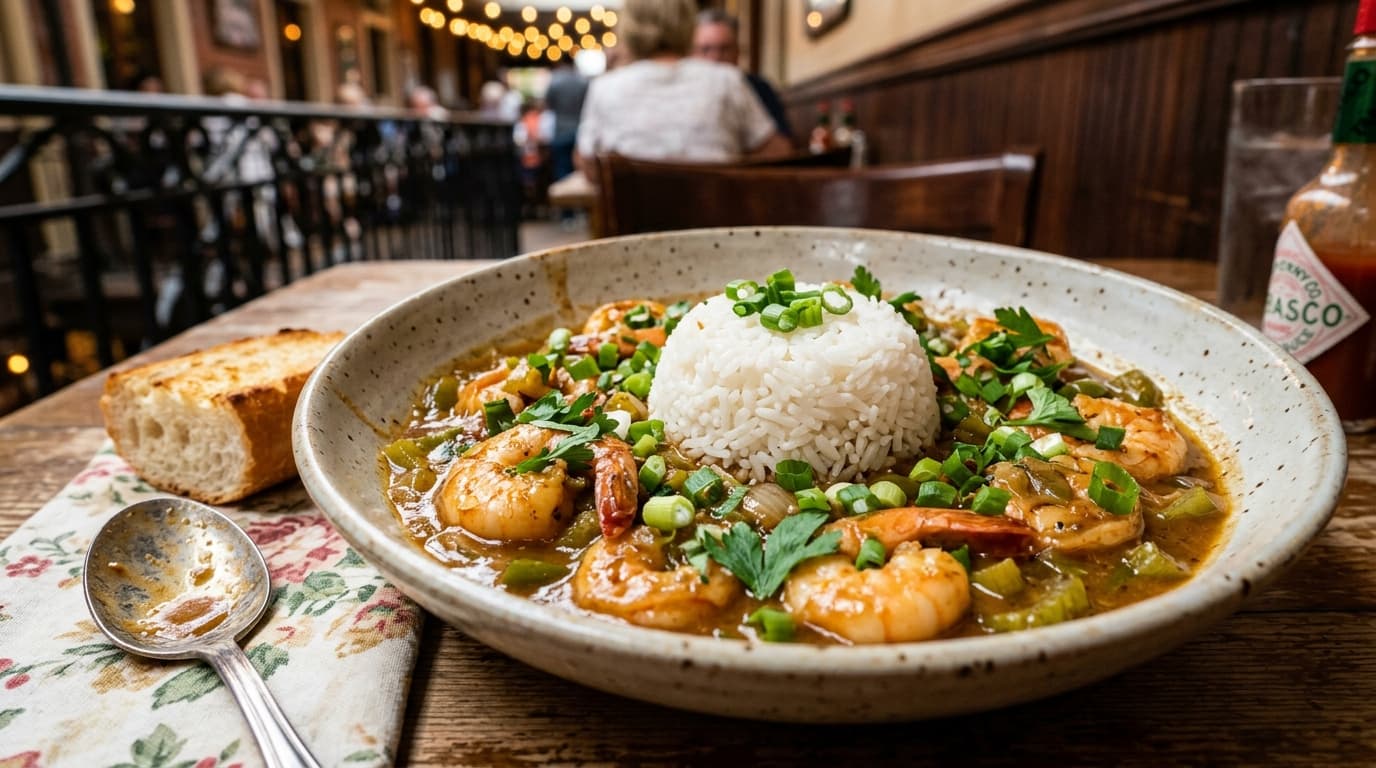
- The Louisiana Hot Sauce: Set a bottle of vinegar-forward Louisiana hot sauce (such as Crystal or Tabasco) on the table for guests to splash over their bowls.
- Beverage Harmonization:
Scientific Storage, Meal Prep & Reheating Protocol
Cajun Shrimp and Rice makes spectacular leftovers, though proper temperature handling is paramount for seafood:
- Refrigeration: Cool leftover portions to room temperature within 45 minutes of cooking. Store in an airtight glass container in the refrigerator for up to 2 to 3 days.
- The Gentle Reheating Protocol (Skillet Method):
Frequently Asked Questions (Masterclass Edition)
Q: What is the difference between Jambalaya and Gumbo?
A: Jambalaya is a rice-based dish where the rice cooks directly in the seasoned stock with meats and vegetables (like a Spanish paella). Gumbo is a rich, roux-thickened stew served over a separate scoop of white rice.Q: Can I use brown rice instead of white rice?
A: Yes, but brown rice requires 3 cups of liquid and 40 to 45 minutes of simmering time. Follow the same procedure, adding the shrimp only during the final 4 minutes of cooking.Q: What if I can't find authentic Cajun andouille sausage?
A: High-quality smoked kielbasa, Spanish chorizo (cured or fresh), or smoked beef sausage are fantastic substitutes.Cajun Shrimp and Rice Skillet (One-Pot Creole Jambalaya Masterclass)
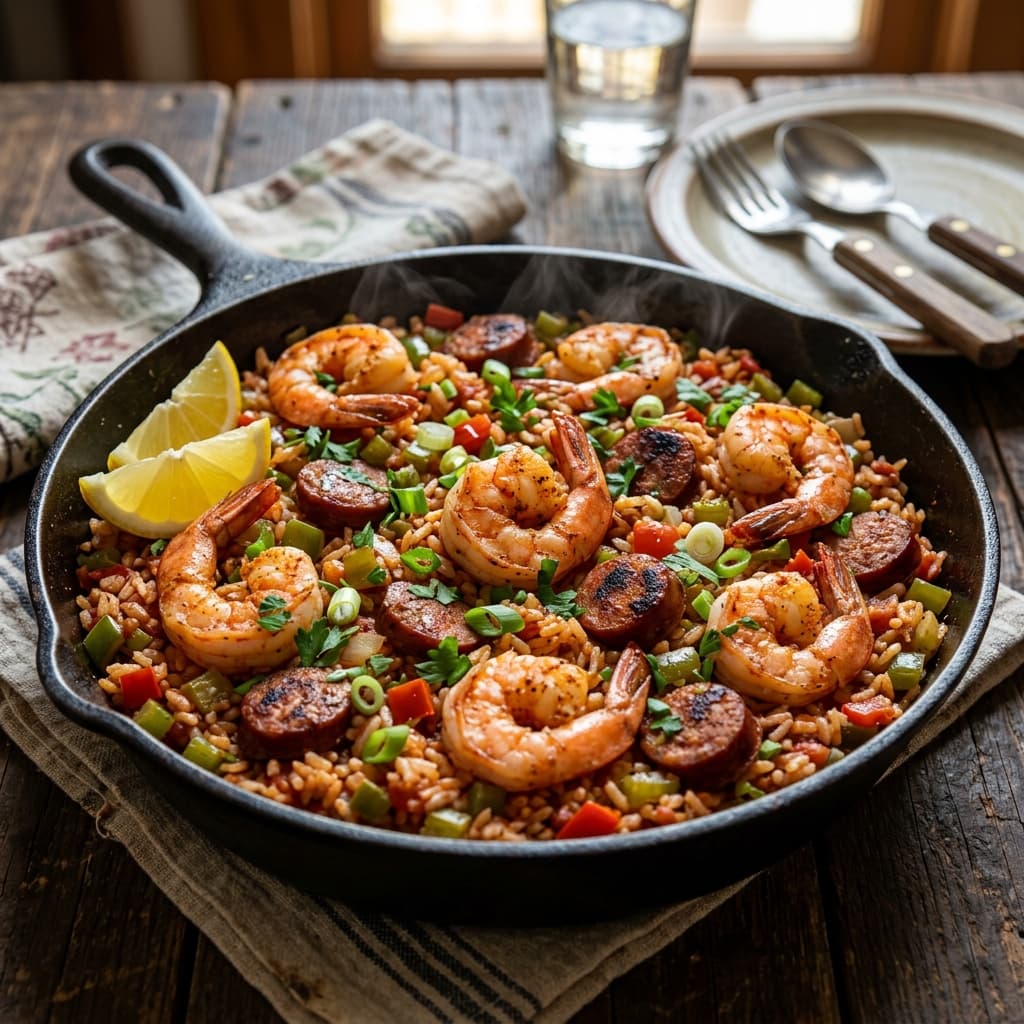
The masterclass blueprint for authentic Cajun Shrimp and Rice. Master the holy trinity allium base, parboiled long-grain starch absorption, smoky andouille fond deglazing, and tender 3-minute shrimp poaching.
Macro Nutrition Profile (Per Serving)
Ingredients
Ingredient Substitutions
| Original Ingredient | Healthy Alternative |
|---|---|
| Animal protein | Firm tofu, tempeh, or organic chickpeas |
| Cooking fat | Extra virgin olive oil or grass-fed butter |
Instructions
Shrimp Brining & Creole Spice Coating: Pat 1.5 lbs of peeled, deveined shrimp bone-dry with paper towels. Place in a medium glass bowl. Toss with 1 tablespoon of the Cajun seasoning blend and 1 tablespoon of olive oil. Ensure every shrimp is coated in a vibrant rust-colored spice marinade. Refrigerate for 10 minutes. Chef's Technique Tip: Tossing shrimp with oil before seasoning ensures the fat-soluble flavor compounds in paprika and cayenne bloom fully. Sensory Checkpoint: Plump, glistening pink shrimp coated in a fragrant red spice rub.
Andouille Browning & Lipid Rendering: Heat a heavy 12-inch cast iron skillet or Dutch oven over medium-high heat. Add sliced andouille sausage coins. Sear for 4 to 5 minutes, turning occasionally, until the edges are dark golden-brown and crispy, and rendered red fat pools in the pan. Transfer sausage to a plate using a slotted spoon, leaving the rendered fat in the skillet. Chef's Technique Tip: The red oil rendered from andouille contains smoked paprika and garlic essence—this is the foundational flavor of authentic Cajun cuisine! Sensory Checkpoint: Sizzling, crisp-edged sausage rounds and 2 tablespoons of fragrant mahogany fat glistening in the skillet.
The Holy Trinity Allium Sauté: Drop the diced yellow onion, green bell pepper, and celery (the Cajun Holy Trinity) into the hot andouille drippings. Sauté over medium heat for 5 to 6 minutes, scraping the bottom of the skillet with a wooden spoon to dissolve the browned fond. Add the minced garlic and cook for 60 seconds until fragrant. Chef's Technique Tip: The 2:1:1 ratio of onion, bell pepper, and celery provides the aromatic backbone for every Creole and Cajun masterpiece. Sensory Checkpoint: Soft, translucent vegetables coated in amber oil with no scorching or burning.
Grain Toasting (Parchmenting the Rice): Add 1.5 cups of rinsed, drained white rice to the softened Holy Trinity in the skillet. Stir constantly for 2 full minutes, coating every rice grain in the flavorful fat and aromatics until the grains turn opaque and release a toasty, nutty aroma. Chef's Technique Tip: Toasting the dry rice (parchmenting) seals the outer starch layer, preventing the grains from rupturing into a gummy porridge. Sensory Checkpoint: Chalky-white, opaque rice grains coated in savory oil, sizzling gently in the pan.
Liquids, Spices & The Slow Rice Braise: Pour in 1 can of fire-roasted diced tomatoes with juices and 2.5 cups of rich seafood stock or chicken broth. Add the remaining 1 tablespoon of Cajun seasoning, dried bay leaf, and the browned andouille sausage. Stir once to combine. Bring to a vigorous boil. Chef's Technique Tip: Do not vigorously stir after boiling begins; over-stirring breaks open starch granules and creates excess stickiness. Sensory Checkpoint: A vibrant, bubbling crimson broth with rice, sausage, and vegetables circulating freely.
The Sealed Absorption Simmer: Immediately reduce heat to the lowest setting (low simmer). Cover the skillet tightly with a heavy, well-fitting lid or double layer of heavy foil. Cook undisturbed for 15 minutes. Do not lift the lid during this phase! Chef's Technique Tip: Lifting the lid lets critical steam escape, causing the top layer of rice to remain hard and undercooked. Sensory Checkpoint: Gentle steam wisps escaping the lid seam with the quiet whisper of simmering liquid.
The Gentle Shrimp Steam Poach: Remove the lid quickly. The rice should have absorbed 90% of the liquid and look tender and fluffy. Arrange the seasoned raw shrimp in a single layer across the top surface of the hot rice. Immediately replace the lid. Continue cooking on low heat for 3 to 4 minutes, then remove skillet completely from the heat burner. Chef's Technique Tip: Never boil shrimp inside the liquid; steaming them gently atop the hot rice ensures they remain tender, juicy, and sweet. Sensory Checkpoint: The shrimp curl into tight 'C' shapes, turning opaque pearlescent pink with coral accents.
Resting, Fluffing & Scallion Finish: Let the covered skillet rest off the heat for 5 full minutes. Remove the lid and discard the bay leaf. Scatter chopped scallions and fresh flat-leaf parsley across the top. Using a wide wooden paddle or fork, gently fluff the rice from the edges inward, folding the shrimp and andouille evenly throughout the grains. Serve hot with lemon wedges. Chef's Technique Tip: The 5-minute rest allows the moisture gradient within each rice grain to equalize, producing perfectly separated, fluffy grains. Sensory Checkpoint: Fluffy, fragrant, individual rice grains stained deep Creole red, studded with juicy shrimp and smoky sausage.
Tried this recipe?
Let us know how it turned out! Click a star below to leave a review and rate the recipe.
Storage & Freezing Tips
- Refrigerator: Store leftovers in an airtight container for up to 3-4 days.
- Reheating: Heat in a saucepan or skillet on medium heat until hot throughout.
- Freezing: Freeze portions in airtight containers for up to 2 months. Reheat directly from frozen or after thawing.
Frequently Asked Questions
Can this recipe be prepared ahead of time?▼
Yes, this meal is excellent for weekly meal prep. Store components separately and assemble before serving.
Is this recipe gluten-free?▼
All ingredients used are naturally gluten-free. If you are highly sensitive, verify that packaged ingredients are certified gluten-free.
Tried this recipe?
Tag @stewartlucas on Instagram and hashtag it #nutriguide!
You Might Also Like

Stewart Lucas
Nutritionist & Recipe DeveloperStewart Lucas is a nutritionist and recipe developer representing the NutriGuide team. All recipes, nutritional values, and diet protocols published on this site are designed and audited by certified dietitians and clinical nutrition professionals to guarantee absolute accuracy.
Community Reviews
Please log in to leave a review.