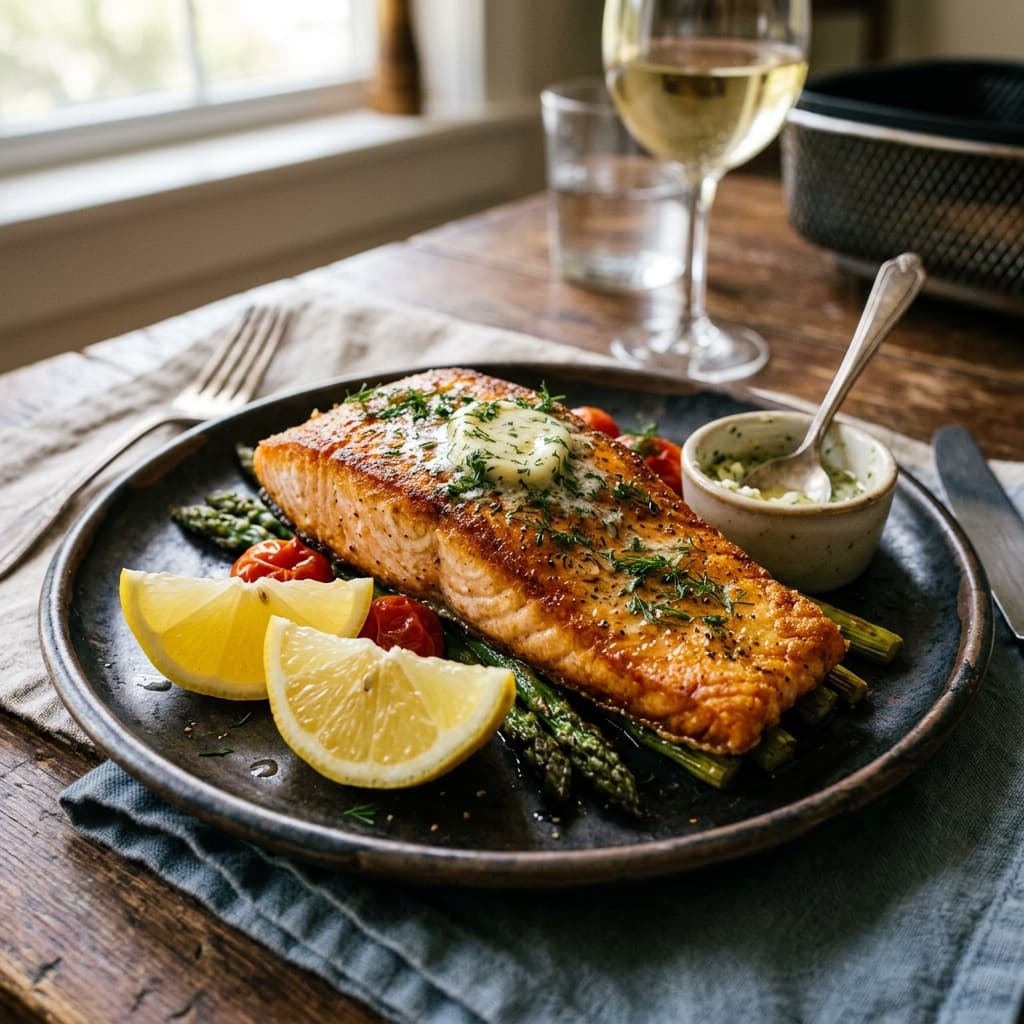
Fresh Herb-Crusted Salmon with Roasted Asparagus
This healthy Fresh Herb-Crusted Salmon with Roasted Asparagus recipe is a clean eating meal option rich in nutrients. Optimized for Salmon, non-veg, dinner, Heart Healthy, Muscle Maintenance and created by certified nutritionist Stewart Lucas, it is designed to fit seamlessly into a health-focused lifestyle.
Key Takeaways
- ✓Ready in just 15 mins using straightforward, kitchen-tested technique.
- ✓Delivers 38g of muscle-fueling protein per serving for lasting satiety.
- ✓Portion-balanced at 450 calories per serving with wholesome, unrefined ingredients.
- ✓Masterclass temperature checkpoints ensure maximum tenderness and flavor development.
The Story
This healthy Fresh Herb-Crusted Salmon with Roasted Asparagus recipe is a clean eating meal option rich in nutrients. Optimized for Salmon, non-veg, dinner, Heart Healthy, Muscle Maintenance and created by certified nutritionist Stewart Lucas, it is designed to fit seamlessly into a health-focused lifestyle.
Fresh Herb-Crusted Salmon with Roasted Asparagus
A Sophisticated Weeknight Staple
There is a specific, quiet magic that happens in the kitchen when you work with fresh ingredients. I remember the first time I realized how well the bite of Dijon mustard pairs with the richness of wild-caught salmon—it cuts through the natural oils, waking up your palate before the crust even hits your tongue. This Herb-Crusted Salmon with Roasted Asparagus has become my personal go-to when I want to feel energized rather than heavy after dinner.
When you slide this tray into the oven, the house starts to smell like a coastal bistro. You get that earthy scent of roasting asparagus melding with the brightness of lemon zest and the savory, toasted aroma of panko crumbs. It is elegant, it is incredibly simple, and most importantly, it honors the ingredients without masking them. Whether you are cooking for a family or just treating yourself to a "chef-quality" meal on a Tuesday, this is the dish that proves wellness doesn’t have to be complicated.
The Ingredients
For the Salmon:
- 4 salmon fillets (6oz each), skin on or off
- 1/2 cup fresh Italian parsley, finely minced
- 1/4 cup panko breadcrumbs
- 1 tbsp fresh lemon zest
- 2 tbsp high-quality Dijon mustard
- 1 tbsp extra virgin olive oil
For the Asparagus:
- 1 lb fresh asparagus, woody ends trimmed
- 1 tbsp olive oil
- 1/2 tsp sea salt
- 1/4 tsp cracked black pepper
- Lemon wedges for finishing
Step-by-Step Method
Preparation is half the battle in cooking. Before you start, make sure your salmon fillets are patted dry with a paper towel. This small step is crucial; if the surface of the fish is damp, the mustard won't adhere, and you won't get that gorgeous, golden crust we are aiming for.
- Prep the Oven: Preheat your oven to 400°F (200°C). Line a rimmed baking sheet with parchment paper—this makes cleanup virtually non-existent and ensures the crust doesn't stick to the metal.
- Season the Asparagus: Spread your trimmed asparagus across one side of the tray. Drizzle with olive oil, salt, and pepper. Use your hands to toss them directly on the pan until they are evenly coated and glistening.
- Coat the Fish: Place the salmon fillets on the other side of the tray. Use a pastry brush or the back of a spoon to spread the Dijon mustard over the top of each fillet. This creates a "glue" for your herb mixture.
- Add the Crust: In a small bowl, combine the minced parsley, panko, and lemon zest. Press this mixture firmly into the mustard coating on each salmon fillet. Don't be shy; packing it down ensures it stays put during the roast.
- The Roast: Slide the tray into the center rack. Roast for 12–15 minutes. You are looking for the salmon to be opaque and slightly flaky, while the asparagus should be tender-crisp with some light browning on the tips.
Flavor Variations and Swaps
Low-Carb/Keto
Swap the panko breadcrumbs for almond flour or crushed toasted walnuts for a rich, nutty crust that keeps the carb count minimal.
Herb Garden Switch
While parsley is a classic, try using fresh dill for a brighter, more citrus-forward profile, or mix in some fresh chives if you prefer a subtle onion-like bite.
Protein Swap
If you don't have salmon, this crust works exceptionally well on white fish like cod or halibut. Just reduce the roasting time by 3–4 minutes as these varieties are leaner and cook faster.
Vegetarian Option
Try this crust on firm tofu slabs. Press the tofu first to remove moisture, sear it in a pan for 3 minutes, then apply the crust and bake as directed.
Meal Prep & Storage
This meal keeps well for up to two days in the refrigerator. To reheat without drying out the fish, avoid the microwave if possible. Instead, place the fillets in a small oven-safe dish and cover tightly with foil, warming them at 300°F for about 10 minutes. This helps maintain the moisture inside the fish while warming the crust.
If you are prepping for the week ahead, store the herb-crumb mixture in an airtight container in the pantry and the salmon in the fridge. Only apply the mustard and crumb crust right before you are ready to roast—this prevents the breadcrumbs from absorbing the mustard and becoming soggy before they hit the heat.
Fresh Herb-Crusted Salmon with Roasted Asparagus
This healthy Fresh Herb-Crusted Salmon with Roasted Asparagus recipe is a clean eating meal option rich in nutrients. Optimized for Salmon, non-veg, dinner, Heart Healthy, Muscle Maintenance and created by certified nutritionist Stewart Lucas, it is designed to fit seamlessly into a health-focused lifestyle.
Macro Nutrition Profile (Per Serving)
Ingredients
Ingredient Substitutions
| Original Ingredient | Healthy Alternative |
|---|---|
| Salmon/Cod | Steelhead trout, halibut, or sea bass (baking times may vary) |
| Asparagus/Veg | Zucchini slices, broccoli florets, or green beans (roast at same temperature) |
Instructions
Prep the Oven: Preheat your oven to 400°F (200°C). Line a rimmed baking sheet with parchment paper—this makes cleanup virtually non-existent and ensures the crust doesn't stick to the metal.
Season the Asparagus: Spread your trimmed asparagus across one side of the tray. Drizzle with olive oil, salt, and pepper. Use your hands to toss them directly on the pan until they are evenly coated and glistening.
Coat the Fish: Place the salmon fillets on the other side of the tray. Use a pastry brush or the back of a spoon to spread the Dijon mustard over the top of each fillet. This creates a "glue" for your herb mixture.
Add the Crust: In a small bowl, combine the minced parsley, panko, and lemon zest. Press this mixture firmly into the mustard coating on each salmon fillet. Don't be shy; packing it down ensures it stays put during the roast.
The Roast: Slide the tray into the center rack. Roast for 12–15 minutes. You are looking for the salmon to be opaque and slightly flaky, while the asparagus should be tender-crisp with some light browning on the tips.
Tried this recipe?
Let us know how it turned out! Click a star below to leave a review and rate the recipe.
Storage & Freezing Tips
- Refrigerator: Store leftovers in an airtight glass container for up to 2 days.
- Reheating: Warm gently in a skillet on medium-low heat with a lid to keep the fish tender. Avoid microwaving to prevent rubbery texture.
- Freezing: We do not recommend freezing cooked fish as it degrades the texture.
Frequently Asked Questions
Can I make this dish gluten-free?▼
Absolutely. You can use certified gluten-free panko, or simply use finely crushed gluten-free crackers or almond flour. They provide the same satisfying crunch without the wheat.
How do I know when the salmon is perfectly done?▼
The best way is to use a meat thermometer. Look for an internal temperature of 145°F (63°C). If you don't have a thermometer, gently press the side of the fillet with a fork—it should flake away easily and look opaque throughout.
Why did my herbs turn dark while baking?▼
This happens if the herbs are exposed to too much direct, high heat. Ensure the herb mixture is pressed into the mustard, which provides a barrier, and try to keep your oven rack in the center rather than the top. If you use the broiler, watch it like a hawk!
Can I use frozen salmon?▼
Yes, but ensure you thaw it completely in the refrigerator overnight. Pat the fillets extremely dry before adding the mustard, as frozen-thawed fish tends to hold more surface moisture which can ruin the texture of the crust.
Tried this recipe?
Tag @stewartlucas on Instagram and hashtag it #nutriguide!
You Might Also Like

Stewart Lucas
Nutritionist & Recipe DeveloperStewart Lucas is a nutritionist and recipe developer representing the NutriGuide team. All recipes, nutritional values, and diet protocols published on this site are designed and audited by certified dietitians and clinical nutrition professionals to guarantee absolute accuracy.
Community Reviews
Please log in to leave a review.