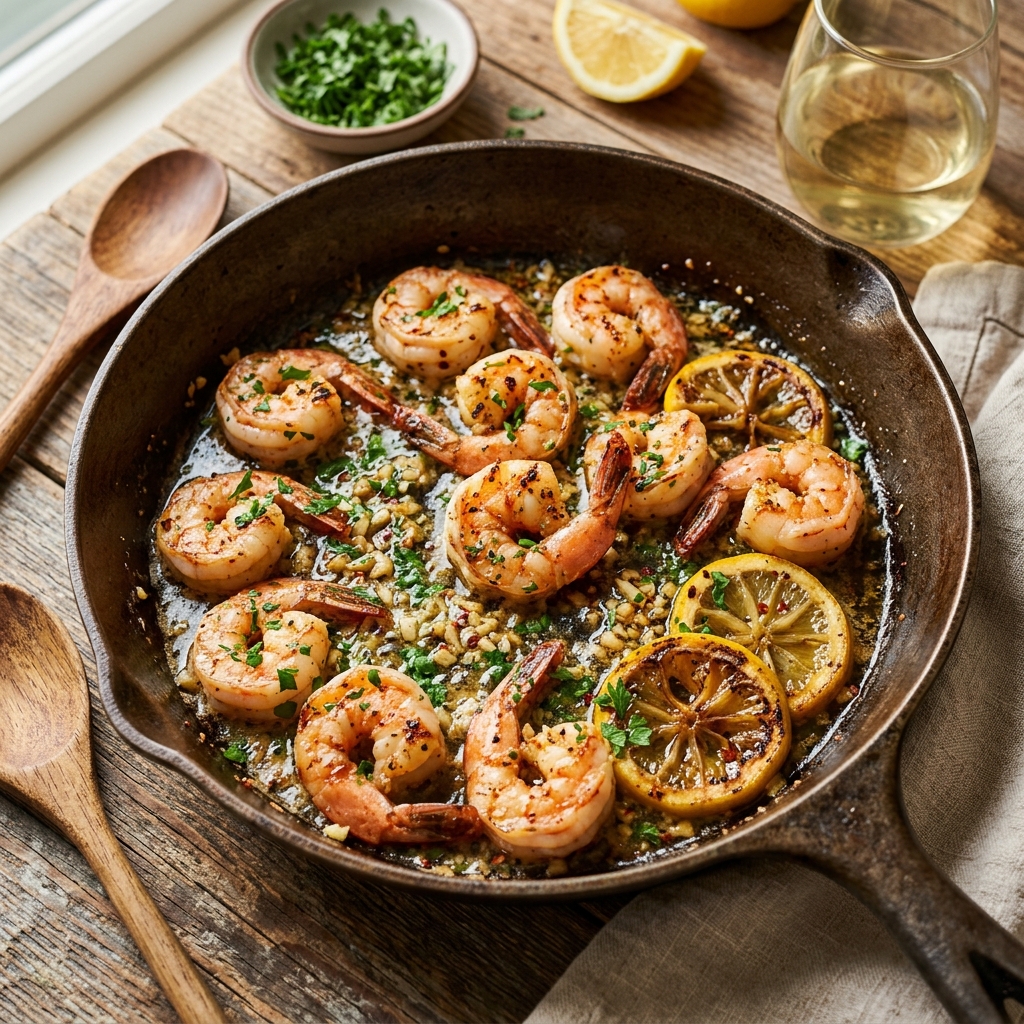
Garlic Butter Shrimp (10-Minute Skillet Masterclass)
The definitive culinary masterclass for restaurant-quality Garlic Butter Shrimp in 10 minutes. Master alkaline brining for crisp snap, high-thermal cast iron searing, and off-heat butter emulsification (monter au beurre) with lemon, white wine, and fresh parsley.
Key Takeaways
- ✓Alkaline brining with 1/4 tsp baking soda for 15 minutes elevates muscle pH, preventing protein shrinkage and guaranteeing a crisp, crunchy bite.
- ✓Thoroughly desiccate the shrimp surface with paper towels; surface moisture expels steam and prevents Maillard caramelization.
- ✓Sear shrimp undisturbed in screaming-hot cast iron for 90 seconds on side one; do not move them until an amber crust forms.
- ✓Add garlic only during the final 60 seconds off direct heat to prevent delicate sulfurous compounds from turning acrid and bitter.
- ✓Whisk cold cubed butter into the warm pan liquid off-heat (monter au beurre) to create a glossy, unified emulsion rather than separated greasy oil.
The Story
Garlic butter shrimp is a universal triumph of coastal gastronomy, celebrated across continents under various regional identities�from Spanish Gambas al Ajillo sizzling in clay cazuelas along the taverns of Madrid, to Venetian Scampi alla Busara, Portuguese Camar�o ao Alho, and the iconic Louisiana Gulf Coast skillet barbecue shrimp. While the cultural interpretations vary in acidity and spice, the culinary soul of the dish remains unyielding: pristine, succulent crustacean meat kissed by blistering thermal energy, bathed in an intoxicating elixir of sweet toasted garlic, luxurious animal lipid, and bright citrus acid.
Historically, however, home renditions of garlic shrimp frequently devolve into a soggy, rubbery disappointment. Inexperienced cooks crowd the pan with icy, wet crustaceans, dropping the skillet temperature below the boiling point of water. Instead of blistering caramelization, the shrimp boil in their own extruded intracellular brine, releasing albumin and contracting into dense, rubbery knots. Simultaneously, enthusiastic cooks introduce minced garlic into scorching hot butter at the beginning of cooking, incinerating the delicate allicin compounds within thirty seconds and contaminating the entire pan with a bitter, burnt acridity.
This masterclass is engineered to overturn those common pitfalls through precise biophysical principles. By dissecting the protein geometry of decapod crustaceans, managing the thermodynamics of cast iron thermal retention, and utilizing the classical French sauce-building technique of monter au beurre, you will achieve shrimp that snap like crisp apples between your teeth, bathed in a silky, restaurant-grade garlic butter emulsion that clings lovingly to every crustacean curve.
The Science of Flavor Chemistry & Thermal Dynamics
To execute flawless garlic butter shrimp in under ten minutes, a chef must operate with an intimate comprehension of crustacean biology, thermal phase transitions, and colloidal emulsification.
1. Crustacean Myofibrillar Architecture & The Baking Soda Miracle
Shrimp muscle tissue differs dramatically from mammalian red meat and avian poultry. Crustacean muscle consists of elongated myofibrils bundled into short, transverse bands called myotomes. When subjected to thermal stress, the structural proteins myosin and actin begin denaturing rapidly at temperatures as low as 120�F (49�C). As heat climbs toward 140�F (60�C), these proteins contract with immense force, wringing out intracellular water like a tightly twisted sponge. If heated beyond 145�F (63�C), the collagenous sheets dissolve and the muscle bundles seize into a chalky, rubbery state.To prevent this catastrophic moisture loss, we introduce alkaline brining. By tossing raw peeled shrimp with 1/4 teaspoon of baking soda (sodium bicarbonate) and salt 15 minutes prior to cooking, we artificially elevate the surface pH of the shrimp meat. In an alkaline environment, the electrical charge of the muscle proteins is altered, preventing them from tightly bonding and squeezing together during thermal contraction. The result is revolutionary: the shrimp retain up to 35% more intracellular moisture, maintaining a plump, juicy interior while developing an extraordinarily crisp, snapping exterior resistance when bitten.
2. The Geometry of Doneness: Deciphering 'C' vs. 'O'
Culinary instructors have long taught the visual mnemonic of the shrimp curl:- The Straight Line: Raw, translucent, uncoagulated.
- The 'C' Curve: Perfectly cooked. The ventral flexor muscles have gently tightened into a graceful semi-circle. Internal core temperature sits at a pristine 135�F to 140�F (57�C to 60�C). The flesh is opaque, glistening, and succulent.
- The Tight 'O' Coil: Severely overcooked. The dorsal extensor muscles have contracted completely, sealing the tail against the head joint. The internal temperature has surged past 155�F (68�C), expelling all moisture and rendering the meat fibrous and tough.
3. Latent Heat of Vaporization & Surface Desiccation
The Maillard reaction�the chemical cascade between amino acids and reducing sugars responsible for deep, savory, complex flavor compounds�occurs efficiently only at temperatures exceeding 285�F (140�C). However, liquid water cannot exceed 212�F (100�C) at sea level. If a shrimp with wet surface moisture is placed into a hot skillet, that moisture must first absorb the massive latent heat of vaporization (approximately 2,260 Joules per gram) before browning can even begin.During this evaporation delay, the delicate interior of the shrimp is simultaneously cooking through conduction. By the time the surface is dry enough to brown, the interior is completely overdone. Therefore, aggressively blotting the shrimp dry with multiple layers of lint-free paper towels prior to seasoning is an indispensable culinary commandment.
4. Allicin Kinetics & Thermal Degradation
Garlic�s signature pungency and sweetness arise from allicin, an organosulfur compound formed when the enzyme allinase catalyzes alliin upon cellular rupture (crushing or mincing). Allicin is extraordinarily heat-sensitive. At moderate temperatures (around 220�F to 250�F / 105�C to 121�C), allicin breaks down into diallyl disulfide and other sweet, nutty aromatic compounds that define classical garlic butter.However, when exposed to direct dry pan temperatures above 300�F (149�C)�such as the temperature required to sear shrimp�garlic burns within 20 to 30 seconds. Burnt garlic produces bitter pyrroles and furans that permanently ruin butter fats. To resolve this timing conflict, we sear the shrimp in neutral high-smoke-point oil first, remove or push them aside, drop the thermal energy, and bloom the minced garlic in the residual heat with white wine and butter for less than 45 seconds.
5. Colloidal Suspension: The Mechanics of Monter au Beurre
Butter is not pure fat; it is a delicate emulsion consisting of roughly 80-82% butterfat, 16-18% water, and 1-2% milk solids. If you melt butter over sustained high heat, the emulsion shatters: the water evaporates, the milk solids fall to the bottom and brown, and the liquid butterfat separates into a clear, greasy oil slick.To create a glossy, clinging pan sauce, we employ the classical French saucier technique known as monter au beurre ("mount with butter"). We reduce dry white wine and fresh lemon juice down to a concentrated, acidic glaze. Then, we take the pan completely off the heat and vigorously swirl in chilled cubes of butter one by one. The low temperature of the cold butter cools the pan liquid below 160�F (71�C), allowing the butterfat droplets to disperse evenly through the acidic wine reduction without splitting. The milk proteins in the butter act as natural surfactants, yielding an opaque, velvety, emulsified pan sauce with luxurious mouthfeel.
Essential Equipment & Thermal Calibration
Achieving Michelin-level garlic butter shrimp requires precise thermal apparatus:
- Heavy-Gauge Cast Iron Skillet (12-inch) or Stainless Steel Rondeau: Cast iron possesses immense volumetric heat capacity. When 1.5 pounds of cold shrimp hit the surface, cast iron retains its stored thermal energy without experiencing the massive temperature drop typical of cheap non-stick aluminum pans. This ensures immediate blistering and sear formation rather than pooling moisture.
- Flexible Slotted Fish Spatula: A thin, high-tensile stainless steel fish spatula slips effortlessly beneath the delicate crustacean flesh without tearing the seared caramelized crust off the shrimp.
- Stainless Steel Microplane: Used for zesting the organic lemon. You want only the outer yellow zest containing flavorful volatile limonene oils, leaving behind the bitter white inner pith.
- Infrared or Instant-Read Digital Thermometer: To calibrate the pan surface to 400�F (204�C) before the shrimp hit the oil.
Anatomy of the Ingredients & Artisanal Sourcing
Every component in this recipe must be sourced with meticulous discernment:
- Wild-Caught Colossal Gulf Shrimp (16/20 count): Sizing on shrimp is designated by count per pound. "16/20" indicates there are between 16 and 20 individual shrimp per pound. Larger shrimp are mandatory for high-heat skillet searing because their greater mass provides a crucial buffer window, allowing a crisp golden exterior to develop before the interior core reaches overcooking temperature. Wild-caught American Gulf shrimp feed naturally on crustaceans and sea vegetation, imparting a clean, sweet, briny flavor far superior to muddy farm-raised imported varieties treated with sodium tripolyphosphate (STPP).
- High-Fat European-Style Unsalted Butter (82% Butterfat): Brands like Kerrygold, Plugr�, or Isigny Sainte-M�re contain 82% to 84% butterfat compared to standard American commodity butter (80%). The lower water content prevents sauce dilution and produces a vastly superior, silkier emulsion when mounted into the pan glaze.
- Fresh Whole-Head Purple Stripe or Spanish Garlic: Pre-minced garlic sold in water jars is treated with phosphoric acid to extend shelf life, resulting in a dull, metallic, stale taste. Fresh garlic bulbs possess vibrant alliinase enzymes that yield sweet, intensely floral, and punchy aromatics when minced right before hitting the pan.
- Dry Acidic White Wine (Italian Pinot Grigio or French Sauvignon Blanc): Wine provides essential tartaric and malic acids that deglaze the caramelized shrimp fond from the bottom of the skillet. The acidity balances the richness of the butterfat while adding complex fermented grape esters. Never use sweet wines like Moscato or oaky Chardonnays, which overwhelm delicate seafood.
Step-by-Step Culinary Masterclass
Step 1: Alkaline Brine & Surface Desiccation
Peel and devein the shrimp, leaving the tails intact for visual elegance and pan-handling leverage. Place the shrimp in a large mixing bowl. Sprinkle with 1/4 teaspoon of pure baking soda and 1/2 teaspoon of fine Kosher salt. Toss thoroughly with your hands to distribute the alkaline powder evenly over every surface. Allow the shrimp to rest at room temperature for precisely 15 minutes. After resting, transfer the shrimp to a cutting board lined with three layers of heavy-duty paper towels. Press additional paper towels firmly over the top of the shrimp until they are completely bone-dry to the touch. Season with freshly cracked black pepper.
- Chef's Technique Tip: Do not exceed 20 minutes in the alkaline brine. 15 minutes is the molecular sweet spot where muscle pH rises without imparting any chemical aftertaste.
- Sensory Checkpoint: The shrimp will look slightly glossy and translucent, and paper towels should come away damp while the shrimp flesh feels dry and tacky.
Step 2: Preheating Cast Iron & High-Thermal Searing
Set a heavy 12-inch cast iron skillet over high heat for 3 to 4 minutes until a light wisp of smoke rises from the metal surface. Add 2 tablespoons of avocado oil and swirl to coat the entire cooking floor. Immediately arrange the shrimp in the skillet in a single, uncrowded layer, starting from the outside edge and working inward. Press down gently on each shrimp with the fish spatula to establish maximum surface contact. Sear undisturbed over medium-high heat for exactly 90 seconds. Do not stir, shake, or disturb the skillet.
- Chef's Technique Tip: If your skillet cannot accommodate all shrimp in a single flat layer without overlapping, divide and sear in two separate batches. Overcrowding drops pan temperature and causes boiling.
- Sensory Checkpoint: Edges of the shrimp in contact with the cast iron will turn opaque white with a deep golden-amber caramelized perimeter.
Step 3: The Flip, Wine Deglazing & Temperature Reduction
Using tongs or your fish spatula, quickly flip each shrimp onto its second side. Immediately pour in 1/4 cup of dry white wine around the perimeter of the skillet. The wine will sizzle violently, creating instant steam that gently finishes cooking the delicate tops. Use a wooden spatula to scrape up the rich, flavorful caramelized shrimp fond sticking to the bottom of the cast iron. Cook for just 45 seconds until the wine reduces by half.
- Chef's Technique Tip: Pouring the wine around the edge of the pan prevents thermal shock to the shrimp while instantly vaporizing into steam that envelops the crustaceans.
- Sensory Checkpoint: The wine will reduce into a glossy, bubbling, golden-amber syrup at the bottom of the skillet.
Step 4: Blooming Garlic & Citrus Infusion
Turn the burner heat down to low (or slide the cast iron skillet halfway off the burner). Scatter the 6 cloves of minced fresh garlic, 1/2 teaspoon of crushed red pepper flakes, and 1/2 teaspoon of fresh lemon zest directly into the bubbling wine reduction around the shrimp. Stir gently for 30 to 40 seconds. The aroma of sweet, fragrant garlic will bloom instantly. Do not allow the garlic to brown; it should remain pale, soft, and sweet.
- Chef's Technique Tip: Garlic cooks ten times faster in residual pan heat than in a fresh cold pan. Pulling the heat down now is the secret to zero bitterness.
- Sensory Checkpoint: Intense, intoxicating garlic-citrus aroma will perfume the kitchen without any signs of browning or dark specks.
Step 5: The Monter au Beurre Emulsion
Remove the skillet entirely from the heat source and set it onto a heatproof trivet. Add 2 tablespoons of freshly squeezed lemon juice. Immediately drop in the 5 tablespoons of chilled, cubed European butter. Swirl the skillet in a continuous circular motion, using a wooden spoon to stir the melting butter into the warm lemon-wine glaze. As the cold butter melts, its fats will bind with the acidic liquid, transforming into an opaque, silky, shimmering sauce that coats the back of a spoon. Taste and adjust seasoning with a pinch of flaky sea salt if needed.
- Chef's Technique Tip: Never mount butter over active fire. Boiling separated fat destroys the colloidal suspension, turning your velvety sauce into an oily grease pool.
- Sensory Checkpoint: The sauce transforms from clear and separated into an opaque, creamy, golden glaze that clings tenaciously to the shrimp.
Step 6: Fresh Herb Garnish & Artisanal Plating
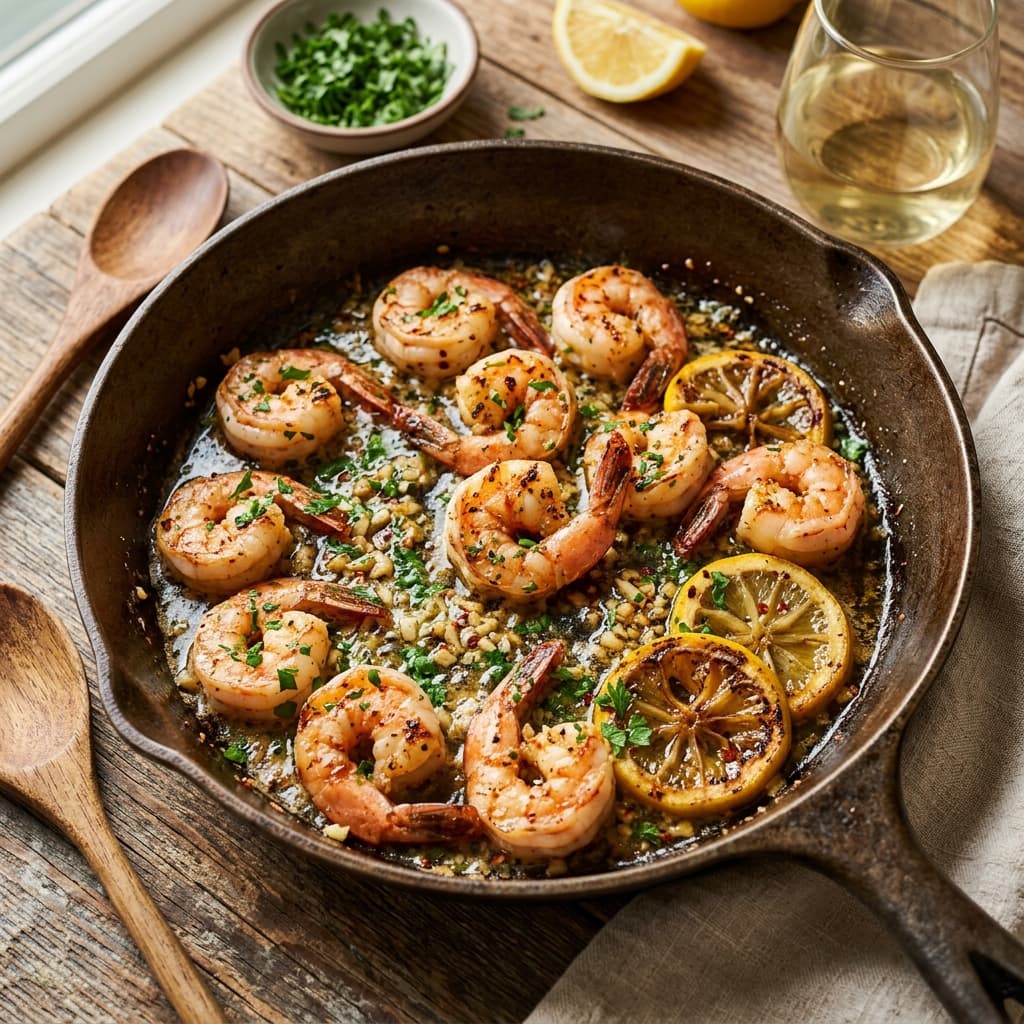
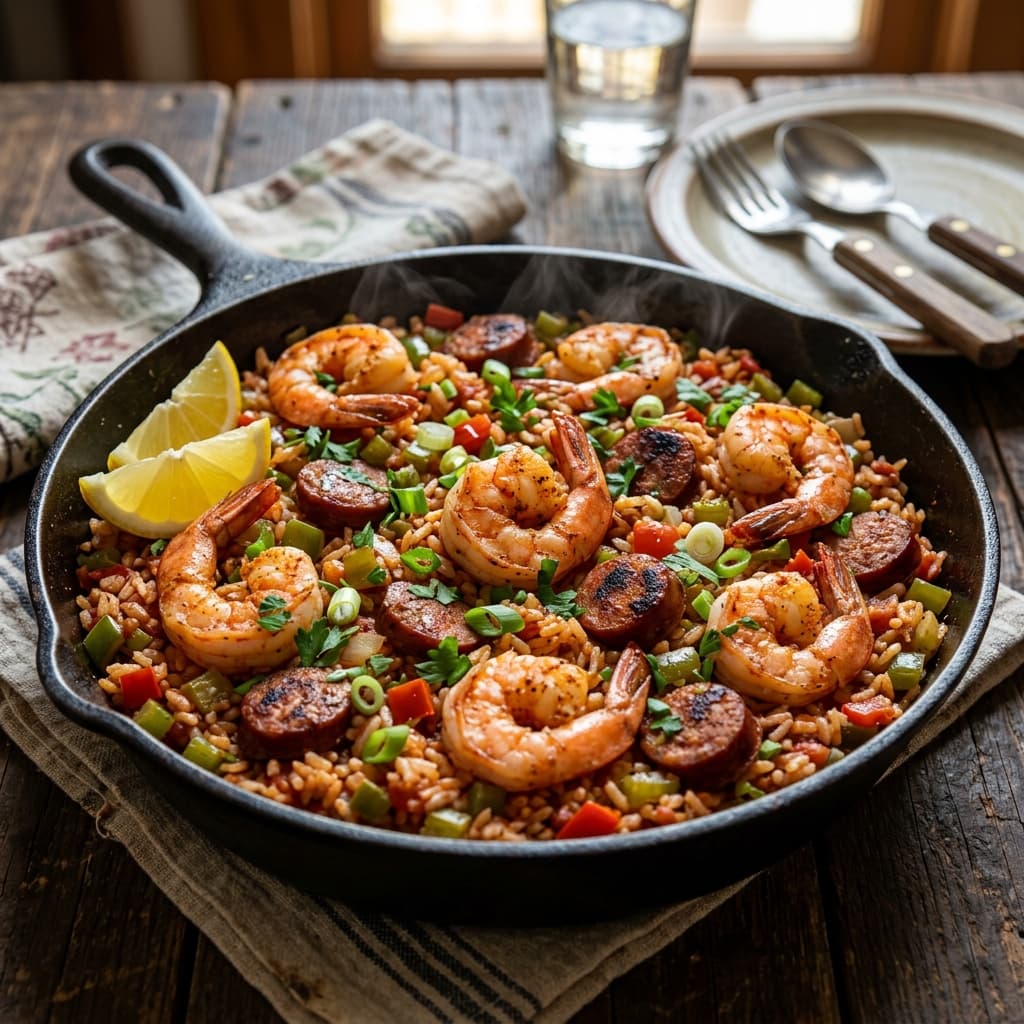
Scatter the 1/4 cup of finely chopped Italian flat-leaf parsley across the skillet. Toss the shrimp one final time in the warm emulsified garlic butter so every piece is glistening. Serve immediately directly in the warm cast iron skillet for rustic elegance, accompanied by thick slices of warm, crusty sourdough bread and extra lemon wedges for squeezing at the table.
- Chef's Technique Tip: Cast iron retains heat for over 15 minutes. Serve promptly so the shrimp do not linger in scorching heat and overcook into 'O' coils.
- Sensory Checkpoint: Vibrant green parsley flecks contrast against the golden-pink shrimp and rich yellow butter emulsion. Shrimp are curled in perfect 'C' arcs.
Pro-Chef Troubleshooting & Critical Checkpoints
Problem: Shrimp Turned Out Tough, Chewy, and Curled in Tight 'O' Circles
- The Root Cause: The shrimp were cooked past 145�F (63�C) due to excessive pan time or resting in a scorching skillet off-heat without serving promptly.
- The Masterclass Solution: Remove the shrimp from the skillet the split second they form a loose 'C' shape and look 90% opaque. The residual heat of the butter emulsion will gently carry them to 100% doneness without contracting muscle fibers.
Problem: The Garlic Tastes Acrid, Harsh, and Bitter
- The Root Cause: Garlic was added at the very beginning of cooking or saut�ed over high heat exceeding 300�F (149�C), burning delicate allicin compounds.
- The Masterclass Solution: Always add minced garlic during the final 45 seconds of cooking over reduced heat or off the flame entirely, protected by the wine reduction.
Problem: The Pan Sauce is Greasy, Clear, and Separated into Oil
- The Root Cause: Butter was melted over active high heat, breaking the fat-in-water emulsion and evaporating the protective water phase.
Problem: Shrimp Released a Pool of Water and Did Not Brown
- The Root Cause: Surface moisture was left on the shrimp prior to cooking, or the skillet was overcrowded with cold shrimp, collapsing the thermal floor.
- The Masterclass Solution: Blot the shrimp aggressively dry with paper towels until tacky, and ensure your 12-inch skillet is preheated to 400�F. If doubling the recipe, always cook in two separate batches.
Problem: Shrimp Flesh Lacks Snap and Feels Soft or Mushy
- The Root Cause: The shrimp were thawed incorrectly in warm water, or the alkaline dry brine step was skipped.
- The Masterclass Solution: Always thaw frozen shrimp slowly in the refrigerator or submerged in icy salted water. Never skip the 15-minute toss in 1/4 tsp baking soda, which tightens cellular moisture binding.
Macro Analysis & Nutritional Optimization
Garlic butter shrimp is one of the most nutritionally dense, high-protein, low-carbohydrate meals in modern culinary wellness:
- Pure High-Biological Value Protein: Wild shrimp deliver approximately 24 grams of complete protein per 100 grams of edible meat, featuring an exceptional profile of branched-chain amino acids (leucine, isoleucine, and valine) crucial for muscle protein synthesis and metabolic recovery.
- Potent Antioxidant Astaxanthin: The vivid pink-orange pigmentation in wild shrimp is derived from astaxanthin, a natural marine carotenoid antioxidant synthesized by microalgae. Astaxanthin has been demonstrated in biomedical literature to exhibit up to 6,000 times the antioxidant capacity of Vitamin C, actively mitigating cellular oxidative stress and promoting vascular endothelial health.
- Essential Trace Minerals (Selenium & Zinc): A single serving supplies over 70% of the daily recommended intake of selenium, an indispensable enzymatic cofactor for glutathione peroxidase (the body's master antioxidant defense) and optimal thyroid hormone synthesis.
- Healthy Lipid Matrix: High-butterfat European butter provides fat-soluble vitamins (Vitamin A, E, and K2) alongside butyric acid, a short-chain fatty acid renowned for supporting gastrointestinal epithelial lining integrity and reducing systemic gut inflammation.
Artisanal Serving & Pairing Architecture
Because garlic butter shrimp possesses rich, savory lipid richness balanced by pungent alliums and bright citrus, pairing choices should emphasize textural crunch and high-acidity beverages:
- Artisanal Crusty Sourdough or French Baguette: The ultimate vessel for capturing the emulsified garlic butter fond. A naturally fermented sourdough with an open crumb and blistered crust provides tart lactic complexity and chew.
- Wine Pairings:
- Accompaniments:
Scientific Storage, Meal Prep & Reheating Protocol
Seafood requires disciplined cold-chain management and gentle reheating protocols:
- Refrigerator Storage: Allow leftover shrimp to cool to room temperature for no more than 30 minutes. Transfer along with all pan juices into an airtight glass container. Store at or below 38�F (3�C) for up to 2 days. Do not store cooked shrimp past 48 hours.
- The Microwave Warning: Never, under any circumstances, reheat cooked shrimp in a microwave. Microwave radiation vibrates water molecules violently, instantly superheating crustacean muscle proteins to over 180�F, turning the tender meat into inedible, rubbery eraser pellets while splattering the delicate butter emulsion.
- The Gentle Skillet Reheating Method: Place a non-stick or stainless skillet over low heat. Add 1 tablespoon of chicken broth or water along with the leftover shrimp and sauce. Cover with a lid and steam gently for 2 to 3 minutes, stirring once, just until the shrimp are warmed through (internal temp 120�F). Remove immediately and serve.
- Cold Repurposing: Leftover chilled garlic butter shrimp are magnificent chopped and folded into a crisp Caesar salad, tossed with chilled avocado and lime, or folded into an omelet.
Frequently Asked Questions (Masterclass Edition)
Q: Can I make this recipe with frozen shrimp?
A: Yes, absolutely! In fact, most 'fresh' shrimp at supermarket seafood counters were previously frozen at sea and thawed behind the glass. Buying IQF (Individually Quick Frozen) wild shrimp is often fresher. Thaw them safely overnight in the refrigerator, or place them in a colander set inside a bowl of cold running tap water for 15 minutes. Ensure they are blotted 100% dry with paper towels before beginning the recipe.Q: Why should I leave the shrimp tails on?
A: Leaving the tails on during cooking serves two culinary functions: first, the calcium-rich tail shells contain concentrated natural flavor compounds that infuse into the sizzling butter; second, the tail acts as a convenient, heat-resistant natural handle for flipping the shrimp quickly with tongs.Q: What if I don't want to cook with alcohol?
A: You can seamlessly substitute the white wine with an equal volume (1/4 cup) of high-quality low-sodium chicken bone broth or vegetable broth, whisked with 1 additional teaspoon of fresh lemon juice to replicate the bright acidity of the wine.Q: Can I use ghee or clarified butter instead of regular butter?
A: You can use ghee for the initial high-heat searing step because of its high smoke point (485�F). However, for the final monter au beurre pan sauce, whole unsalted European butter is strongly recommended because its natural milk solids and 16% water content are structurally necessary to create an emulsified, creamy sauce rather than pure liquid oil.Q: How do I prevent my garlic from turning blue or green?
A: Garlic contains sulfur compounds and enzymes that can turn blue-green when exposed to acidic environments (like lemon juice) and trace copper or iron. To prevent this, always use fresh, mature garlic bulbs, avoid prolonged soaking in acidic marinades, and add the lemon juice at the very end of cooking.Garlic Butter Shrimp (10-Minute Skillet Masterclass)
The definitive culinary masterclass for restaurant-quality Garlic Butter Shrimp in 10 minutes. Master alkaline brining for crisp snap, high-thermal cast iron searing, and off-heat butter emulsification (monter au beurre) with lemon, white wine, and fresh parsley.
Macro Nutrition Profile (Per Serving)
Ingredients
Ingredient Substitutions
| Original Ingredient | Healthy Alternative |
|---|---|
| Animal protein | Firm tofu, tempeh, or organic chickpeas |
| Cooking fat | Extra virgin olive oil or grass-fed butter |
Instructions
Alkaline Brine & Surface Desiccation: Peel and devein the shrimp, leaving the tails intact for visual elegance and pan-handling leverage. Place the shrimp in a large mixing bowl. Sprinkle with 1/4 teaspoon of pure baking soda and 1/2 teaspoon of fine Kosher salt. Toss thoroughly with your hands to distribute the alkaline powder evenly over every surface. Allow the shrimp to rest at room temperature for precisely 15 minutes. After resting, transfer the shrimp to a cutting board lined with three layers of heavy-duty paper towels. Press additional paper towels firmly over the top of the shrimp until they are completely bone-dry to the touch. Season with freshly cracked black pepper. Chef's Technique Tip: Do not exceed 20 minutes in the alkaline brine. 15 minutes is the molecular sweet spot where muscle pH rises without imparting any chemical aftertaste. Sensory Checkpoint: The shrimp will look slightly glossy and translucent, and paper towels should come away damp while the shrimp flesh feels dry and tacky.
Preheating Cast Iron & High-Thermal Searing: Set a heavy 12-inch cast iron skillet over high heat for 3 to 4 minutes until a light wisp of smoke rises from the metal surface. Add 2 tablespoons of avocado oil and swirl to coat the entire cooking floor. Immediately arrange the shrimp in the skillet in a single, uncrowded layer, starting from the outside edge and working inward. Press down gently on each shrimp with the fish spatula to establish maximum surface contact. Sear undisturbed over medium-high heat for exactly 90 seconds. Do not stir, shake, or disturb the skillet. Chef's Technique Tip: If your skillet cannot accommodate all shrimp in a single flat layer without overlapping, divide and sear in two separate batches. Overcrowding drops pan temperature and causes boiling. Sensory Checkpoint: Edges of the shrimp in contact with the cast iron will turn opaque white with a deep golden-amber caramelized perimeter.
The Flip, Wine Deglazing & Temperature Reduction: Using tongs or your fish spatula, quickly flip each shrimp onto its second side. Immediately pour in 1/4 cup of dry white wine around the perimeter of the skillet. The wine will sizzle violently, creating instant steam that gently finishes cooking the delicate tops. Use a wooden spatula to scrape up the rich, flavorful caramelized shrimp fond sticking to the bottom of the cast iron. Cook for just 45 seconds until the wine reduces by half. Chef's Technique Tip: Pouring the wine around the edge of the pan prevents thermal shock to the shrimp while instantly vaporizing into steam that envelops the crustaceans. Sensory Checkpoint: The wine will reduce into a glossy, bubbling, golden-amber syrup at the bottom of the skillet.
Blooming Garlic & Citrus Infusion: Turn the burner heat down to low (or slide the cast iron skillet halfway off the burner). Scatter the 6 cloves of minced fresh garlic, 1/2 teaspoon of crushed red pepper flakes, and 1/2 teaspoon of fresh lemon zest directly into the bubbling wine reduction around the shrimp. Stir gently for 30 to 40 seconds. The aroma of sweet, fragrant garlic will bloom instantly. Do not allow the garlic to brown; it should remain pale, soft, and sweet. Chef's Technique Tip: Garlic cooks ten times faster in residual pan heat than in a fresh cold pan. Pulling the heat down now is the secret to zero bitterness. Sensory Checkpoint: Intense, intoxicating garlic-citrus aroma will perfume the kitchen without any signs of browning or dark specks.
The Monter au Beurre Emulsion: Remove the skillet entirely from the heat source and set it onto a heatproof trivet. Add 2 tablespoons of freshly squeezed lemon juice. Immediately drop in the 5 tablespoons of chilled, cubed European butter. Swirl the skillet in a continuous circular motion, using a wooden spoon to stir the melting butter into the warm lemon-wine glaze. As the cold butter melts, its fats will bind with the acidic liquid, transforming into an opaque, silky, shimmering sauce that coats the back of a spoon. Taste and adjust seasoning with a pinch of flaky sea salt if needed. Chef's Technique Tip: Never mount butter over active fire. Boiling separated fat destroys the colloidal suspension, turning your velvety sauce into an oily grease pool. Sensory Checkpoint: The sauce transforms from clear and separated into an opaque, creamy, golden glaze that clings tenaciously to the shrimp.
Fresh Herb Garnish & Artisanal Plating: Scatter the 1/4 cup of finely chopped Italian flat-leaf parsley across the skillet. Toss the shrimp one final time in the warm emulsified garlic butter so every piece is glistening. Serve immediately directly in the warm cast iron skillet for rustic elegance, accompanied by thick slices of warm, crusty sourdough bread and extra lemon wedges for squeezing at the table. Chef's Technique Tip: Cast iron retains heat for over 15 minutes. Serve promptly so the shrimp do not linger in scorching heat and overcook into 'O' coils. Sensory Checkpoint: Vibrant green parsley flecks contrast against the golden-pink shrimp and rich yellow butter emulsion. Shrimp are curled in perfect 'C' arcs.
Tried this recipe?
Let us know how it turned out! Click a star below to leave a review and rate the recipe.
Storage & Freezing Tips
- Refrigerator: Store leftovers in an airtight container for up to 3-4 days.
- Reheating: Heat in a saucepan or skillet on medium heat until hot throughout.
- Freezing: Freeze portions in airtight containers for up to 2 months. Reheat directly from frozen or after thawing.
Frequently Asked Questions
Can this recipe be prepared ahead of time?▼
Yes, this meal is excellent for weekly meal prep. Store components separately and assemble before serving.
Is this recipe gluten-free?▼
All ingredients used are naturally gluten-free. If you are highly sensitive, verify that packaged ingredients are certified gluten-free.
Tried this recipe?
Tag @stewartlucas on Instagram and hashtag it #nutriguide!
You Might Also Like

Stewart Lucas
Nutritionist & Recipe DeveloperStewart Lucas is a nutritionist and recipe developer representing the NutriGuide team. All recipes, nutritional values, and diet protocols published on this site are designed and audited by certified dietitians and clinical nutrition professionals to guarantee absolute accuracy.
Community Reviews
Please log in to leave a review.