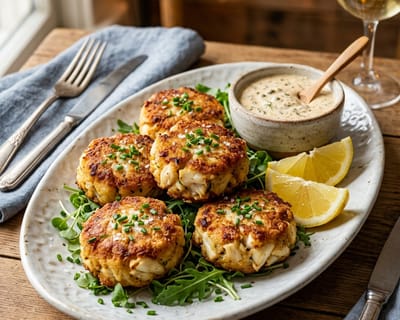
Mini Crab Cakes

Delicate bite-sized Maryland-style mini crab cakes packed with sweet jumbo lump blue crab, Old Bay seasoning, Dijon mustard, and crushed saltines, seared until golden and crisp.
Key Takeaways
- ✓Ready in just 15 mins using straightforward, kitchen-tested technique.
- ✓Delivers 14g of muscle-fueling protein per serving for lasting satiety.
- ✓Portion-balanced at 165 calories per serving with wholesome, unrefined ingredients.
- ✓Masterclass temperature checkpoints ensure maximum tenderness and flavor development.
The Story
Delicate bite-sized Maryland-style mini crab cakes packed with sweet jumbo lump blue crab, Old Bay seasoning, Dijon mustard, and crushed saltines, seared until golden and crisp.
The Culinary Art of Maryland Mini Crab Cakes
A properly executed crab cake represents restraint in the kitchen. In the Chesapeake Bay tradition, crab meat is not treated as a mere flavoring ingredient for a breaded croquette; rather, the crab itself is the centerpiece, bound together by the bare minimum of custard and starches needed to survive the pan.
When adapted into bite-sized appetizer portions, mini crab cakes demand precision. Full-sized dinner cakes have enough surface area and volume to tolerate gentle handling, but mini cakes—measuring barely an inch and a half across—can easily dry out or crumble apart if the binder ratio or thermal handling is off.
By balancing sweet jumbo lump crab with smaller flakes of backfin meat, incorporating crushed saltine crackers into a seasoned mayonnaise-Dijon suspension, and thoroughly chilling the formed discs prior to searing in clarified butter, you produce appetizer cakes with crisp exterior edges, tender sweet centers, and clean seafood flavor.
Selecting the Right Crab Meat
The quality of your crab meat determines the quality of your finished dish. Navigating seafood counters requires knowing how crab is graded, processed, and packed.
Blue Crab (Callinectes sapidus)
Authentic Maryland crab cakes are traditionally prepared with wild Atlantic blue crab. Blue crab is prized for its balance of natural sweetness and subtle ocean brininess. If domestic fresh pasteurized blue crab from Maryland, Virginia, or the Gulf Coast is accessible, choose it above all others.Grading Crab Meat
- Jumbo Lump: The two large muscle segments that power the crab's swimming paddle legs. These snowy white, whole pieces are sweet and dense.
- Lump or Backfin: Smaller broken pieces of jumbo lump mixed with meat extracted from the body chambers. It offers sweet flavor and blends easily into binders.
- Special Meat: Small, tender body meat flakes. It works well in dips and soups, but is too fine on its own for primary crab cakes.
- Claw Meat: Darker, brownish-pink meat with a stronger, mineral-forward flavor. While flavorful, its assertive profile can overpower delicate appetizers.
Equipment Needed for Appetizer Precision
Having the right tools streamlines the preparation process and prevents delicate crab lumps from breaking during handling:
- Rimmed Baking Sheet with Parchment Paper: Essential for chilling the formed cakes in the refrigerator so they do not stick or distort.
- 1.5-Tablespoon Spring-Loaded Cookie Scoop (#40 Scoop): Delivers uniform portion sizing so every mini crab cake cooks at the exact same rate.
- Heavy Cast-Iron Skillet or Non-Stick Sauté Pan (12-Inch): Ensures even heat retention and uniform golden crust formation across the entire cooking surface.
- Thin Metal Fish Spatula: A flexible, beveled fish spatula slides effortlessly under fragile cakes without gouging the crust or dislodging lumps.
- Wide Shallow Mixing Bowl: Gives your hands plenty of room to fold crab meat gently with minimal breakage.
The Chemistry of Minimal Binding
Understanding how proteins and starches cooperate allows you to minimize filler while preventing your cakes from disintegrating in the skillet.
Mayonnaise as an Emulsified Fat Base
Duke's or a high-quality whole-egg mayonnaise forms the base of the wet binder. Because mayonnaise is an emulsion of oil and egg yolks, it provides moisture and fat that lubricates the crab fibers, preventing the meat from drying out during pan searing.Whole Egg for Protein Coagulation
One large egg provides the structural binder. Egg whites coagulate between 144°F and 149°F (62°C to 65°C), while egg yolks set between 150°F and 158°F (65°C to 70°C). As heat penetrates the interior of the mini cake, the egg proteins form a firm structural web that knits the crab chunks together.Crushed Saltines vs. Breadcrumbs
Crushed saltine crackers consist of flour, yeast, and shortening baked into layered crisps. Unlike breadcrumbs, which can absorb too much moisture and create a dense texture, crushed saltines break down into small, tender flakes that bind gently with the egg-mayonnaise custard.The Role of Chilling
Never skip chilling formed crab cakes. Placing shaped patties in the refrigerator at 38°F (3°C) for at least 30 minutes solidifies the emulsified oils in the mayonnaise and allows the cracker crumbs to hydrate fully. This resting step creates a firm puck that holds its shape when placed in hot fat.Step-by-Step Instructions
Follow these clear, tested steps to yield approximately 20 golden mini crab cakes.
Step 1: Inspect and Pick the Crab Meat
Gently spread 1 pound of lump crab meat (or an 8-ounce jumbo lump and 8-ounce lump blend) over a flat rimmed baking sheet. Using your fingertips, gently sift through the crab to locate and remove any stray pieces of cartilage or shell fragments. Work with a light touch so you do not crush the delicate white lumps.Step 2: Prepare the Crushed Saltines
Place 14 standard saltine crackers (about 1/2 cup once crushed) into a zip-top bag. Use a rolling pin or the flat side of a meat mallet to crush the crackers into coarse crumbs with a few fine flakes. Avoid pulverizing them into dust.Step 3: Whisk the Savory Wet Custard
In a wide mixing bowl, crack 1 large egg and whisk lightly. Add 1/3 cup of high-quality mayonnaise, 1 teaspoon of Dijon mustard, 1 teaspoon of Worcestershire sauce, 1 teaspoon of freshly squeezed lemon juice, 1 teaspoon of Old Bay seasoning, 2 tablespoons of finely minced fresh flat-leaf parsley, and 1 finely sliced scallion (green and white parts). Whisk until completely smooth and emulsified.Step 4: Fold the Ingredients Gently
Sprinkle the crushed saltine crackers over the mayonnaise mixture and stir gently with a rubber spatula until moistened. Add the picked crab meat to the bowl. Using clean hands or a flexible silicone spatula, fold the crab meat into the binder with slow, sweeping lifting motions from the bottom of the bowl upward. Stop as soon as the crab is lightly coated. Do not overmix.Step 5: Shape into Mini Patties
Line a clean baking sheet with parchment paper. Using a 1.5-tablespoon spring-loaded scoop, portion the crab mixture into uniform balls and deposit them onto the parchment. Using lightly dampened hands, gently press each mound between your palms into a compact, flat disc roughly 1.5 inches in diameter and 3/4-inch thick.Step 6: Chill to Set the Structure
Transfer the baking sheet of shaped mini crab cakes to the refrigerator uncovered. Chill for a minimum of 30 minutes, or up to 2 hours. This step allows the binders to firm up and prevents the cakes from breaking apart in the skillet.Step 7: Pan-Sear to Deep Golden Crispness
Place a large heavy cast-iron or stainless-steel skillet over medium heat. Add 2 tablespoons of clarified butter (or 1 tablespoon of unsalted butter combined with 1 tablespoon of canola oil). Heat until the fat is shimmering and fragrant, but not smoking. Working in batches of 8 to 10 cakes to avoid crowding the pan, carefully place the chilled mini crab cakes into the skillet. Cook undisturbed for 3 to 4 minutes, until the undersides turn a rich golden brown.Step 8: Flip and Finish
Slide a thin fish spatula gently beneath each cake, turn it over, and cook the second side for another 2 to 3 minutes until golden brown and the internal temperature registers 150°F to 155°F (65°C to 68°C) on an instant-read thermometer. Transfer the cooked cakes to a paper-towel-lined plate, repeat with the remaining cakes, and serve immediately with lemon wedges and homemade remoulade sauce.Sauce Pairings and Serving Ideas
Mini crab cakes shine when paired with balanced, acidic sauces that cut through rich seafood fats:
Classic Chesapeake Remoulade
Whisk together 1/2 cup mayonnaise, 1 tablespoon Creole mustard, 1 teaspoon capers (drained and chopped), 1/2 teaspoon smoked paprika, 1/2 teaspoon prepared horseradish, 1 teaspoon fresh lemon juice, and a pinch of cayenne pepper. Chill for 30 minutes before serving.Quick Lemon-Herb Aioli
Combine 1/2 cup mayonnaise, 1 finely grated garlic clove, 1 tablespoon finely chopped fresh dill, 1 teaspoon lemon zest, and 1 tablespoon lemon juice. This clean, herbal sauce complements the sweetness of blue crab.Appetizer Platter Styling
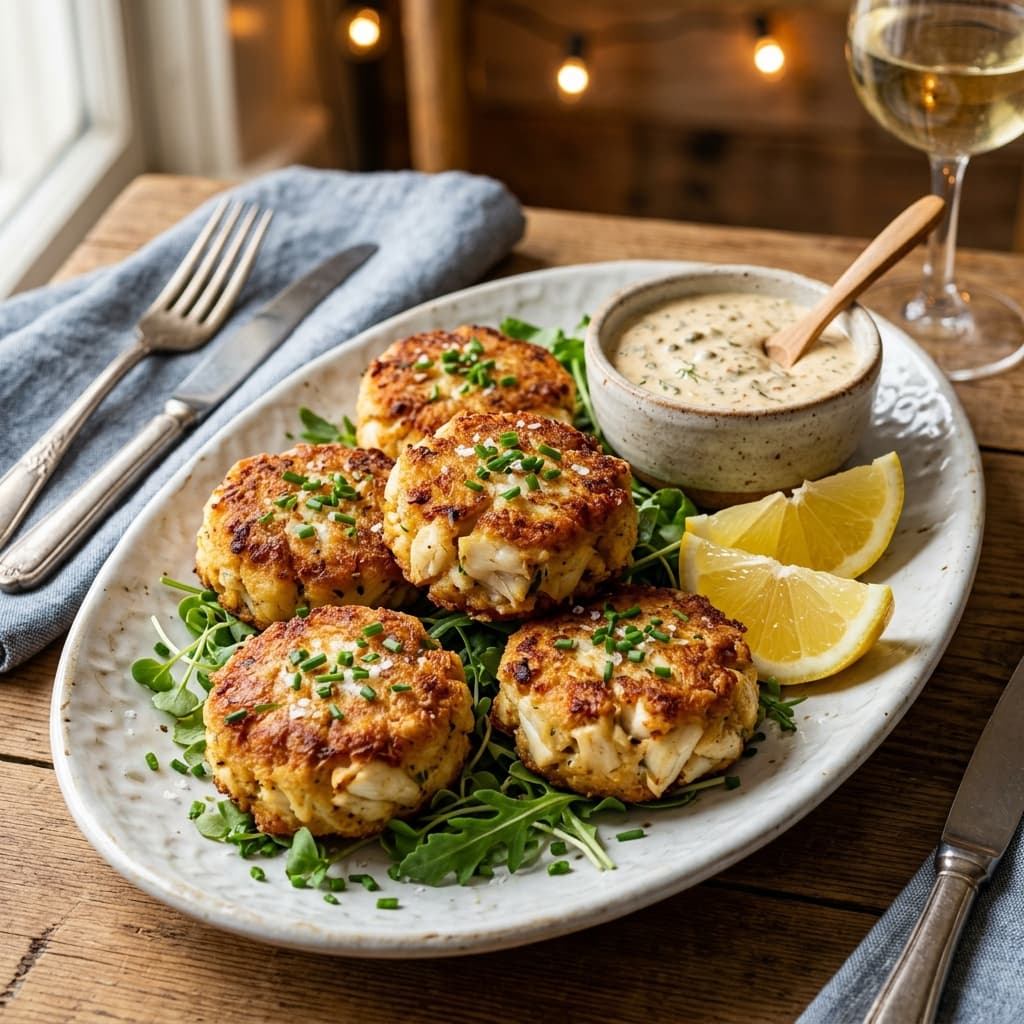
Arrange the mini crab cakes on a warm slate platter lined with baby arugula leaves. Top each cake with a tiny dollop of remoulade and a micro-sprig of fresh dill or chives, framing the platter with fresh lemon wedges.Nutritional Breakdown
Mini crab cakes provide lean, nutrient-dense marine protein rich in selenium, zinc, and vitamin B12, balanced with healthy dietary fats.
| Metric | Per Serving (2 Mini Crab Cakes) | Daily Value (%) |
|---|---|---|
| Calories | 165 kcal | 8% |
| Protein | 14 g | 28% |
| Total Carbohydrates | 5 g | 2% |
| Dietary Fiber | 0.3 g | 1% |
| Total Fat | 10 g | 13% |
| Saturated Fat | 2.5 g | 13% |
| Cholesterol | 85 mg | 28% |
| Sodium | 420 mg | 18% |
| Potassium | 210 mg | 4% |
| Iron | 0.9 mg | 5% |
Pan-Frying Thermodynamics and Oil Management
Cooking mini crab cakes successfully demands careful monitoring of the pan environment. Because crab meat is pre-cooked during commercial processing, the goal of pan-searing is not to cook raw protein, but rather to brown the exterior starch-protein crust and warm the delicate center without driving out moisture.
Smoke Point and Fat Choices
Standard whole butter begins scorching at 300°F (150°C) as milk proteins burn. Clarified butter (or ghee) eliminates water and milk solids, raising the smoke point to 450°F (232°C). This allows you to achieve deep Maillard browning without charred flakes sticking to the crab cakes. If clarified butter is unavailable, use a 50/50 blend of unsalted butter and high-heat avocado or canola oil. The vegetable oil raises the overall flash point, letting you reap butter flavor without premature burning.Heat Transfer and Skillet Crowding
Never cook all 20 mini crab cakes in one batch. Dropping too many cold patties into the skillet causes the surface temperature of the pan to plummet. When the pan cools, the crab cakes absorb oil rather than searing, turning greasy and loose. Cook in batches of 8 to 10 cakes, leaving at least an inch of space between each piece to allow evaporated moisture to escape cleanly.Homemade Dipping Sauces and Condiments
Offering a selection of contrasting sauces elevates mini crab cakes for formal entertaining or casual appetizers:
Maryland Old Bay Tartar Sauce
Combine 1/2 cup mayonnaise, 2 tablespoons finely diced dill pickles, 1 tablespoon capers (rinsed and chopped), 1 teaspoon fresh lemon juice, 1/2 teaspoon Old Bay seasoning, and 1 teaspoon chopped fresh parsley. Chill for 1 hour to allow flavors to meld.Fiery Cocktail Sauce
Whisk 1/2 cup chili sauce or high-grade ketchup with 2 tablespoons prepared horseradish, 1 teaspoon fresh lemon juice, 1/2 teaspoon Worcestershire sauce, and 2 drops of hot sauce. The pungent horseradish cleanses the palate after rich, buttery crab.Caper and Shallot Vinaigrette
For a lighter, non-mayonnaise option, whisk 3 tablespoons extra-virgin olive oil with 1 tablespoon champagne vinegar, 1 teaspoon finely minced shallot, 1 teaspoon small capers, and a pinch of salt and pepper. Drizzle lightly over plated crab cakes alongside microgreens.Serving and Presentation Strategies
Mini crab cakes make ideal finger food for cocktail gatherings or elegant sit-down first courses:
Butler-Passed Hors d'Oeuvres
Arrange the golden cakes on warm porcelain platters lined with fresh lemon leaves or baby arugula. Place a small dot of remoulade on each cake and spear with an attractive bamboo knot pick for effortless guest handling.Elegant Plated First Course
For a seated dinner, plate three warm mini crab cakes atop a bed of thinly shaved fennel and radish salad tossed in lemon juice and olive oil. Swirl remoulade sauce along the edge of the plate and serve with warm brioche toasts.Mini Brioche Crab Sliders
Split warm mini brioche slider buns in half and toast lightly with butter. Smear both cut sides with lemon-herb aioli, set a hot mini crab cake inside, and top with a crisp slice of butterhead lettuce and a paper-thin slice of heirloom tomato. These handheld bites are always the first item to disappear at cocktail parties.Summery Seafood Salad Topping
Serve two or three freshly seared mini crab cakes over a colorful bowl of chilled sweet corn, diced avocado, English cucumber, and baby spinach tossed in a light champagne vinaigrette. The warm, crisp exterior of the cakes contrasts delightfully against cool, crunchy garden produce.Mini Crab Cakes
Delicate bite-sized Maryland-style mini crab cakes packed with sweet jumbo lump blue crab, Old Bay seasoning, Dijon mustard, and crushed saltines, seared until golden and crisp.
Macro Nutrition Profile (Per Serving)
Ingredients
Ingredient Substitutions
| Original Ingredient | Healthy Alternative |
|---|---|
| Animal protein | Firm tofu, tempeh, or organic chickpeas |
| Cooking fat | Extra virgin olive oil or grass-fed butter |
Instructions
Inspect and Pick the Crab Meat: Gently spread 1 pound of lump crab meat (or an 8-ounce jumbo lump and 8-ounce lump blend) over a flat rimmed baking sheet. Using your fingertips, gently sift through the crab to locate and remove any stray pieces of cartilage or shell fragments. Work with a light touch so you do not crush the delicate white lumps.
Prepare the Crushed Saltines: Place 14 standard saltine crackers (about 1/2 cup once crushed) into a zip-top bag. Use a rolling pin or the flat side of a meat mallet to crush the crackers into coarse crumbs with a few fine flakes. Avoid pulverizing them into dust.
Whisk the Savory Wet Custard: In a wide mixing bowl, crack 1 large egg and whisk lightly. Add 1/3 cup of high-quality mayonnaise, 1 teaspoon of Dijon mustard, 1 teaspoon of Worcestershire sauce, 1 teaspoon of freshly squeezed lemon juice, 1 teaspoon of Old Bay seasoning, 2 tablespoons of finely minced fresh flat-leaf parsley, and 1 finely sliced scallion (green and white parts). Whisk until completely smooth and emulsified.
Fold the Ingredients Gently: Sprinkle the crushed saltine crackers over the mayonnaise mixture and stir gently with a rubber spatula until moistened. Add the picked crab meat to the bowl. Using clean hands or a flexible silicone spatula, fold the crab meat into the binder with slow, sweeping lifting motions from the bottom of the bowl upward. Stop as soon as the crab is lightly coated. Do not overmix.
Shape into Mini Patties: Line a clean baking sheet with parchment paper. Using a 1.5-tablespoon spring-loaded scoop, portion the crab mixture into uniform balls and deposit them onto the parchment. Using lightly dampened hands, gently press each mound between your palms into a compact, flat disc roughly 1.5 inches in diameter and 3/4-inch thick.
Chill to Set the Structure: Transfer the baking sheet of shaped mini crab cakes to the refrigerator uncovered. Chill for a minimum of 30 minutes, or up to 2 hours. This step allows the binders to firm up and prevents the cakes from breaking apart in the skillet.
Pan-Sear to Deep Golden Crispness: Place a large heavy cast-iron or stainless-steel skillet over medium heat. Add 2 tablespoons of clarified butter (or 1 tablespoon of unsalted butter combined with 1 tablespoon of canola oil). Heat until the fat is shimmering and fragrant, but not smoking. Working in batches of 8 to 10 cakes to avoid crowding the pan, carefully place the chilled mini crab cakes into the skillet. Cook undisturbed for 3 to 4 minutes, until the undersides turn a rich golden brown.
Flip and Finish: Slide a thin fish spatula gently beneath each cake, turn it over, and cook the second side for another 2 to 3 minutes until golden brown and the internal temperature registers 150°F to 155°F (65°C to 68°C) on an instant-read thermometer. Transfer the cooked cakes to a paper-towel-lined plate, repeat with the remaining cakes, and serve immediately with lemon wedges and homemade remoulade sauce.
Tried this recipe?
Let us know how it turned out! Click a star below to leave a review and rate the recipe.
Storage & Freezing Tips
- Refrigerator: Store in an airtight container for up to 2 days. Keep the components separate if possible to preserve texture.
- Reheating: Reheat gently in a skillet on medium-low heat with a splash of olive oil or butter.
- Freezing: Freezing is not recommended for this dish because ingredients like eggs become soggy, rubbery, or mushy when defrosted.
Frequently Asked Questions
Can this recipe be prepared ahead of time?▼
Yes, this meal is excellent for weekly meal prep. Store components separately and assemble before serving.
Is this recipe gluten-free?▼
All ingredients used are naturally gluten-free. If you are highly sensitive, verify that packaged ingredients are certified gluten-free.
Tried this recipe?
Tag @stewartlucas on Instagram and hashtag it #nutriguide!
You Might Also Like
Stewart Lucas
Chief Culinary SpecialistStewart Lucas is the Chief Culinary Specialist and lead recipe developer representing the NutriGuide team. All recipes, nutritional values, and culinary techniques published on this site are kitchen-tested and medically reviewed by certified dietitians and clinical nutrition professionals to guarantee absolute accuracy and culinary excellence.
Community Reviews
Please log in to leave a review.