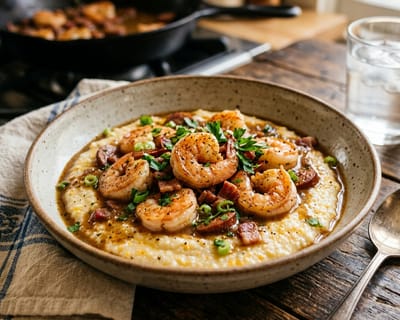
Southern Shrimp and Grits

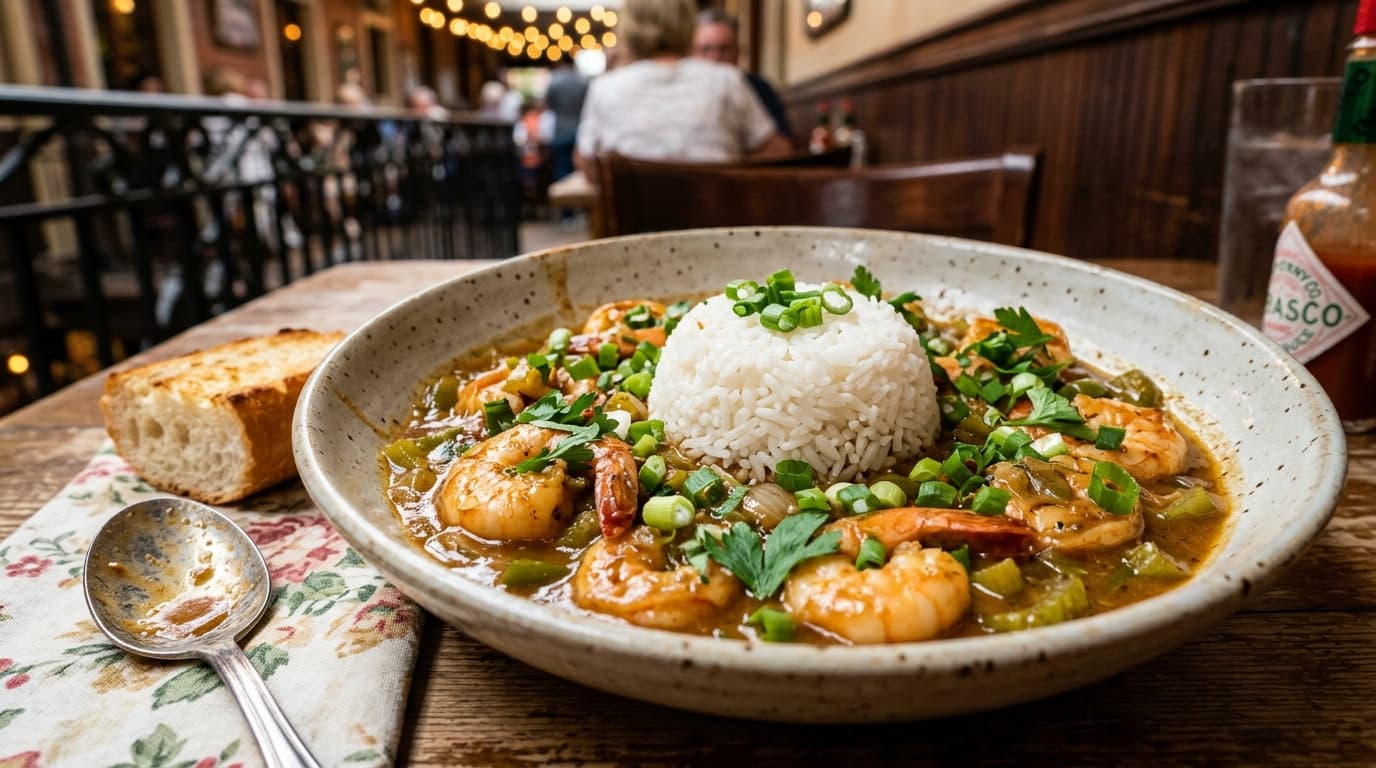
Authentic Lowcountry Southern shrimp and grits featuring plump wild-caught shrimp, smoky andouille sausage, and thick-cut bacon in a savory pan gravy over slow-simmered, stone-ground sharp cheddar grits.
Key Takeaways
- ✓Ready in just 45 mins using straightforward, kitchen-tested technique.
- ✓Delivers 38g of muscle-fueling protein per serving for lasting satiety.
- ✓Portion-balanced at 560 calories per serving with wholesome, unrefined ingredients.
- ✓Masterclass temperature checkpoints ensure maximum tenderness and flavor development.
The Story
Southern Shrimp and Grits stands as one of the defining triumphs of North American regional cooking. Born in the coastal Lowcountry of South Carolina and Georgia, this dish pairs succulent wild-caught shrimp, smoky andouille sausage, and crisp rendered bacon in a deeply savory pan gravy ladled over a steaming bed of slow-simmered stone-ground cheddar grits.
Despite its iconic standing on restaurant menus across the country, home iterations frequently suffer from critical execution flaws: watery, bland, instant-grit gruel with a pasty mouthfeel; rubbery, overcooked shrimp that have surrendered all moisture; or greasy, separated pan gravies that lack body and acid balance.
Mastering authentic Lowcountry shrimp and grits requires understanding the starch gelatinization kinetics of whole-kernel dent corn, extracting natural umami from shrimp shells, controlling protein denaturing in shellfish cookery, and balancing animal fats with sharp citrus and alliums.
The Lowcountry Heritage: From Coastal Fishermen to Modern Southern Menus
Shrimp and grits originated along the tidal marshes, barrier islands, and estuaries of the Carolina Lowcountry, a coastal region stretching from Cape Fear, North Carolina, southward through Charleston and Beaufort to Savannah, Georgia.
For centuries, this preparation was known simply as "breakfast shrimp." Local shrimpers and coastal families caught seasonal creek shrimp in casting nets during the humid summer months and simmered them quickly in rendered bacon drippings or country ham fat with fresh bell peppers and sweet onions, spooning the savory shellfish and its pan juices over leftover hominy grits from the morning meal.
The dish's cultural lineage is deeply intertwined with the Gullah Geechee people—descendants of enslaved Central and West Africans who preserved their agricultural, culinary, and linguistic heritage along the Sea Islands. The Gullah Geechee tradition of pairing fresh shellfish with slow-cooked grain porridges directly echoed West African traditions of rice and ground maize cookery.
In the mid-1980s, chef Bill Neal of Crook's Corner in Chapel Hill, North Carolina, elevated this humble coastal breakfast onto the national stage. Neal refined the preparation by pairing coarse stone-ground grits enriched with aged cheddar cheese with a pan gravy enriched with smoked bacon, mushrooms, scallions, fresh garlic, and lemon juice. Craig Claiborne praised Neal's preparation in The New York Times, cementing Shrimp and Grits as an essential masterwork of American culinary art.
The Food Science of Corn Grits: Amylose, Amylopectin, and Gelatinization
The foundational bed of grits determines the success of the entire dish. Grits are not simply cornmeal; they represent a distinct agricultural and milling process:
1. Dent Corn vs. Flint Corn
Traditional Southern grits are milled from dried field dent corn (Zea mays var. indentata), so named because a small depression or "dent" forms in the crown of each kernel as it dries. Dent corn possesses a soft, floury starch core surrounded by a hard outer endosperm, yielding a rich, creamy consistency when ground and cooked. (By contrast, Italian polenta is traditionally milled from flint corn, which has a harder, glassier endosperm that produces a firmer, more granular porridge).2. Stone-Ground vs. Industrially Degerminated Grits
- Instant and Quick Grits: Industrially manufactured by running corn through high-speed steel rollers that strip away the nutrient-rich germ and the fiber-dense aleurone layer (the bran). The remaining endosperm is pre-cooked, rolled, and dehydrated. While they cook in 5 minutes, they have surrendered all natural corn oils, leaving a flat, pasty mush with zero textural character.
- Coarse Stone-Ground Grits: Milled between cool revolving millstones that crush whole kernels without overheating. Stone-ground grits retain the fatty corn germ and natural sugars, delivering a rich, complex aroma of sweet roasted corn.
3. Starch Gelatinization Kinetics
Corn starch consists of linear amylose and branched amylopectin molecules packed inside tightly bound crystalline granules:- When dry grits are simmered in liquid, water gradually penetrates the starch granules.
- At temperatures between 145°F and 160°F (63°C to 71°C), the granules swell and absorb water.
- As simmering continues past 180°F (82°C) with steady agitation from a wire whisk, the swollen granules rupture, unraveling amylose polymers into the surrounding liquid.
- These uncoiled starch chains tangle together, trapping water in a thick, velvety viscoelastic gel.
- Achieving complete gelatinization and tenderizing the coarse outer bran takes 40 to 45 minutes of slow, low-temperature simmering. Rushing this process results in crunchy, under-hydrated raw starch grit.
The Chemistry of Creamy Dairy Enrichment
Cooking grits purely in water yields a bland starch base. The liquid medium must balance moisture, fat, and acidity:
1. The Broth-Milk Hybrid Base
Using an equal blend of low-sodium chicken broth and whole milk provides:- Savory Depth: Chicken broth supplies background savory glutamates.
- Lactic Smoothness: Whole milk provides lactose sugars and dairy proteins that soften the assertive corn starches.
- Preventing Scorch: Cooking grits in pure heavy cream or whole milk from the start increases the risk of scorching on the pot floor, as milk proteins easily burn. Adding cream and butter during the final 10 minutes of cooking buffers the starches while delivering a luxurious finish.
2. Sharp Cheddar: Emulsifying Aged Curd
Stirring freshly grated aged sharp cheddar cheese into hot, fully gelatinized grits incorporates dairy fat and aged cheese glutamates. The natural starches in the grits serve as a powerful stabilizer, preventing the melted cheddar fat from breaking into an oily slick.Shellfish Science: Shrimp Selection, Shell Stock, and Cookery
Shrimp are the delicate centerpiece of the dish, requiring careful handling:
1. Shrimp Selection: Wild-Caught American Whites
Always select wild-caught American white or brown shrimp (preferably 16/20 or 21/25 count):- Farmed imported shrimp are frequently treated with sodium tripolyphosphate (STPP), a chemical preservative that forces the shrimp to absorb excess water weight. When cooked, STPP-treated shrimp weep cloudy chemical brine into the pan, preventing browning and leaving a rubbery, spongy texture.
- Wild shrimp feed on natural marsh nutrients, yielding firm, sweet meat rich in natural mineral brine.
2. The Power of Shrimp Shell Stock
Never discard the peeled shrimp shells:- Shrimp exoskeletons are composed of chitin bound with rich carotenoid pigments (astaxanthin) and savory free amino acids.
- Simmering the shells in water or broth for 15 minutes creates a fragrant, golden-pink stock.
- Using this stock to deglaze the sausage and bacon fond elevates the pan gravy, infusing the entire sauce with intense seafood sweetness.
3. Avoiding the Rubber Threshold
Shrimp muscle consists of delicate myofibrillar proteins with minimal connective collagen.- At 120°F (49°C), shrimp meat turns translucent to opaque white.
- At 140°F (60°C), the proteins contract into a firm, juicy texture.
- When cooked past 155°F (68°C), the protein strands tighten aggressively, squeezing out moisture and leaving the meat dry, chalky, and curled into tight, rubbery "O" shapes.
- The Rule: Sear shrimp in hot bacon fat for only 90 seconds per side until they form a loose, gentle "C" shape. Immediately transfer them out of the skillet, build the pan gravy, and return the shrimp at the very end just to coat in warm sauce.
Step-by-Step Instructions
Follow these culinary steps for authentic Southern Shrimp and Grits:
Step 1: Simmer the Rapid Shrimp Shell Stock
Peel and devein 1 1/2 pounds of wild-caught large shrimp, leaving the tails attached if desired for presentation. Place all the peeled raw shells into a small saucepan.Add 2 cups of low-sodium chicken broth (or water), a pinch of kosher salt, and a few parsley stems.
Bring to a boil over medium-high heat, then reduce heat to medium-low and simmer gently for 15 minutes.
Pour through a fine-mesh strainer into a heat-proof measuring cup, pressing the shells with the back of a spoon to extract all savory liquid. Measure out 1 cup of rich shrimp stock for the pan gravy (discard shells).
Step 2: Begin the Stone-Ground Grits
In a heavy-bottomed 3-quart saucepan or Dutch oven, bring 2 cups of chicken broth, 2 cups of whole milk, and 1 teaspoon of kosher salt to a gentle simmer over medium heat.Slowly pour in 1 cup of coarse stone-ground corn grits in a steady, thin stream while whisking vigorously with a wire whisk to prevent any lumps from forming.
Continue whisking steadily for the first 3 minutes as the liquid comes back to a bare simmer and the starches begin to swell.
Step 3: Slow-Simmer Grits to Velvet Consistency
Reduce the heat under the saucepan to the absolute lowest setting. Cover the pot with a tight-fitting lid.Cook for 40 to 45 minutes, stirring thoroughly with a wooden spoon or silicone spatula every 5 to 7 minutes, scraping the bottom corners of the pot to prevent scorching.
The grits should gently bubble like molten lava. When fully cooked, the grains should feel soft, creamy, and tender on the tongue with zero raw crunch.
Step 4: Finish Grits with Cream, Butter, and Cheddar
Remove the lid from the cooked grits. Stir in 1/2 cup of heavy cream and 4 tablespoons of cubed unsalted butter.Whisk until the butter is completely melted and emulsified.
Add 1 1/2 cups of freshly grated sharp yellow cheddar cheese, 1/4 teaspoon of black pepper, and a tiny pinch of cayenne pepper.
Stir until the cheese is fully melted into the smooth, golden porridge. Taste and adjust salt if needed.
Remove the pan from the heat, cover tightly with the lid, and let stand while preparing the shrimp; the grits will stay steaming hot.
Step 5: Render the Bacon and Andouille
Place a wide 12-inch cast-iron skillet over medium heat.Add 4 strips of diced thick-cut applewood-smoked bacon. Cook for 6 to 8 minutes, stirring occasionally, until the bacon is deep mahogany brown and crisp.
Using a slotted spoon, transfer the bacon to a paper-towel-lined plate.
Add 6 ounces of sliced smoked andouille sausage to the remaining hot bacon drippings. Sauté for 3 to 4 minutes until browned with crisp edges.
Transfer the sausage to the plate with the bacon, leaving about 2 tablespoons of rendered savory fat in the skillet.
Step 6: Flash-Sear the Wild Shrimp
Increase the skillet heat to medium-high until the rendered fat is shimmering.Pat the peeled shrimp completely dry with paper towels. Season lightly with a pinch of kosher salt, black pepper, and 1/2 teaspoon of smoked paprika.
Add the shrimp to the hot skillet in a single, uncrowded layer.
Sear undisturbed for 90 seconds until the underside turns bright pink and golden. Flip with tongs and sear the second side for 60 to 90 seconds just until the meat turns opaque and curls into a loose 'C' shape.
Immediately transfer the seared shrimp to the plate with the bacon and sausage. (Do not overcook).
Step 7: Build the Lowcountry Pan Gravy
Reduce the skillet heat to medium. Add the finely diced yellow onion and green bell pepper to the remaining pan fat.Sauté for 4 to 5 minutes, stirring frequently with a wooden spoon, until soft and translucent.
Add 3 cloves of finely minced garlic and cook for 60 seconds until fragrant.
Sprinkle 1 1/2 tablespoons of all-purpose flour evenly over the vegetables. Stir continuously for 90 seconds to cook out the raw flour starch flavor.
Slowly pour in 1 cup of the warm strained shrimp shell stock, whisking constantly to incorporate the flour without lumps.
Add 1 tablespoon of fresh lemon juice, 1 teaspoon of Worcestershire sauce, 1/4 teaspoon of hot pepper sauce, and the cooked bacon and andouille sausage.
Bring to a gentle simmer for 3 to 4 minutes, stirring often, until the gravy thickens into a glossy, savory sauce that coats the back of a spoon.
Step 8: Assemble, Garnish, and Plate
Return the seared shrimp and any accumulated resting juices back into the skillet with the bubbling pan gravy.Simmer gently on low heat for just 60 seconds—only long enough to heat the shrimp through. Remove the skillet from the heat.
To plate, give the warm cheddar grits a quick stir (whisk in a splash of warm broth or cream if they have thickened too much).
Ladle generous mounds of creamy cheddar grits into wide, shallow serving bowls.
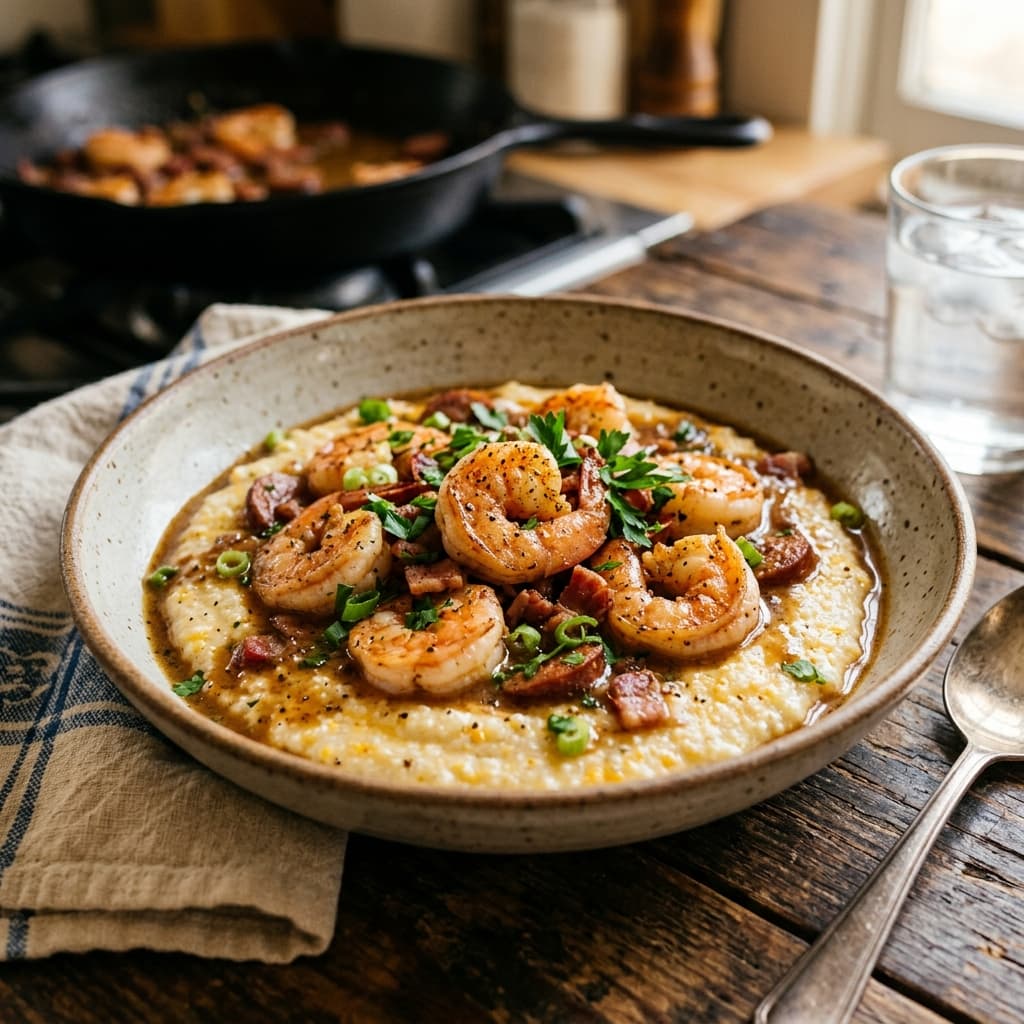
Spoon the sautéed shrimp, andouille sausage, crisp bacon, and rich pan gravy generously over the center of the grits.
Garnish with abundant thinly sliced green onions and chopped flat-leaf parsley. Serve immediately with fresh lemon wedges on the side.
Pro-Tips for Masterful Lowcountry Cooking
- Never Use Pre-Shredded Cheddar: Pre-shredded packaged cheeses are coated with potato starch and cellulose to prevent sticking in the bag. In hot grits, these starches prevent smooth melting, creating an oily, grainy texture. Always shred a block of aged cheddar by hand.
- Simmer Low and Stir Often: Corn starches sink to the bottom of the pot and will scorch if neglected. Use a heavy enameled Dutch oven or copper-bottomed pot and scrape the bottom every 5 to 7 minutes.
- Keep Shrimp Loose, Not Tight: A perfectly cooked shrimp resembles the letter 'C'. A shrimp cooked into a tight, clenched 'O' shape is severely overcooked and rubbery. Watch the pan closely.
- Save the Shells: Making a quick 15-minute shell stock transforms a basic chicken-gravy into an authentic, deeply ocean-sweet seafood gravy that defines true coastal Lowcountry cooking.
Flavor Variations and Additions
Storage, Reheating, and Make-Ahead Instructions
Shrimp and grits are best served fresh, but proper reheating restores their luxurious texture:
Storing Leftovers
Store leftover shrimp and pan gravy in an airtight container separate from the cooked grits in the refrigerator for up to 3 days.Reheating the Grits
As cooked grits cool, corn starches undergo retrogradation, firming the porridge into a solid block:- Place cold grits into a saucepan over medium-low heat.
- Whisk in 1/4 to 1/2 cup of whole milk, chicken broth, or water.
- Heat gently, whisking constantly, until the grits absorb the liquid and return to their creamy, velvety consistency.
Reheating the Shrimp and Gravy
Place the cold shrimp, sausage, bacon, and gravy into a skillet over low heat. Warm gently for 3 to 4 minutes until simmering and hot. Do not boil vigorously, or the shrimp will toughen.Transforming Leftovers: Crispy Pan-Fried Grit Cakes
Pour leftover warm grits into a greased 8x4-inch loaf pan and chill overnight until firm. Slice into 3/4-inch slabs, dredge lightly in flour, and pan-fry in butter for 4 to 5 minutes per side until crisp and golden brown. Top with warm sautéed shrimp and pan gravy.Sommelier Beverage Pairings
The rich, creamy cheese grits, smoky pork fat, and sweet, mineral shrimp pair beautifully with drinks that offer bright acidity, effervescence, or crisp herbal contrast:
- Dry Sparkling Wine (Blanc de Blancs or Cava): Champagne or crisp sparkling wine provides sharp bubbles and bright orchard-fruit acidity that cuts through heavy butter and cheese grits while highlighting sweet shellfish.
- Crisp, Acidic White Wine (Albariño or Muscadet Sèvre-et-Maine): Albariño from the coastal vineyards of Rías Baixas, Spain, offers salinity, citrus, and white-peach fruit that naturally pairs with wild shrimp and rich gravies.
- Southern Sweet Tea or Iced Tea with Lemon: Unsweetened or lightly sweetened iced black tea with fresh lemon slices provides clean astringency that resets the palate between rich bites.
- Craft Beer (American Amber Ale or Pilsner): An amber ale offers caramel malt notes that mirror seared andouille sausage, while a crisp pilsner provides clean bitterness that scrubs the palate.
Troubleshooting Common Shrimp and Grits Problems
1. The Grits Are Gritty and Hard After 30 Minutes
- The Cause: The heat was set too high, evaporating cooking liquid before starches could hydrate, or insufficient liquid was used.
- The Solution: Whisk in an additional 1/2 cup of warm broth or water, lower the burner to minimum, cover tightly, and simmer for an additional 15 minutes until tender.
2. The Pan Gravy Turned Greasy and Separated
- The Cause: Excessive rendered fat was left in the skillet, or the flour was not cooked properly before liquid was added.
- The Solution: Pour off excess pork drippings, leaving strictly 2 tablespoons of fat. Stir in 1 1/2 tablespoons of flour and cook for 90 seconds to create a roux that binds the fat and stock into a smooth emulsion.
3. The Shrimp Are Dry, Tough, and Rubbery
- The Cause: The shrimp were cooked too long in the skillet or boiled inside the hot gravy.
- The Solution: Sear shrimp for only 90 seconds per side. Remove them immediately from the pan, build the gravy, and return the shrimp at the very end for just 60 seconds off the flame to warm through.
Nutritional Breakdown and Macro Profile
Per serving (serving size: 1 generous bowl of grits with shrimp and gravy, recipe makes 6 servings):
| Nutrient | Amount per Serving | % Daily Value |
|---|---|---|
| Calories | 560 kcal | — |
| Total Fat | 26 g | 33% |
| Saturated Fat | 12 g | 60% |
| Cholesterol | 215 mg | 72% |
| Sodium | 980 mg | 43% |
| Total Carbohydrates | 44 g | 16% |
| Dietary Fiber | 3 g | 11% |
| Total Sugars | 4 g | — |
| Protein | 38 g | 76% |
| Potassium | 580 mg | 12% |
| Calcium | 310 mg | 24% |
| Iron | 3.2 mg | 18% |
Southern Shrimp and Grits
Authentic Lowcountry Southern shrimp and grits featuring plump wild-caught shrimp, smoky andouille sausage, and thick-cut bacon in a savory pan gravy over slow-simmered, stone-ground sharp cheddar grits.
Macro Nutrition Profile (Per Serving)
Ingredients
Creamy Stone-Ground Cheddar Grits
Lowcountry Shrimp & Pan Gravy
Garnishes
Ingredient Substitutions
| Original Ingredient | Healthy Alternative |
|---|---|
| Animal protein | Firm tofu, tempeh, or organic chickpeas |
| Cooking fat | Extra virgin olive oil or grass-fed butter |
Instructions
Simmer the Rapid Shrimp Shell Stock: Peel and devein 1 1/2 pounds of wild-caught large shrimp, leaving the tails attached if desired for presentation. Place all the peeled raw shells into a small saucepan. Add 2 cups of low-sodium chicken broth (or water), a pinch of kosher salt, and a few parsley stems. Bring to a boil over medium-high heat, then reduce heat to medium-low and simmer gently for 15 minutes. Pour through a fine-mesh strainer into a heat-proof measuring cup, pressing the shells with the back of a spoon to extract all savory liquid. Measure out 1 cup of rich shrimp stock for the pan gravy (discard shells).
Begin the Stone-Ground Grits: In a heavy-bottomed 3-quart saucepan or Dutch oven, bring 2 cups of chicken broth, 2 cups of whole milk, and 1 teaspoon of kosher salt to a gentle simmer over medium heat. Slowly pour in 1 cup of coarse stone-ground corn grits in a steady, thin stream while whisking vigorously with a wire whisk to prevent any lumps from forming. Continue whisking steadily for the first 3 minutes as the liquid comes back to a bare simmer and the starches begin to swell.
Slow-Simmer Grits to Velvet Consistency: Reduce the heat under the saucepan to the absolute lowest setting. Cover the pot with a tight-fitting lid. Cook for 40 to 45 minutes, stirring thoroughly with a wooden spoon or silicone spatula every 5 to 7 minutes, scraping the bottom corners of the pot to prevent scorching. The grits should gently bubble like molten lava. When fully cooked, the grains should feel soft, creamy, and tender on the tongue with zero raw crunch.
Finish Grits with Cream, Butter, and Cheddar: Remove the lid from the cooked grits. Stir in 1/2 cup of heavy cream and 4 tablespoons of cubed unsalted butter. Whisk until the butter is completely melted and emulsified. Add 1 1/2 cups of freshly grated sharp yellow cheddar cheese, 1/4 teaspoon of black pepper, and a tiny pinch of cayenne pepper. Stir until the cheese is fully melted into the smooth, golden porridge. Taste and adjust salt if needed. Remove the pan from the heat, cover tightly with the lid, and let stand while preparing the shrimp; the grits will stay steaming hot.
Render the Bacon and Andouille: Place a wide 12-inch cast-iron skillet over medium heat. Add 4 strips of diced thick-cut applewood-smoked bacon. Cook for 6 to 8 minutes, stirring occasionally, until the bacon is deep mahogany brown and crisp. Using a slotted spoon, transfer the bacon to a paper-towel-lined plate. Add 6 ounces of sliced smoked andouille sausage to the remaining hot bacon drippings. Sauté for 3 to 4 minutes until browned with crisp edges. Transfer the sausage to the plate with the bacon, leaving about 2 tablespoons of rendered savory fat in the skillet.
Flash-Sear the Wild Shrimp: Increase the skillet heat to medium-high until the rendered fat is shimmering. Pat the peeled shrimp completely dry with paper towels. Season lightly with a pinch of kosher salt, black pepper, and 1/2 teaspoon of smoked paprika. Add the shrimp to the hot skillet in a single, uncrowded layer. Sear undisturbed for 90 seconds until the underside turns bright pink and golden. Flip with tongs and sear the second side for 60 to 90 seconds just until the meat turns opaque and curls into a loose 'C' shape. Immediately transfer the seared shrimp to the plate with the bacon and sausage. (Do not overcook).
Build the Lowcountry Pan Gravy: Reduce the skillet heat to medium. Add the finely diced yellow onion and green bell pepper to the remaining pan fat. Sauté for 4 to 5 minutes, stirring frequently with a wooden spoon, until soft and translucent. Add 3 cloves of finely minced garlic and cook for 60 seconds until fragrant. Sprinkle 1 1/2 tablespoons of all-purpose flour evenly over the vegetables. Stir continuously for 90 seconds to cook out the raw flour starch flavor. Slowly pour in 1 cup of the warm strained shrimp shell stock, whisking constantly to incorporate the flour without lumps. Add 1 tablespoon of fresh lemon juice, 1 teaspoon of Worcestershire sauce, 1/4 teaspoon of hot pepper sauce, and the cooked bacon and andouille sausage. Bring to a gentle simmer for 3 to 4 minutes, stirring often, until the gravy thickens into a glossy, savory sauce that coats the back of a spoon.
Assemble, Garnish, and Plate: Return the seared shrimp and any accumulated resting juices back into the skillet with the bubbling pan gravy. Simmer gently on low heat for just 60 seconds—only long enough to heat the shrimp through. Remove the skillet from the heat. To plate, give the warm cheddar grits a quick stir (whisk in a splash of warm broth or cream if they have thickened too much). Ladle generous mounds of creamy cheddar grits into wide, shallow serving bowls. Spoon the sautéed shrimp, andouille sausage, crisp bacon, and rich pan gravy generously over the center of the grits. Garnish with abundant thinly sliced green onions and chopped flat-leaf parsley. Serve immediately with fresh lemon wedges on the side.
The Charleston Mushroom and Country Ham Gravy (Bill Neal Style): Sauté 8 ounces of sliced cremini or button mushrooms alongside the onions and peppers. Substitute 4 ounces of finely diced cured Carolina country ham in place of the andouille sausage.
The Cajun Creole Tomato Spiced Gravy: Add 1 cup of crushed canned San Marzano tomatoes and 1 teaspoon of Cajun seasoning (garlic powder, onion powder, oregano, thyme, cayenne) to the pan gravy. Simmer until the sauce reduces into a rich, tomato-infused Creole pan sauce.
The Smoked Gouda or Goat Cheese Grits: Replace the sharp yellow cheddar with 1 1/2 cups of shredded Dutch smoked Gouda for rich, autumnal smokiness. Alternatively, stir in 4 ounces of creamy goat cheese (chèvre) and 2 tablespoons of chopped fresh tarragon for an elegant bistro variation.
The Grits Are Gritty and Hard After 30 Minutes: The Cause: The heat was set too high, evaporating cooking liquid before starches could hydrate, or insufficient liquid was used. The Solution: Whisk in an additional 1/2 cup of warm broth or water, lower the burner to minimum, cover tightly, and simmer for an additional 15 minutes until tender.
The Pan Gravy Turned Greasy and Separated: The Cause: Excessive rendered fat was left in the skillet, or the flour was not cooked properly before liquid was added. The Solution: Pour off excess pork drippings, leaving strictly 2 tablespoons of fat. Stir in 1 1/2 tablespoons of flour and cook for 90 seconds to create a roux that binds the fat and stock into a smooth emulsion.
The Shrimp Are Dry, Tough, and Rubbery: The Cause: The shrimp were cooked too long in the skillet or boiled inside the hot gravy. The Solution: Sear shrimp for only 90 seconds per side. Remove them immediately from the pan, build the gravy, and return the shrimp at the very end for just 60 seconds off the flame to warm through.
Tried this recipe?
Let us know how it turned out! Click a star below to leave a review and rate the recipe.
Storage & Freezing Tips
- Refrigerator: Store leftovers in an airtight container for up to 3-4 days.
- Reheating: Heat in a saucepan or skillet on medium heat until hot throughout.
- Freezing: Freeze portions in airtight containers for up to 2 months. Reheat directly from frozen or after thawing.
Frequently Asked Questions
Can this recipe be prepared ahead of time?▼
Yes, this meal is excellent for weekly meal prep. Store components separately and assemble before serving.
Is this recipe gluten-free?▼
All ingredients used are naturally gluten-free. If you are highly sensitive, verify that packaged ingredients are certified gluten-free.
Tried this recipe?
Tag @stewartlucas on Instagram and hashtag it #nutriguide!
You Might Also Like
Stewart Lucas
Chief Culinary SpecialistStewart Lucas is the Chief Culinary Specialist and lead recipe developer representing the NutriGuide team. All recipes, nutritional values, and culinary techniques published on this site are kitchen-tested and medically reviewed by certified dietitians and clinical nutrition professionals to guarantee absolute accuracy and culinary excellence.
Community Reviews
Please log in to leave a review.