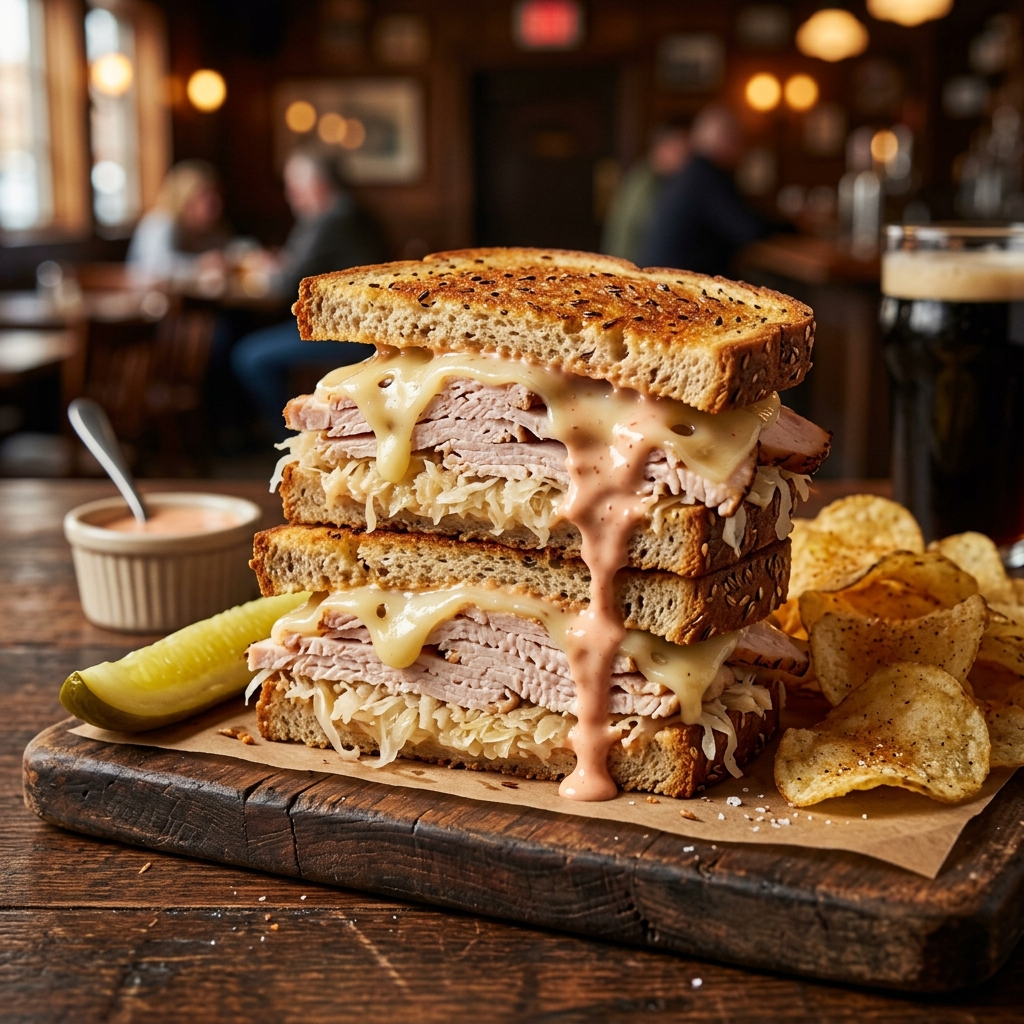
Turkey Reuben Sandwich

Also known as the classic Rachel sandwich, this hot deli favorite features thick layers of carved roasted turkey breast, melted Swiss cheese, tangy drained sauerkraut, and creamy homemade Russian dressing griddled to golden crispness on seeded rye bread.
Key Takeaways
- ✓Ready in just 15 mins using straightforward, kitchen-tested technique.
- ✓Delivers 38g of muscle-fueling protein per serving for lasting satiety.
- ✓Portion-balanced at 560 calories per serving with wholesome, unrefined ingredients.
- ✓Masterclass temperature checkpoints ensure maximum tenderness and flavor development.
The Story
Also known as the classic Rachel sandwich, this hot deli favorite features thick layers of carved roasted turkey breast, melted Swiss cheese, tangy drained sauerkraut, and creamy homemade Russian dressing griddled to golden crispness on seeded rye bread.
The Heritage and Evolution of the Deli-Style Turkey Reuben
Few sandwiches rival the enduring appeal of the Reuben. Originating in the early twentieth century—with historical claims split between Reuben's Restaurant in Manhattan and the Blackstone Hotel in Omaha, Nebraska—the Reuben achieved icon status by orchestrating contrasting flavor profiles: pungent cured meat, tangy fermented cabbage, sharp alpine cheese, and creamy spiced dressing pressed between crispy griddled rye.
The Turkey Reuben—frequently celebrated as the "Rachel"—emerged as a beloved variation across classic Jewish delis and roadside diners. By substituting lean, roasted turkey breast for cured corned beef, the sandwich retains all the textural crunch, gooey cheese richness, and fermented tang of the original, while offering a cleaner, less salty poultry profile.
However, crafting an outstanding Turkey Reuben at home requires disciplined moisture containment and thermal management. Because roasted turkey breast is leaner than fatty corned beef, it can easily dry out if overheated. Simultaneously, sauerkraut carries massive water reserves that threaten to dissolve the rye bread into mush.
By thoroughly squeezing out excess brine from the sauerkraut, layering ingredients to construct protective fat barriers, and griddling over controlled low heat beneath an inverted steam dome, you produce a sandwich with a crisp, buttered exterior, molten cheese, and juicy, tender turkey.
Ingredient Selection and Culinary Rationale
Each layer of the Turkey Reuben serves an essential physical and culinary purpose in maintaining structural stability from the skillet to the plate.
Seeded Rye Bread
Artisanal Jewish rye bread made with ground rye flour and unbleached wheat flour provides the ideal structural crumb. The addition of whole caraway seeds (Carum carvi) supplies distinctive earthy notes and volatile essential oils (primarily carvone and limonene) that cut through dairy fat. Avoid soft, squishy commercial sandwich ryes that collapse under griddle pressure; look for bakery loaves with a dense, elastic crumb and a firm, flour-dusted crust.Roasted Turkey Breast: Cut and Quality
Avoid wafer-thin, water-added shaved lunchmeat, which turns rubbery and releases salty phosphate water when heated. Instead, source thick-sliced oven-roasted turkey breast, smoked turkey breast, or carve leftover roasted turkey into uniform quarter-inch cutlets. The thicker cut gives the sandwich substantial chew, mimicking the structural presence of hand-carved corned beef.Fermented Sauerkraut: Brine Management
Sauerkraut is raw cabbage fermented by lactic acid bacteria (Leuconostoc mesenteroides and Lactobacillus plantarum), yielding clean, complex lactic acidity. That acidity is necessary to cut through rich Swiss cheese and mayonnaise dressing. However, raw kraut is roughly ninety percent brine by weight. Squeezing the sauerkraut forcefully inside a clean kitchen towel until bone-dry is the single most important step in preventing a soggy Reuben.Real Swiss Cheese: Emmental vs. Processed
Real Swiss cheese—such as Swiss Emmental, Jarlsberg, or Gruyère—is an alpine cow's milk cheese characterized by propionic acid fermentation, which creates large eyes and sweet, hazelnut notes. When heated, natural Swiss melts into a stretchy, cohesive blanket that encapsulates the turkey and sauerkraut, holding the tall sandwich together during slicing.Scratch Russian Dressing vs. Bottled Thousand Island
Many commercial establishments use sweet Thousand Island dressing as a shortcut. Authentic Russian dressing, by contrast, is sharper, spicier, and less sweet. By combining whole-egg mayonnaise with chili sauce, drained prepared horseradish, Worcestershire sauce, and smoked paprika, you produce a dressing with pungent bite that cuts through the rich butter and melted cheese.Equipment Needed for Griddle Success
Assembling and pressing a tall deli sandwich requires basic tools to manage heat transfer and prevent structural collapse:
- 12-Inch Heavy Cast-Iron Skillet or Carbon Steel Griddle: Thick cast iron retains steady heat, ensuring the outer rye crust browns into an even, golden shell without hot spots that scorch caraway seeds.
- Metal Basting Cover or Inverted Stainless-Steel Bowl: Placing a dome over the sandwich during the first few minutes traps ambient steam, melting the thick Swiss cheese down through the turkey layers before the bread burns.
- Wide Metal Spatula or Burger Turner: A stiff, broad spatula allows you to support the full weight of the loaded sandwich, making flips seamless and spill-free.
- Serrated Bread Knife: A sharp serrated knife saws cleanly through crispy griddled rye and melted layers without compressing the sandwich or squeezing out the dressing.
- Clean Lint-Free Kitchen Dish Towel: Essential for wringing out moisture from the fermented sauerkraut.
The Physics of Griddled Sandwiches: Preventing Sogginess
The primary failure mode of a Reuben is the dreaded "soggy bottom"—a wet, gummy lower crust that falls apart under handling. Preventing this requires mastering moisture barriers and steam dynamics:
The Hydrophobic Fat Shield
Water and oil do not mix. If wet sauerkraut or watery dressing touches bare bread, the flour starches absorb the liquid instantly. To prevent this, apply a thin layer of Russian dressing directly to the inner face of the bread, followed immediately by a solid slice of Swiss cheese. As the skillet heats up, the cheese melts against the bread, creating an impermeable lipid barrier that permanently isolates the bread crumb from any juices released by the sauerkraut and turkey.Controlled Low-Heat Griddling
Sugar in bread dough caramelizes rapidly above 320°F (160°C). If the skillet is screaming hot, the buttered rye will turn dark brown within 90 seconds, while the thick stack of turkey and Swiss cheese inside remains stone cold. Maintain burner heat at medium-low (around 300°F to 325°F / 150°C to 163°C). This gentle thermal conduction gives heat ample time to penetrate the interior layers and liquefy the cheese while the rye crust develops a shatteringly crisp, amber crust.Step-by-Step Instructions
Follow these clear, sequential directions to create four hearty Turkey Reuben sandwiches.
Step 1: Whisk the Scratch Russian Dressing
In a small glass mixing bowl, combine 1/2 cup of mayonnaise, 2 tablespoons of chili sauce (or ketchup), 1 tablespoon of finely diced dill pickles, 1 tablespoon of drained prepared horseradish, 1 teaspoon of Worcestershire sauce, 1 teaspoon of fresh lemon juice, 1/2 teaspoon of smoked paprika, 1/4 teaspoon of kosher salt, and 1/4 teaspoon of black pepper. Whisk vigorously until smooth and creamy. Cover and refrigerate for at least 15 minutes to allow the flavors to marry.Step 2: Squeeze and Dry the Sauerkraut
Measure 1 1/2 cups of sauerkraut into a fine-mesh colander set over the sink. Press down firmly with a silicone spatula to expel initial brine. Transfer the sauerkraut to the center of a clean, lint-free kitchen dish towel. Gather the corners of the towel together to form a bundle, and twist firmly with both hands over the sink, wringing out as much liquid as possible. When unwrapped, the sauerkraut should feel dry and fluffy.Step 3: Warm the Turkey and Kraut
Place a nonstick skillet over medium-low heat. Add the sliced turkey breast and dried sauerkraut side-by-side. Add 1 tablespoon of water to the pan and cover tightly with a lid for 90 seconds. The trapped steam gently warms the poultry and softens the sauerkraut without drying out the meat. Remove from heat and set aside on a plate.Step 4: Butter the Rye Bread
Lay 8 slices of seeded rye bread flat on a clean cutting board. Using a butter knife, spread 1/2 tablespoon of softened unsalted butter evenly across one side of each slice, reaching all the way to the crust edges. Flip 4 of the slices over so the buttered sides face downward; these will be your bottom sandwich halves.Step 5: Construct the Sandwich Layers
Spread 1 generous tablespoon of Russian dressing across the unbuttered side of each of the 4 bottom bread slices. Top each with 1 slice of Swiss cheese. Divide the warmed, drained sauerkraut evenly across the cheese layers. Stack one-quarter of the warmed sliced turkey breast (about 4 ounces) over the sauerkraut. Top the turkey with a second slice of Swiss cheese, and drizzle another tablespoon of Russian dressing over the cheese. Close each sandwich with a remaining bread slice, buttered side facing outward.Step 6: Griddle Under a Steam Dome
Place a 12-inch heavy cast-iron skillet over medium-low heat. Add 1 or 2 assembled sandwiches to the dry skillet, ensuring they do not crowd each other. Cover the skillet immediately with a metal basting dome, large inverted bowl, or pan lid. Cook undisturbed for 3 to 4 minutes. The trapped steam will circulate around the top of the sandwich, pre-melting the upper cheese layer while the bottom bread toasts to a deep golden amber.Step 7: Flip and Brown the Second Side
Remove the cover. Slide a wide metal spatula underneath the sandwich, place your free hand lightly on top of the sandwich to stabilize the fillings, and flip cleanly. Cook uncovered for an additional 2 to 3 minutes, pressing down gently with the spatula to encourage even contact with the pan floor, until the bottom slice is crispy and the cheese oozes enticingly from the sides.Step 8: Rest, Slice, and Serve
Transfer the griddled sandwiches to a wooden cutting board. Let them rest for 60 seconds; this brief rest allows the melted cheese to firm up slightly so the turkey does not slide out when cut. Using a sharp serrated knife, slice each sandwich diagonally in half using gentle sawing motions. Serve immediately with chilled kosher dill pickle spears and crispy kettle chips.Flavor Twists and Regional Variations
Nutritional Breakdown
The Turkey Reuben provides a satisfying, protein-forward meal featuring complex carbohydrates, gut-friendly lactic ferments, and bioavailable calcium.
| Metric | Per Serving (1 Whole Sandwich) | Daily Value (%) |
|---|---|---|
| Calories | 560 kcal | 28% |
| Protein | 38 g | 76% |
| Total Carbohydrates | 42 g | 15% |
| Dietary Fiber | 5 g | 18% |
| Total Fat | 28 g | 36% |
| Saturated Fat | 13 g | 65% |
| Cholesterol | 105 mg | 35% |
| Sodium | 1,180 mg | 51% |
| Potassium | 460 mg | 10% |
| Calcium | 480 mg | 37% |
| Iron | 3.4 mg | 19% |
Bread Selection and Griddle Mechanics: Sourdough vs. Rye
While seeded rye is the indisputable benchmark for an authentic Reuben, understanding alternative breads helps home cooks adapt to their pantry:
Seeded Jewish Rye (The Classic Standard)
Seeded Jewish rye combines rye and wheat flours with whole caraway seeds. The natural starches in rye create a tight, moist crumb that withstands heat without disintegrating, while caraway seeds release aromatic terpenes that cut through the richness of Swiss cheese and butter.Marbled Rye (Visual Contrast)
Marbled rye combines light rye dough with dark rye colored with malted barley or molasses. It delivers a striking visual swirl on the plate with slightly deeper caramelized sweetness, pairing beautifully with tangy Russian dressing.Country Sourdough (The Modern Alternative)
If rye is unavailable, artisanal country sourdough is the finest substitute. Its natural wild fermentation delivers crisp crust blisters and gentle lactic acidity that harmonizes with sauerkraut. Avoid sliced white sandwich bread, which is too flimsy to support the weight of warm turkey and cheese.Beverage Pairings and Deli Accompaniments
A hearty, savory sandwich benefits from crisp, refreshing accompaniments that balance its rich, tangy profile:
Craft Beers
- German Pilsner or Kölsch: Clean, crisp carbonation and bright noble hops scrub the palate of cheese fat and butter.
- Irish Red Ale or Amber Lager: Caramel malt sweetness echoes the toasted rye crust while standing up to spicy horseradish dressing.
Classic Deli Sides
Pair your hot Turkey Reuben with thick kosher dill pickle spears, crispy homemade potato chips or kettle chips, and a chilled glass of fresh iced tea with lemon.Turkey Reuben Sandwich
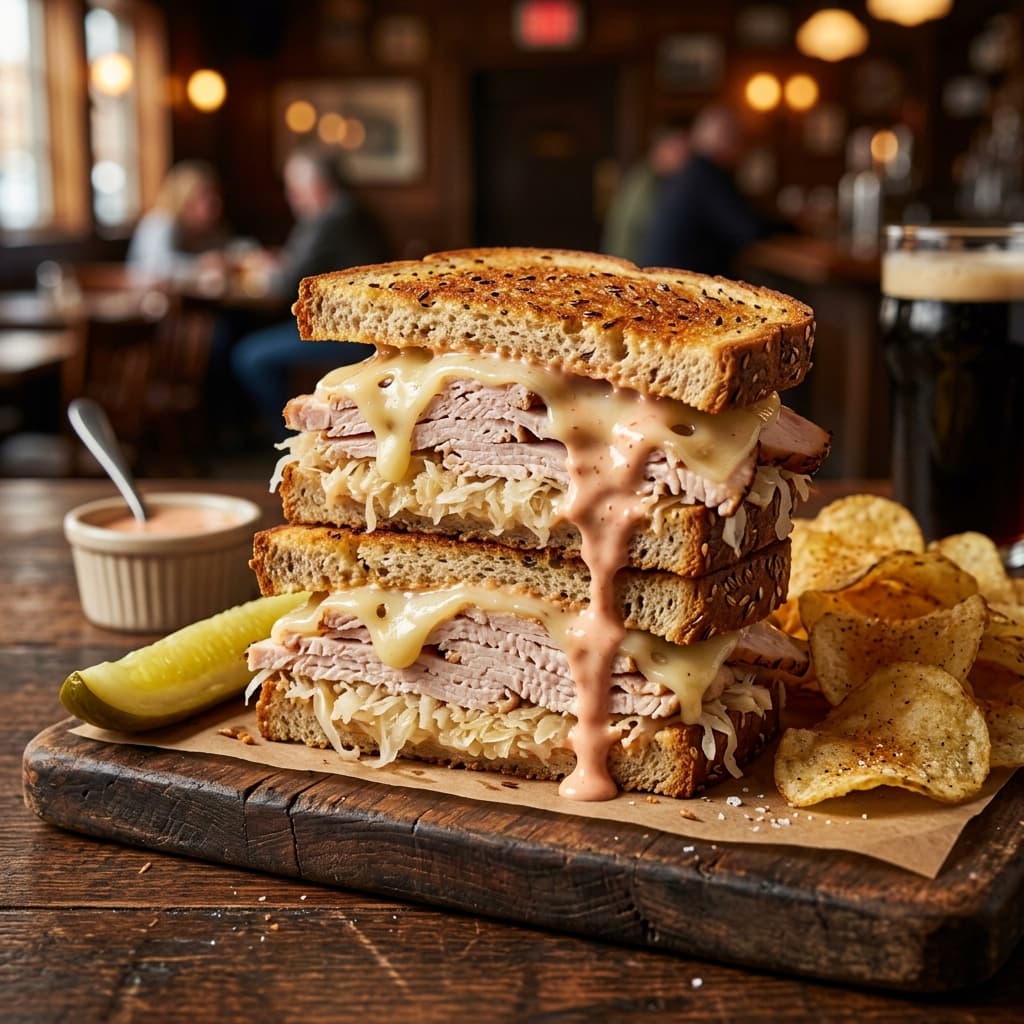
Also known as the classic Rachel sandwich, this hot deli favorite features thick layers of carved roasted turkey breast, melted Swiss cheese, tangy drained sauerkraut, and creamy homemade Russian dressing griddled to golden crispness on seeded rye bread.
Macro Nutrition Profile (Per Serving)
Ingredients
Creamy Homemade Russian Dressing
Ingredient Substitutions
| Original Ingredient | Healthy Alternative |
|---|---|
| Chicken breast | Turkey breast or extra-firm tofu (1:1 ratio) |
| Dino kale/greens | Baby spinach or Swiss chard (cooks faster, add at the end) |
Instructions
Whisk the Scratch Russian Dressing: In a small glass mixing bowl, combine 1/2 cup of mayonnaise, 2 tablespoons of chili sauce (or ketchup), 1 tablespoon of finely diced dill pickles, 1 tablespoon of drained prepared horseradish, 1 teaspoon of Worcestershire sauce, 1 teaspoon of fresh lemon juice, 1/2 teaspoon of smoked paprika, 1/4 teaspoon of kosher salt, and 1/4 teaspoon of black pepper. Whisk vigorously until smooth and creamy. Cover and refrigerate for at least 15 minutes to allow the flavors to marry.
Squeeze and Dry the Sauerkraut: Measure 1 1/2 cups of sauerkraut into a fine-mesh colander set over the sink. Press down firmly with a silicone spatula to expel initial brine. Transfer the sauerkraut to the center of a clean, lint-free kitchen dish towel. Gather the corners of the towel together to form a bundle, and twist firmly with both hands over the sink, wringing out as much liquid as possible. When unwrapped, the sauerkraut should feel dry and fluffy.
Warm the Turkey and Kraut: Place a nonstick skillet over medium-low heat. Add the sliced turkey breast and dried sauerkraut side-by-side. Add 1 tablespoon of water to the pan and cover tightly with a lid for 90 seconds. The trapped steam gently warms the poultry and softens the sauerkraut without drying out the meat. Remove from heat and set aside on a plate.
Butter the Rye Bread: Lay 8 slices of seeded rye bread flat on a clean cutting board. Using a butter knife, spread 1/2 tablespoon of softened unsalted butter evenly across one side of each slice, reaching all the way to the crust edges. Flip 4 of the slices over so the buttered sides face downward; these will be your bottom sandwich halves.
Construct the Sandwich Layers: Spread 1 generous tablespoon of Russian dressing across the unbuttered side of each of the 4 bottom bread slices. Top each with 1 slice of Swiss cheese. Divide the warmed, drained sauerkraut evenly across the cheese layers. Stack one-quarter of the warmed sliced turkey breast (about 4 ounces) over the sauerkraut. Top the turkey with a second slice of Swiss cheese, and drizzle another tablespoon of Russian dressing over the cheese. Close each sandwich with a remaining bread slice, buttered side facing outward.
Griddle Under a Steam Dome: Place a 12-inch heavy cast-iron skillet over medium-low heat. Add 1 or 2 assembled sandwiches to the dry skillet, ensuring they do not crowd each other. Cover the skillet immediately with a metal basting dome, large inverted bowl, or pan lid. Cook undisturbed for 3 to 4 minutes. The trapped steam will circulate around the top of the sandwich, pre-melting the upper cheese layer while the bottom bread toasts to a deep golden amber.
Flip and Brown the Second Side: Remove the cover. Slide a wide metal spatula underneath the sandwich, place your free hand lightly on top of the sandwich to stabilize the fillings, and flip cleanly. Cook uncovered for an additional 2 to 3 minutes, pressing down gently with the spatula to encourage even contact with the pan floor, until the bottom slice is crispy and the cheese oozes enticingly from the sides.
Rest, Slice, and Serve: Transfer the griddled sandwiches to a wooden cutting board. Let them rest for 60 seconds; this brief rest allows the melted cheese to firm up slightly so the turkey does not slide out when cut. Using a sharp serrated knife, slice each sandwich diagonally in half using gentle sawing motions. Serve immediately with chilled kosher dill pickle spears and crispy kettle chips.
Tried this recipe?
Let us know how it turned out! Click a star below to leave a review and rate the recipe.
Storage & Freezing Tips
- Refrigerator: Store leftovers in an airtight container for up to 3-4 days.
- Reheating: Heat in a saucepan or skillet on medium heat until hot throughout.
- Freezing: Freeze portions in airtight containers for up to 2 months. Reheat directly from frozen or after thawing.
Frequently Asked Questions
Can this recipe be prepared ahead of time?▼
Yes, this meal is excellent for weekly meal prep. Store components separately and assemble before serving.
Is this recipe gluten-free?▼
All ingredients used are naturally gluten-free. If you are highly sensitive, verify that packaged ingredients are certified gluten-free.
Tried this recipe?
Tag @stewartlucas on Instagram and hashtag it #nutriguide!
You Might Also Like



Stewart Lucas
Chief Culinary SpecialistStewart Lucas is the Chief Culinary Specialist and lead recipe developer representing the NutriGuide team. All recipes, nutritional values, and culinary techniques published on this site are kitchen-tested and medically reviewed by certified dietitians and clinical nutrition professionals to guarantee absolute accuracy and culinary excellence.
Community Reviews
Please log in to leave a review.