Fuel Your Fitness: The Ultimate Guide to Pre and Post-Workout Nutrition
Ever finished a workout feeling more drained than invigorated? Or hit a frustrating plateau despite your consistent effort? The secret often lies not just in your movements, but in how you purposefully nourish your body around every exercise session.
Ever finished a workout feeling more drained than invigorated? Or hit a frustrating plateau despite your consistent effort? The secret often lies not just in your movements, but in how you purposefully nourish your body around every exercise session.
Key Takeaways
- ✓Evidence-based guidance on Pre and Post Workout Nutrition for long-term health.
- ✓Evidence-based guidance on Workout Nutrient Timing for long-term health.
- ✓Evidence-based guidance on What to Eat Before a Workout for long-term health.
- ✓Evidence-based guidance on Post Workout Recovery Meals for long-term health.
Quick Takeaways
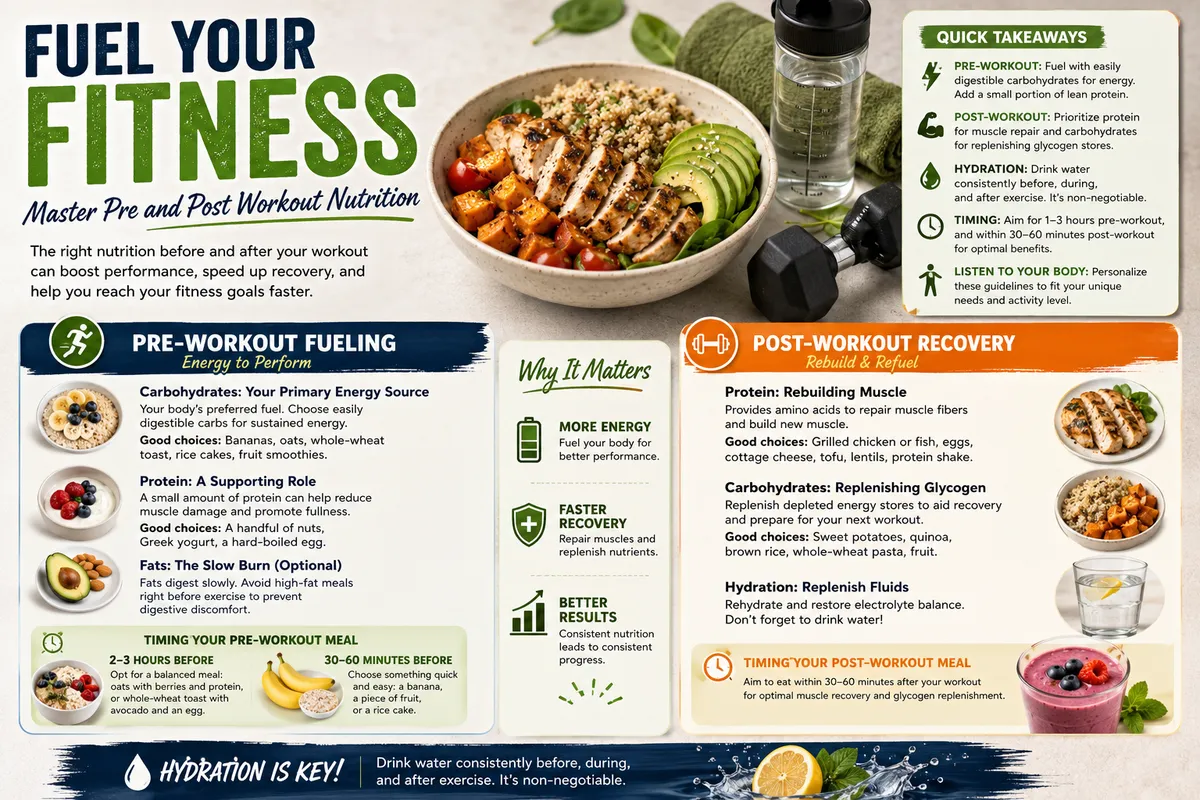
- Pre-Workout: Fuel with easily digestible carbohydrates for energy. Add a small portion of lean protein.
- Post-Workout: Prioritize protein for muscle repair and carbohydrates for replenishing glycogen stores.
- Hydration: Drink water consistently before, during, and after exercise. It's non-negotiable.
- Timing: Aim for 1-3 hours pre-workout, and within 30-60 minutes post-workout for optimal benefits.
- Listen to Your Body: Personalize these guidelines to fit your unique needs and activity level.
Fuel Your Fitness: The Ultimate Guide to Pre and Post Workout Nutrition
Every movement is an investment. From a brisk morning walk to an intense lifting session, your body expends energy and adapts. Choosing the right Healthy Exercise Fuel directly impacts your performance, recovery, and ultimately, your progress. Let's explore how mindful eating can transform your exercise experience.
The Foundation: Why Nutrition Matters Around Your Workout
Imagine building a house without proper materials. Mastering Workout Nutrient Timing ensures you get the right fuel at the right moments. Your body, in its incredible complexity, requires specific nutrients to perform at its best. Before exercise, you need readily available energy. Afterwards, your focus shifts to repair and replenishment. This isn't just about athletic performance; it's about feeling vibrant and strong in your everyday life.
Before You Move: Pre-Workout Fueling
Knowing What to Eat Before a Workout is like setting the stage for success. You want to ensure sustained energy without weighing yourself down. The goal is to provide fuel that's easily accessible to your muscles.
Carbohydrates: Your Primary Energy Source
These are your body's preferred fuel. Simple carbohydrates offer quick energy, while complex carbohydrates provide a more sustained release. Choose options that are easy to digest to avoid discomfort during exercise.
- Good choices: Bananas, oats, whole-wheat toast, rice cakes, fruit smoothies.
Protein: A Supporting Role
A small amount of protein pre-workout can help reduce muscle damage, support Muscle Maintenance, and promote a feeling of fullness. It's about support, not bulk.
- Good choices: A handful of nuts, Greek yogurt, a hard-boiled egg.
Fats: The Slow Burn (Optional)
Fats digest slowly. While essential for overall health, high-fat meals right before a workout can cause digestive upset. Keep them minimal or avoid them immediately pre-exercise.
Timing Your Pre-Workout Meal
If you have 2-3 hours, opt for a balanced meal: oats with berries and a scoop of protein, or whole-wheat toast with avocado and an egg. If you have 30-60 minutes, choose something quick: a banana, a piece of fruit, or a rice cake.
After Your Effort: Post-Workout Recovery
You’ve pushed your body. Now, it’s time to rebuild and refuel with targeted Post Workout Recovery Meals. This phase is crucial for muscle repair, glycogen replenishment, and overall adaptation.
Protein: Rebuilding Muscle
Exercise creates tiny tears in your muscle fibers. Protein provides the amino acids needed to repair these tears and build new muscle. Aim for a substantial portion.
- Good choices: Grilled chicken or fish, eggs, cottage cheese, tofu, lentils, a protein shake.
Carbohydrates: Replenishing Glycogen
Your muscles store energy as glycogen. Intense exercise depletes these stores. Replenishing them helps with recovery and prepares you for your next session. Combine both simple and complex options.
- Good choices: Sweet potatoes, quinoa, brown rice, whole-wheat pasta, fruit.
Fats: A Moderate Approach
Healthy fats are important for overall health, but like pre-workout, keep them moderate post-workout as they can slow nutrient absorption. Include them as part of a balanced meal.
Stewart's Perspective: "Many fixate on a rigid 'anabolic window' for post-workout nutrition. While immediate refueling is beneficial, the window isn't as fleeting as once thought. Focus on consistent, quality nutrition throughout your entire day. That's where true, lasting progress truly blossoms, building strength and vitality beyond a single meal."
Workout Hydration Guide: The Unsung Hero
Often overlooked, water is critical. Dehydration impacts performance, energy levels, and recovery. Drink water consistently throughout the day, and increase intake around your workouts. Electrolyte drinks can be beneficial for longer, intense sessions, but plain water is generally sufficient for most.
Science Says: Muscle Repair & Glycogen Replenishment
Research consistently shows that consuming 0.25–0.4 grams of protein per kilogram of body weight, combined with carbohydrates, within a few hours post-exercise, significantly enhances muscle protein synthesis and glycogen replenishment. This accelerates recovery, reduces muscle soreness, and effectively prepares your body for the next challenge.
Listen to Your Body: Personalization is Key
These are guidelines, not rigid rules. Your body is unique. Experiment with different foods and timings. Pay attention to how you feel, your energy levels, and your recovery. A food journal can be a valuable tool to track what works best for you. What energizes one person might feel heavy to another.
Frequently Asked Questions
1. Can I work out on an empty stomach?▼
For lighter, shorter workouts, some people find exercising on an empty stomach fine. However, for moderate to intense sessions, fueling beforehand provides the energy needed to perform effectively and prevent early fatigue.
2. What if I don't feel hungry after a workout?▼
It's common for appetite to decrease after intense exercise. Even if you're not starving, try a liquid option like a smoothie with protein powder, fruit, and a splash of milk or water. It's an easy way to get essential nutrients for recovery.
3. Are protein shakes essential for post-workout?▼
No, they are not essential, but they are convenient. Whole food sources like chicken, fish, eggs, or lentils provide excellent protein. If time or appetite is limited, a protein shake is a quick and efficient option for muscle repair.
4. How long should I wait to eat after my workout?▼
Aim to consume your post-workout meal or snack within 30-60 minutes after finishing. This window is considered optimal for kickstarting the recovery process, especially the replenishment of glycogen and initiation of muscle repair.
5. What are good options for Plant Based Fitness Food pre and post-workout?▼
Pre: Banana with a few almonds, oat porridge with berries, a fruit smoothie with plant-based protein powder. Post: Lentil soup with whole-grain bread, quinoa salad with chickpeas and roasted vegetables, tofu scramble with sweet potatoes, a plant-based protein shake.

Stewart Lucas
Nutritionist & Recipe DeveloperStewart Lucas is a nutritionist and recipe developer representing the NutriGuide team. All articles, dietary guidelines, and meal plans published on this site are designed and audited by certified dietitians and clinical nutrition professionals to guarantee absolute accuracy.
Explore More




Community Reviews
Please log in to leave a review.