Macro Counting 101: The Complete Beginner's Guide to Protein, Carbs & Fats
Unlock vibrant energy and precise nutrition with our beginner's guide to macro counting. Learn how to balance protein, carbs, and fats for sustainable weight loss, muscle maintenance, and healthy living.
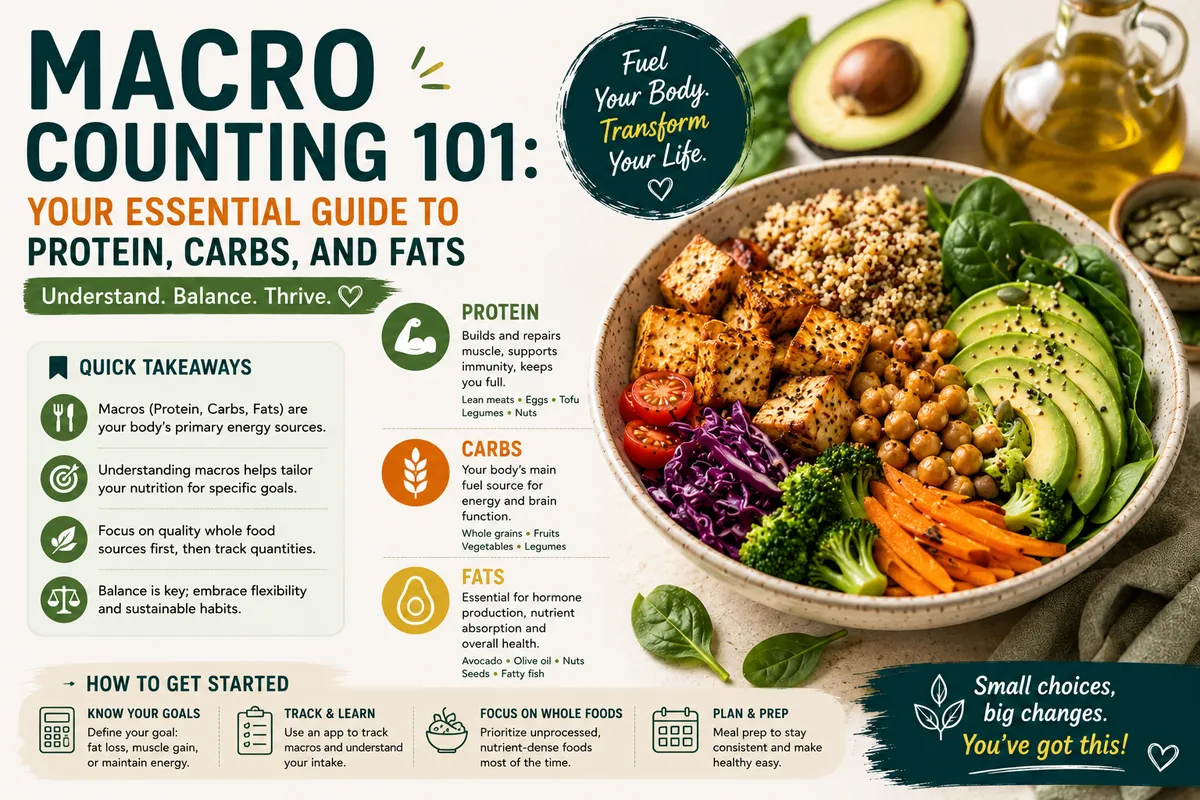
Unlock vibrant energy and precise nutrition with our beginner's guide to macro counting. Learn how to balance protein, carbs, and fats for sustainable weight loss, muscle maintenance, and healthy living.
Key Takeaways
- ✓Protein supports muscle maintenance and enhances satiety for weight management.
- ✓Carbohydrates fuel muscle energy and optimize recovery window performance.
- ✓Healthy fats regulate hormone production and support vitamin absorption.
- ✓Use a macro calculator to customize targets to your specific BMR and TDEE.
- Macros (Protein, Carbs, Fats) are your body's primary energy sources.
- Understanding macros helps tailor your nutrition for weight loss, muscle gain, or steady energy.
- Focus on quality whole food sources first, then track quantities.
- Balance is key; embrace flexible dieting and sustainable habits over strict perfection.
Ever wonder if your plate truly aligns with your body's unique needs? Imagine feeling consistently energized, focused, and truly nourished. This journey begins not with restriction, but with understanding the fundamental building blocks of your food: macronutrients. If you are new to tracking, starting with a roadmap of macro counting for beginners is the best way to avoid feeling overwhelmed. Learning how to count macros isn't about calorie restriction; it's about optimizing your daily fuel.
What Are Macros, Really?
Macronutrients are the nutrients your body needs in larger amounts for energy, growth, and proper function. They consist of protein carbs fats that function as the primary fuel sources for every system within you.
Protein: The Foundation
Protein builds and repairs tissues. It keeps you feeling full, supports muscle growth, and aids in countless bodily processes. Picture lean meats, fish, eggs, legumes, and nuts forming the robust structure of your meals.
Carbohydrates: Your Body's Fuel
Carbohydrates are your body's preferred energy source. They power your brain, muscles, and daily activities. Choose complex carbs like whole grains, fruits, and vegetables for sustained, stable energy release. They provide that steady hum throughout your day.
Fats: Essential for Function
Fats are vital for hormone production, nutrient absorption, and organ protection. Healthy fats, found in avocados, olive oil, nuts, and fatty fish, are crucial for long-term health and a sense of deep satisfaction in your meals. They contribute to a vibrant glow from within.
Why Count Macros? Beyond Just Calories
Counting calories tells you how much you're eating. Counting macros tells you what kind of fuel you're providing. This distinction is powerful.
Precision in Fueling Your Body
It brings clarity. You move beyond vague eating habits to precise nutritional strategies. Every meal becomes an intentional step towards your wellness goals, whether it's shedding excess weight, supporting muscle gain, or simply enhancing daily vitality.
Tailoring Your Nutrition Goals
Your body has unique demands. An athlete needs different macro ratios than someone managing blood sugar. Macro counting allows you to personalize your plate, optimizing for specific outcomes like improved performance, stable energy, or targeted body composition changes.
"For years, I saw people struggle with 'diet rules.' Macro counting isn't about restriction; it's about empowerment. It’s a tool for understanding your body's language, allowing you to feed it exactly what it needs to thrive. It brings a new level of awareness to every bite."
Getting Started: The NutriGuide Approach
Embarking on macro counting doesn't need to be daunting. Here’s a simple path forward.
Calculate Your Daily Needs
Begin by determining your basal metabolic rate (BMR) and total daily energy expenditure (TDEE). Using a dedicated macro calculator is a great way to estimate your personalized numbers. Then, adjust your macro ratios based on your specific goals: generally higher protein for muscle, balanced carbs for energy, and healthy fats for overall function.
Tracking Made Simple
Utilize a reliable food tracking app. Log your meals for a few days to get a baseline understanding. This isn't about perfection, but awareness. Watch how your body responds; it's your best guide.
Focus on Quality First
Always prioritize nutrient-dense, whole foods. Counting macros on a diet of processed snacks misses the point. Think vibrant vegetables, lean proteins, wholesome grains, and beneficial fats. The foundation of your health is always quality ingredients.
Research published in the American Journal of Clinical Nutrition consistently highlights the importance of adequate protein intake (typically 0.8-1.2g per kg body weight) for satiety, muscle preservation, and metabolic health, particularly during weight loss.
Common Missteps and How to Avoid Them
Every new journey has its bumps. Here's how to navigate them smoothly.
Over-Complicating It
Don't strive for exact numbers from day one. Start with broad targets. Focus on hitting your protein goal, then fill in carbs and fats. Progress, not perfection, is the aim.
Neglecting Micronutrients
Macro counting primarily tracks protein, carbs, and fats. Remember to include plenty of fruits, vegetables, and whole foods to ensure you're also getting essential vitamins, minerals, and fiber. These unsung heroes are just as vital.
All or Nothing Mentality
Life happens. If you miss a macro target or have an off-plan meal, simply adjust the next one. Consistency over time yields results, not flawless daily execution. Embrace flexibility and self-compassion.
Frequently Asked Questions
Is macro counting suitable for everyone?▼
While beneficial for many, it's wise to consult a nutritionist or healthcare professional, especially if you have underlying health conditions or specific dietary needs.
How long should I count macros?▼
Some count indefinitely, others use it to build awareness, then transition to intuitive eating with their learned knowledge. It's a tool; use it as long as it serves your goals.
Can I eat "unhealthy" foods if they fit my macros?▼
While technically possible, NutriGuide emphasizes nutrient density. Prioritize whole, unprocessed foods. "If it fits your macros" (IIFYM) should never compromise micronutrient intake or overall health.
What's a good starting macro ratio?▼
A common starting point is 30% protein, 40% carbs, 30% fat, but this varies significantly based on activity level, age, and goals. A coach can help you personalize this.
Scientific References
- Helms, E. R. et al. (2014). 'Evidence-based recommendations for natural bodybuilding contest preparation: nutrition and supplementation.' Journal of the International Society of Sports Nutrition, 11(1), 20. [View Study]

Stewart Lucas
Nutritionist & Recipe DeveloperStewart Lucas is a nutritionist and recipe developer representing the NutriGuide team. All articles, dietary guidelines, and meal plans published on this site are designed and audited by certified dietitians and clinical nutrition professionals to guarantee absolute accuracy.
Explore More




Community Reviews
Please log in to leave a review.