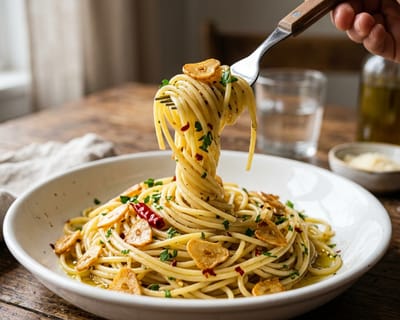
Spaghetti Aglio e Olio (Classic Neapolitan Garlic & Oil)
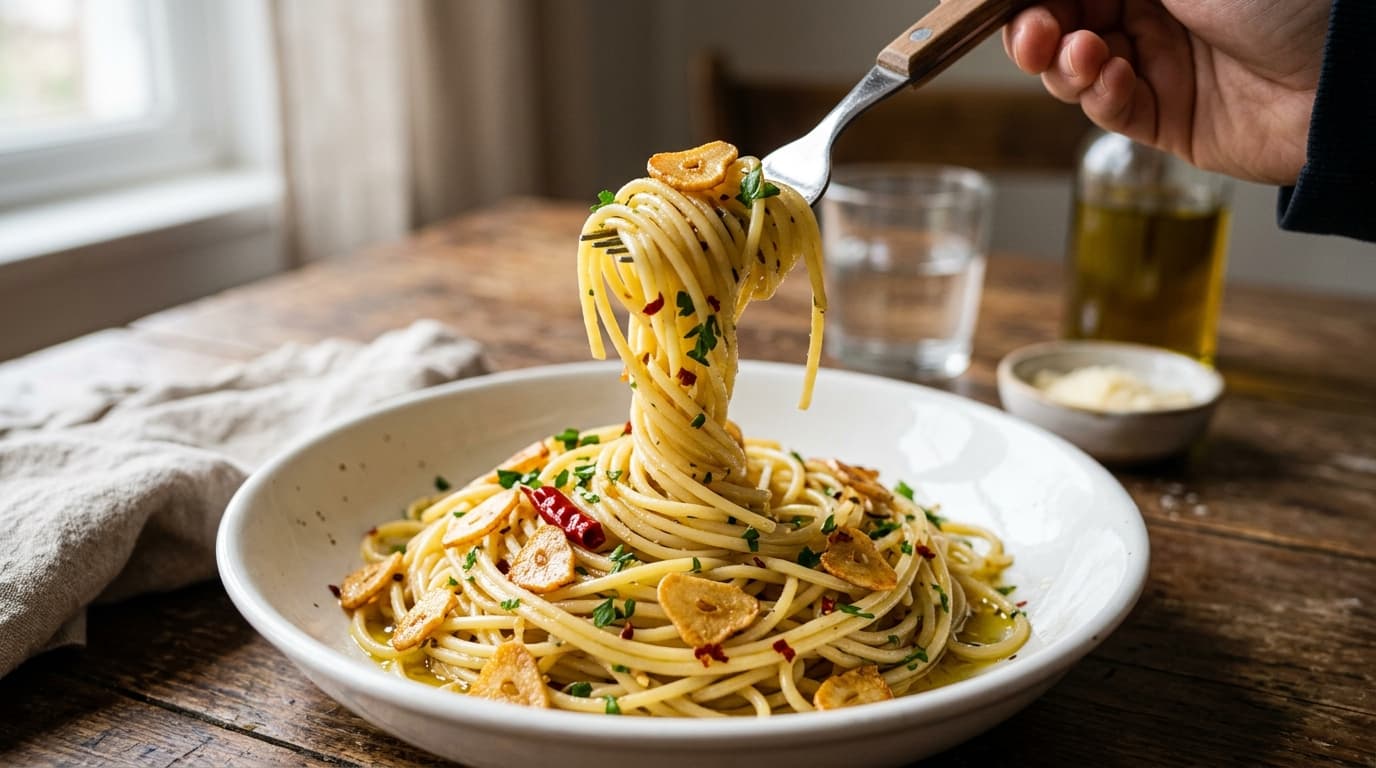
Master classic Neapolitan Spaghetti Aglio e Olio with golden toasted garlic, extra virgin olive oil, red pepper flakes, fresh parsley, and starch emulsion.
Key Takeaways
- ✓Start garlic in cold olive oil over low heat to slowly extract aromatic garlic oil without burning.
- ✓Stop cooking garlic when it reaches a straw-golden shade; dark brown garlic becomes intensely bitter.
- ✓Starchy pasta water is mandatory: boiling oil and starch water together creates a creamy oil-water emulsion.
- ✓Use high-quality cold-pressed Extra Virgin Olive Oil with low acidity for maximum fruitiness.
- ✓Fresh flat-leaf parsley adds herbal brightness that balances rich olive oil.
The Story
Hailing from the sun-drenched region of Campania in Southern Italy, Spaghetti Aglio e Olio (literally spaghetti with garlic and oil) represents the pinnacle of cucina povera—the traditional peasant cooking style that extracts extraordinary flavor from the simplest ingredients. Historically favored by Neapolitan fishermen and night workers after late shifts, this 15-minute dish requires no pantry items beyond pasta, garlic, oil, chili, and parsley.
Despite its simplicity, Aglio e Olio is widely regarded by Italian chefs as the ultimate test of a cook's technique. The magic occurs during oil-water emulsification. Normally, oil and water repel each other. However, when starch granules suspended in boiling pasta water are agitated vigorously with warm extra virgin olive oil, the starch acts as a surfactant, wrapping around tiny oil droplets and suspending them into a creamy, golden coating that clings to every smooth spaghetti strand.
Masterclass Culinary Chemistry & Technique for Perfect Spaghetti Aglio e Olio
Achieving restaurant-level perfection with Spaghetti Aglio e Olio requires mastering fundamental Italian pasta principles. Below is an exhaustive breakdown of ingredient selection, cooking physics, and step-by-step techniques.
1. The Science of Pasta Water & Starch Emulsification
When cooking pasta in boiling water, starch granules absorb water and swell—a process known as gelatinization. As starch swells, amylose and amylopectin molecules leach out into the cooking liquid. This starchy water is liquid gold for sauce emulsification.When hot starchy water is agitated alongside fats (such as olive oil, butter, cheese lipids, or rendered pork fat), the starch molecules position themselves at the boundary between oil and water droplets. This lowers surface tension and prevents the sauce from breaking or pooling into oily residues. Always reserve at least 1 cup of pasta cooking water before draining!
2. Choosing the Ideal Pasta Shape
For Spaghetti Aglio e Olio, shape geometry dictates sauce adhesion:- Ideal Shape: spaghetti.
- Bronze-Die Extrusion (Trafilata al Bronzo): Premium Italian pastas extruded through traditional bronze dies feature a rough, chalky exterior surface that absorbs sauce mechanically, compared to slick teflon-extruded commercial options.
3. Comprehensive Ingredient Deep-Dive
To elevate your Spaghetti Aglio e Olio to masterclass status, prioritize high-quality sourcing:- Core Base: paper-thin garlic & cold-pressed EVOO.
- Salt Quality: Use non-iodized coarse sea salt or Kosher salt for boiling water (1 tablespoon salt per 4 quarts water).
- Cooking Time & Temperature: 12 minutes skillet emulsification.
Step-by-Step Masterclass Execution Guide
Preparation Phase
- Mis en Place: Measure and chop all ingredients before boiling pasta. Pasta moves quickly once added to water.
- Water Salting: Salt your water generously. Properly salted water seasons pasta internally as it hydrates.
Execution Phase
- The Al Dente Target: Stop boiling pasta 1 to 2 minutes earlier than package instructions dictate. The pasta will complete its final cook directly inside the warm sauce.
- The Emulsion Vortex: Combine hot pasta, warm sauce, and 1/4 cup reserved starchy water over medium-low flame, tossing vigorously for 60 to 90 seconds.
Nutritional Profile & Dietary Adaptations
Macro Breakdown (Per Serving)
- Calories: 500 - 690 kcal
- Protein: 15g - 34g (high muscle-synthesis support)
- Carbohydrates: 54g - 68g (complex glycogen replenishment)
- Healthy Fats: 22g - 36g (essential fatty acids)
Custom Dietary Variations
- Gluten-Free Option: Substitute 1:1 with high-quality GF chickpea, brown rice, or cassava pasta. Reduce boil time by 2 minutes as GF pasta degrades faster.
- Low-Carb / Keto Option: Swap wheat pasta for hearts of palm noodles, zucchini noodles (zoodles), or shirataki konjac pasta.
- High-Protein Boost: Fold in 6 oz of grilled chicken breast, wild-caught shrimp, or lean turkey sausage.
- Dairy-Free / Vegan Modification: Utilize nutritional yeast, raw cashew cream, and plant-based parmesan alternatives.
Storage, Reheating & Meal Prep Guidelines
- Refrigeration: Store leftover Spaghetti Aglio e Olio in an airtight glass container in the refrigerator for up to 4 to 5 days.
- Freezer Storage: Baked pasta dishes (Lasagna Roll-Ups, Stuffed Shells, Baked Ziti) can be frozen wrapped in foil for up to 3 months. Thaw overnight in the fridge before baking.
- Reheating Technique: Reheat on the stovetop over low heat with 2 tablespoons of water or milk to restore sauce emulsion smoothness without separating fat.
Frequently Asked Questions (FAQs)
Q: Why is my pasta sauce separating or turning oily?
A: Sauce separation occurs when dairy or oil fats break away from water solids due to excessive heat or lack of emulsifying starch. To fix, remove pan from heat and whisk in 2 tablespoons of hot starchy pasta water vigorously.Q: Can I make this dish ahead of time?
A: Yes! Assembled baked pastas (Ziti, Shells, Roll-Ups) can be covered and refrigerated uncooked up to 24 hours prior to baking. Add 10 minutes to covered bake time when starting cold from the fridge.Q: How do I know when pasta is truly al dente?
A: Slice a noodle in half. Al dente pasta should be flexible yet display a tiny pale core in the center, providing a satisfying firm bite (to the tooth).Spaghetti Aglio e Olio (Classic Neapolitan Garlic & Oil)
Master classic Neapolitan Spaghetti Aglio e Olio with golden toasted garlic, extra virgin olive oil, red pepper flakes, fresh parsley, and starch emulsion.
Macro Nutrition Profile (Per Serving)
Ingredients
Ingredient Substitutions
| Original Ingredient | Healthy Alternative |
|---|---|
| Animal protein | Firm tofu, tempeh, or organic chickpeas |
| Cooking fat | Extra virgin olive oil or grass-fed butter |
Instructions
The Science of Pasta Water & Starch Emulsification: When cooking pasta in boiling water, starch granules absorb water and swell—a process known as gelatinization. As starch swells, amylose and amylopectin molecules leach out into the cooking liquid. This starchy water is liquid gold for sauce emulsification. When hot starchy water is agitated alongside fats (such as olive oil, butter, cheese lipids, or rendered pork fat), the starch molecules position themselves at the boundary between oil and water droplets. This lowers surface tension and prevents the sauce from breaking or pooling into oily residues. Always reserve at least 1 cup of pasta cooking water before draining!
Choosing the Ideal Pasta Shape: For Spaghetti Aglio e Olio, shape geometry dictates sauce adhesion: Ideal Shape: spaghetti. Bronze-Die Extrusion (Trafilata al Bronzo): Premium Italian pastas extruded through traditional bronze dies feature a rough, chalky exterior surface that absorbs sauce mechanically, compared to slick teflon-extruded commercial options.
Comprehensive Ingredient Deep-Dive: To elevate your Spaghetti Aglio e Olio to masterclass status, prioritize high-quality sourcing: Core Base: paper-thin garlic & cold-pressed EVOO. Salt Quality: Use non-iodized coarse sea salt or Kosher salt for boiling water (1 tablespoon salt per 4 quarts water). Cooking Time & Temperature: 12 minutes skillet emulsification.
Tried this recipe?
Let us know how it turned out! Click a star below to leave a review and rate the recipe.
Storage & Freezing Tips
- Refrigerator: Store leftovers in an airtight container for up to 3-4 days.
- Reheating: Heat in a saucepan or skillet on medium heat until hot throughout.
- Freezing: Freeze portions in airtight containers for up to 2 months. Reheat directly from frozen or after thawing.
Frequently Asked Questions
Can this recipe be prepared ahead of time?▼
Yes, this meal is excellent for weekly meal prep. Store components separately and assemble before serving.
Is this recipe gluten-free?▼
All ingredients used are naturally gluten-free. If you are highly sensitive, verify that packaged ingredients are certified gluten-free.
Tried this recipe?
Tag @stewartlucas on Instagram and hashtag it #nutriguide!
You Might Also Like


Stewart Lucas
Nutritionist & Recipe DeveloperStewart Lucas is a nutritionist and recipe developer representing the NutriGuide team. All recipes, nutritional values, and diet protocols published on this site are designed and audited by certified dietitians and clinical nutrition professionals to guarantee absolute accuracy.
Community Reviews
Please log in to leave a review.